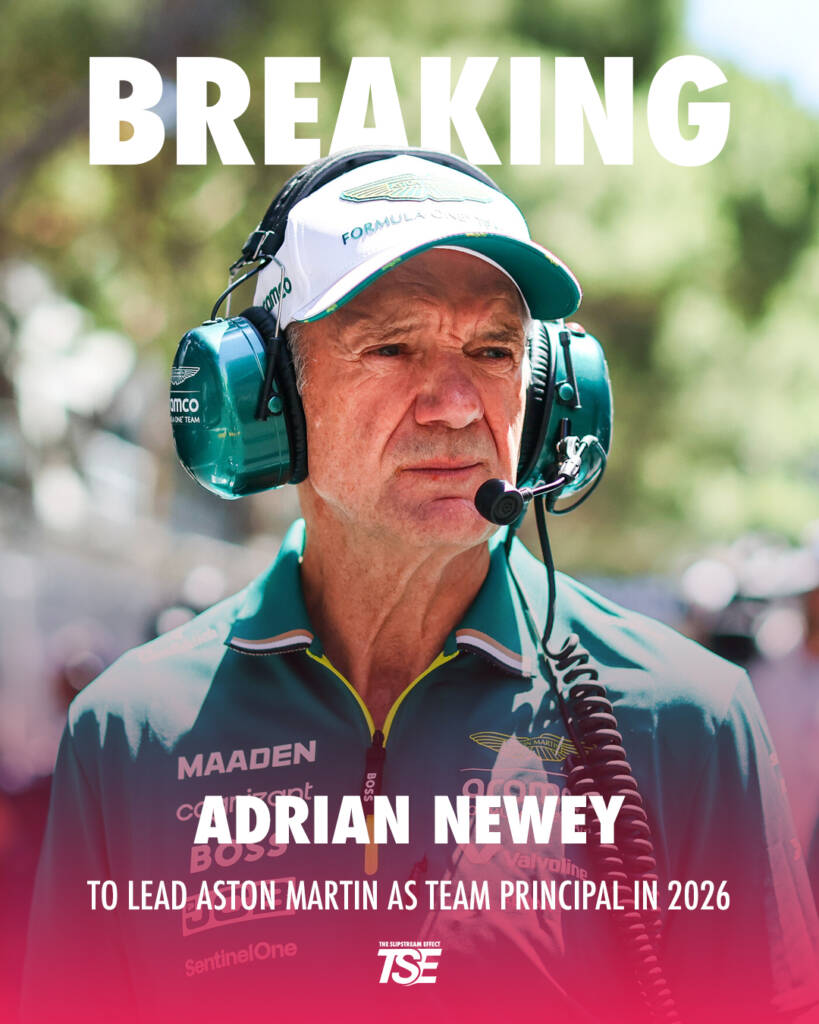
Adrian Newey will become Aston Martin’s team principal from the 2026 Formula 1 season, marking one of the most significant leadership shifts in recent years. The move ends months of internal tension and places the most successful designer in F1 history at the head of a team preparing for a full works partnership with Honda and an entirely new set of chassis and power unit regulations.
Aston Martin confirmed that current team boss Andy Cowell will step aside at the end of the season, moving into a newly created chief strategy officer role. The shake-up follows weeks of speculation and reflects a deeper repositioning of power within the organisation.
A decision shaped by months of friction
Newey joined Aston Martin in early 2025 as managing technical partner on a lucrative five-year deal reportedly worth up to £30 million per year including bonuses. From the moment he arrived, he quickly became the central figure in the team’s technical direction. According to sources inside Silverstone, he and Cowell clashed repeatedly over the structure of the organisation and the concept of the 2026 car.
It reached a point where Newey’s influence outweighed Cowell’s authority.
Team owner Lawrence Stroll has now made it official.
Stroll said:
“This leadership change is a mutual decision reached in the interest of the team. Adrian’s new position will enable him to make full use of his creative and technical expertise.”
The message is clear: the entire project will be built around Newey’s vision.
Adrian Newey steps into full control ahead of a regulation reset
This will be the first time Adrian Newey formally holds the title of team principal in Formula 1, despite a career defined by fourteen drivers’ titles and twelve constructors’ championships across Williams, McLaren and Red Bull.
The timing could not be more deliberate. In 2026, Aston Martin becomes a full works team with Honda engines, new fuels and new aerodynamic rules. It is the most significant regulatory shift since 2014, and Stroll wants the project steered by someone who has delivered winning cars across every major era.
Newey said:
“Over the last nine months, I have seen great individual talent within our team. I’m looking forward to taking on this additional role as we put ourselves in the best possible position to compete in 2026.”
His responsibilities will now include technical leadership, organisational strategy and trackside decision making.
Cowell remains vital, but in a different place
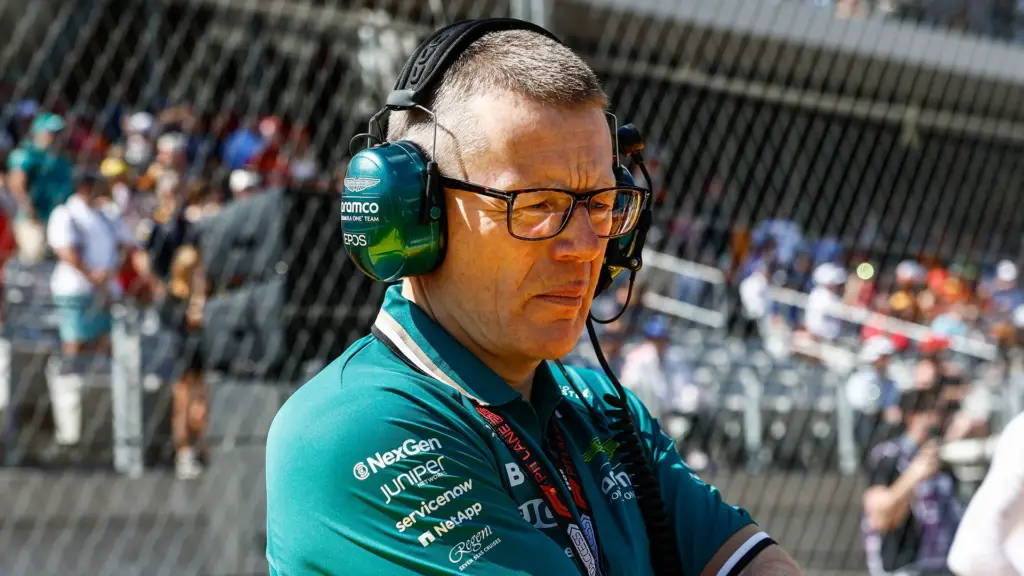
Cowell does not leave Aston Martin. Instead, he moves into a role designed to maximise his strengths and remove him from areas where conflict emerged. As chief strategy officer, he will oversee power unit integration, work directly with Honda and fuel suppliers, and focus on long-range planning.
Cowell said:
“Having implemented the structural changes needed to transition to a full works team, it is an appropriate time for me to take a different role.”
This position becomes crucial with Honda’s arrival.
What this signals about Aston Martin’s long-term direction
This restructure tells us three things about where Aston Martin are heading:
2026 is everything
Aston are treating 2026 as a reset, not an evolution. Every major leadership decision aligns with the next regulation cycle rather than the current one.
Newey is the centrepiece of the project
His technical plan, his design philosophy and his organisational model will dictate everything from the factory workflows to the car on track.
Stroll wants stability and identity
Aston Martin have gone through four team principals in four years. By placing Newey in charge, Stroll is signalling that this is the leadership structure he intends to stick with.
The wider context and unanswered questions
The move comes during a period of unusual movement in the F1 leadership market. Stroll reportedly held conversations with Andreas Seidl, Mattia Binotto and even Christian Horner before committing fully to Newey.
Horner, who is free to join another team next summer, was given a private tour of Aston Martin’s factory by Newey this week. Sources emphasise he will not be given a role, but the door to a future partnership does not seem fully shut.
Meanwhile, Aston Martin remain stuck in eighth in the 2025 constructors’ standings. This appointment is as much a long-term bet as it is a response to short-term challenges.
The road to 2026 begins now
Aston Martin need a competitive works team identity. They need a car capable of extracting the best from Honda’s final F1 power unit. And they need to prove the investment of the past four years can translate into sustained competitiveness.
Placing Adrian Newey in charge is a bold step toward that ambition.