


On paper, Monaco looks incompatible with modern Formula 1. The 1992 Monaco Grand Prix remains the clearest example of why that assumption has never fully held up. The circuit is narrow, unforgiving and offers almost no overtaking opportunities, yet it continues to expose qualities that no other venue can test in the same way. Precision, control and psychological resilience matter more here than outright performance, and that has allowed Monaco to retain a unique place on the calendar.
A circuit that amplifies the driver
By the early 1990s, Formula 1 was undergoing rapid technical evolution. Performance gaps were increasingly defined by engineering advantage, and dominant cars often shaped race outcomes. Monaco resisted that trend.
At just 3.337 kilometres, with 19 corners and virtually no margin for error, track position mattered more than outright pace. Qualifying performance often dictated the race, strategy options were limited, and drivers were forced to operate at the absolute limit for the full distance. In this environment, execution outweighed innovation.
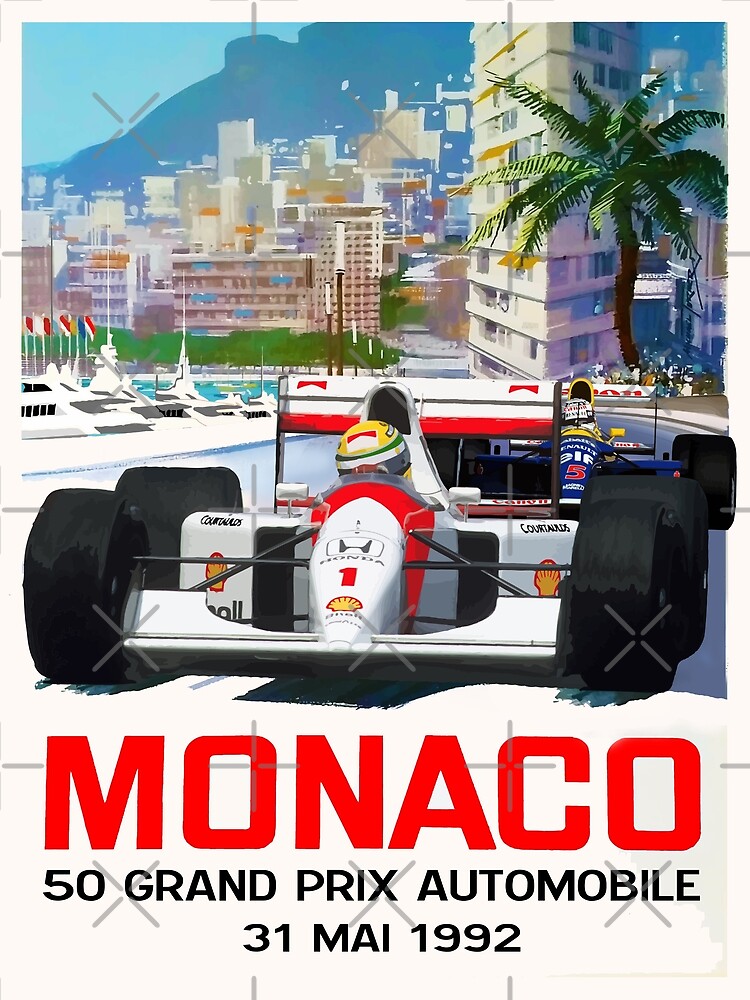
Qualifying set the tone
Nigel Mansell arrived in Monaco leading the championship in the Williams FW14B, widely regarded as the fastest and most advanced car of the season. Ayrton Senna’s McLaren did not share that advantage.
Still, Senna secured pole position by just 0.019 seconds.
The margin was small, but the message was clear. Monaco remained a circuit where driver input could still override mechanical superiority. Commitment, accuracy and confidence carried more weight than raw pace.
Defence as a form of racecraft
The race initially followed expectations, with Senna leading and Mansell applying pressure from behind. A late pit stop for Senna, caused by a loose wheel nut, changed the dynamic entirely. Mansell emerged ahead on fresher tyres and with a clear pace advantage, setting up a ten lap chase that appeared decisive.
What followed was not a contest of speed, but of control.
Senna defended with precision rather than aggression. Through disciplined positioning, controlled braking and careful corner exits, he removed every realistic passing opportunity. Monaco’s constraints amplified this approach, turning each lap into a test of concentration and restraint.
Despite sustained pressure, Mansell was unable to force a move. Afterwards, he acknowledged that no genuine overtaking options had existed.
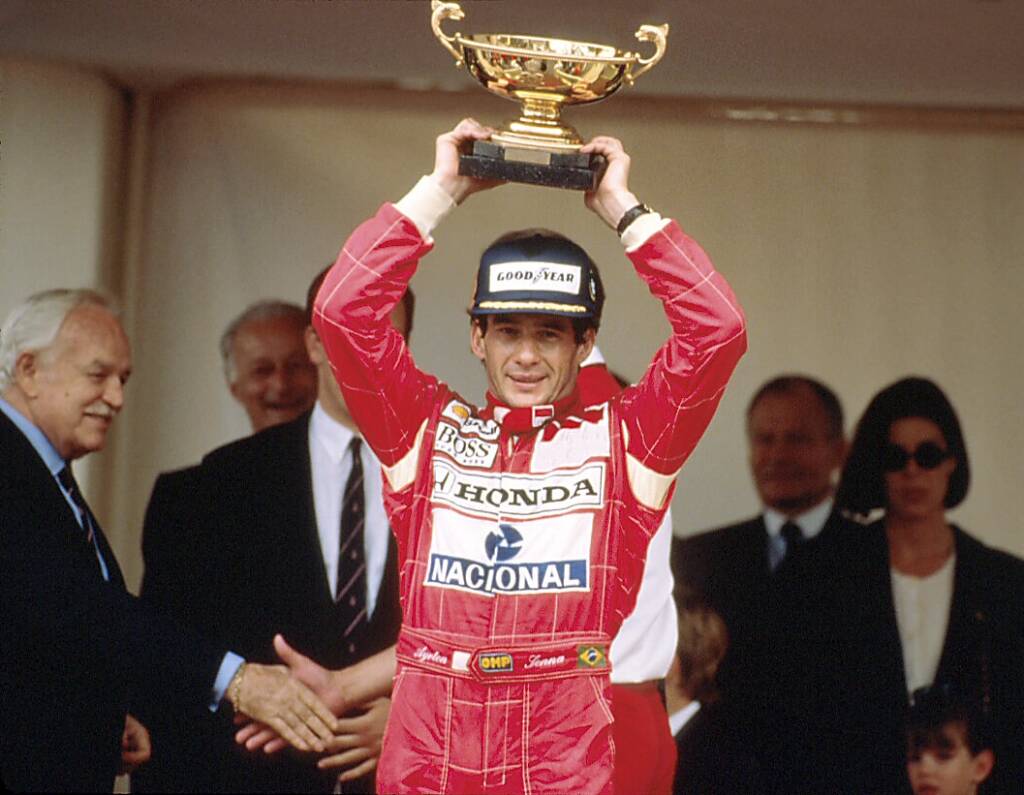
Why the race still matters
The 1992 Monaco Grand Prix became a defining moment in the circuit’s modern identity. At a time when Formula 1 was increasingly shaped by aerodynamics and technical dominance, Monaco demonstrated that tension and competition could exist without overtakes.
The race reinforced the idea that success at Monaco is built on perfection under constraint.
Senna’s sixth victory at the circuit remains a record, but its broader significance lies in what it represented. Monaco was no longer just a historic venue or a glamorous backdrop. It was a proving ground for driver intelligence and mental resilience.
Monaco’s place in today’s Formula 1
Debate around Monaco’s relevance continues as the sport evolves and cars grow larger and more complex. The criticisms are understandable. On-track action is limited, and strategy variation is minimal.
But Monaco has never rewarded spectacle. It rewards sustained excellence. The 1992 Monaco Grand Prix remains the clearest explanation for why the circuit endures, not despite its limitations, but because of them.

1 Comment
Hayley
Hi there to all, the contents present aat this web page are truly amazing ffor people knowledge, well,
keep up the good wirk fellows.