


Formula E experienced one of its most symbolic moments since the creation of the category this Saturday, January 10.
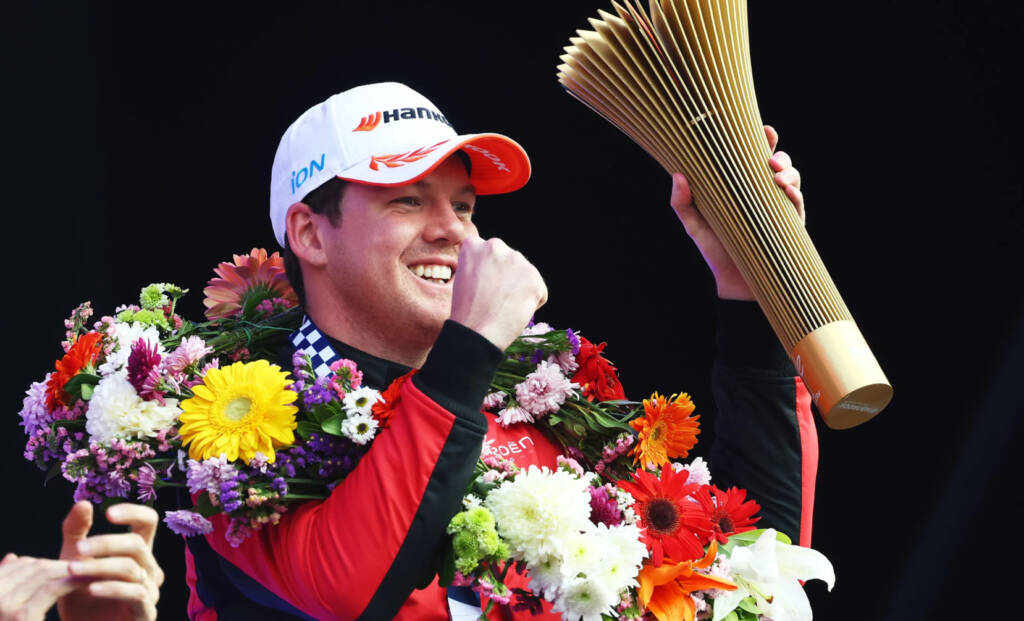
The Mexico City round, valid as the second race of the 12th season, marked the 150th race in the history of the electric world championship — and it was crowned with a result as symbolic as it was surprising: Citroën’s first win in the category, in just its second official appearance.
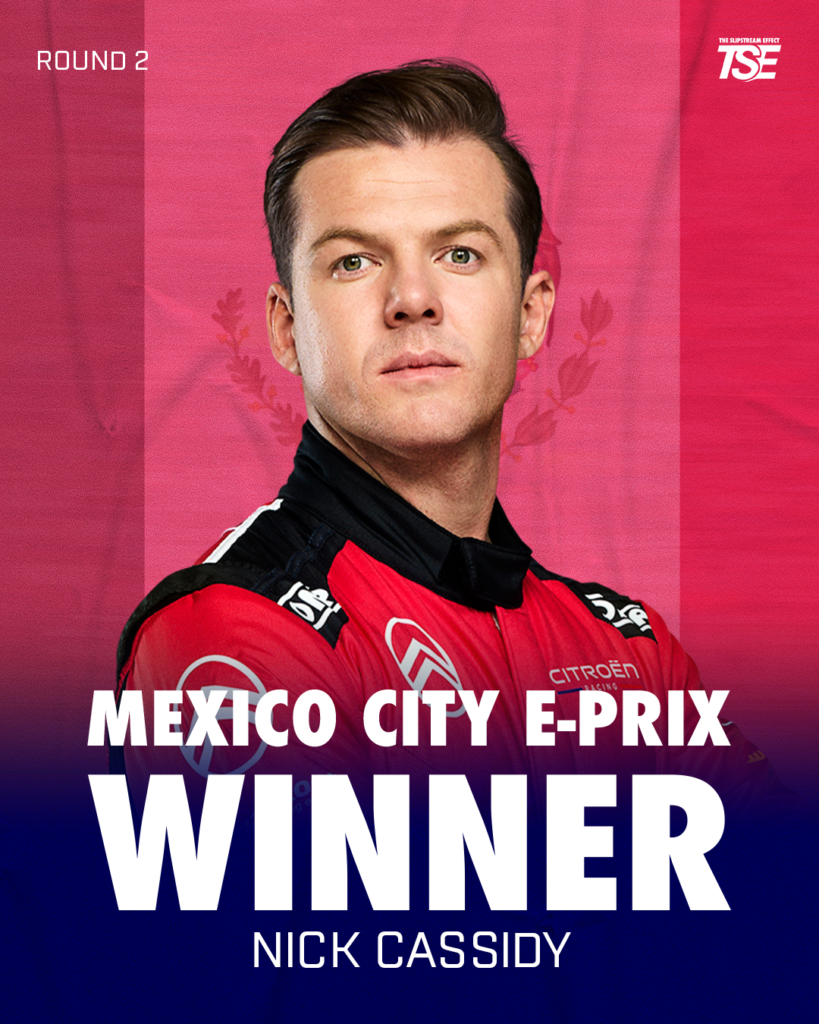
The triumph came at the hands of Nick Cassidy, who crossed the finish line in first place after a surgical performance in energy management, strategic race reading and flawless defense in the final laps. Starting only 13th on the grid, the New Zealander took the French brand to the top step of the podium on one of the most demanding and emblematic circuits on the calendar.
More than an isolated victory, the result placed Cassidy at the top of the drivers’ championship, with 40 points, after also stepping onto the podium in São Paulo with a third place in the season opener. Citroën, in turn, became the 20th different brand to win a Formula E race, reinforcing the competitive and unpredictable nature of the category.
A historic milestone and an unexpected winner
The Mexico race already occupies a special place in the recent history of Formula E. Over the past three years, a curious — and increasingly respected — statistic has emerged in the paddock. Jake Dennis, Pascal Wehrlein and Oliver Rowland back up this theory: all of them won the Mexico City e-Prix in the seasons in which they went on to claim the world title.
Dennis was champion in Season 9 with Andretti, Wehrlein lifted the trophy in Season 10 for Porsche, and Rowland repeated the feat in Season 11 with Nissan. This sequence turned victory at the Autódromo Hermanos Rodríguez into something of an omen for the champion of the year.
And Cassidy made a point of recalling this trend right after the race, visibly excited by the result. In a season marked by technical uncertainties, new alliances and deep changes on the grid, winning Formula E’s 150th race in Mexico added even more symbolic weight to the achievement.
And the context makes the victory even more impressive. Citroën officially took over its Formula E entry only in September 2025, after Maserati stepped away from the electric project. Less than four months later, in just its second race in the category, the French manufacturer was already standing on the top step of the podium.
The race: pole does not guarantee victory
As is customary in Formula E, starting from pole position is important — but rarely decisive. And Mexico was yet another clear example of that.
Sébastien Buemi secured first place on the grid after Taylor Barnard, who had been the fastest, lost his lap for exceeding track limits. The Envision Racing driver started from the front, but was unable to turn that initial advantage into control of the race.
Barnard, despite the penalty, made it clear from the start that he was not willing to be just a supporting act. The Briton reacted excellently when the lights went out and forced Buemi into an aggressively defensive posture. The pressure paid off quickly: Buemi missed his braking at Turn 1, ran wide of the ideal line and ended up handing over the lead on the very first lap.
The mistake was costly. While Barnard took the lead, followed by Edoardo Mortara and Nico Müller, Buemi dropped through the field and found himself as far back as 18th.
Strategy, attack and team play
The race dynamic began to take shape around ATTACK MODE management, a key element of Formula E. Pascal Wehrlein, who started only eighth, was the first among the leaders to activate his extra 50 kW boost, as early as lap six.
Shortly after, Mortara attacked Barnard for the lead at Turn 1, with Müller managing to follow the move. Wehrlein, riding the momentum of ATTACK MODE, also passed Barnard and then overtook his own teammate Müller at the hairpin, taking the lead inside the Foro Sol stadium.
At that moment, Porsche showed collective strength and strategic intelligence, with four cars equipped with its powertrain running inside the top five. On lap 11, Jake Dennis, winner in São Paulo, appeared only seventh, but with a half-percent energy advantage over his closest rivals — a detail that would prove crucial later on.
The lead changed again when Mortara retook the front, followed by Müller, Wehrlein, Barnard and Dennis. The midfield pack was beginning to show impatience, and more aggressive battles emerged, especially at the hairpin, one of the most critical points of the circuit.
Tension in the middle of the race
On lap 17, Oliver Rowland drew attention for another reason: the reigning Formula E champion had between 2% and 4% more energy compared to his direct rivals when he activated his first ATTACK MODE.
Shortly afterwards, the race entered a delicate phase. A Full Course Yellow was called to remove Nyck de Vries’ Mahindra. The neutralisation directly harmed Rowland, who saw his ATTACK MODE run out under yellow flag conditions.
At the restart on lap 22, the top 10 featured Müller, Mortara, Wehrlein, Barnard, Dennis, Evans, Ticktum, da Costa and Rowland. Incidents and contact returned, especially on lap 26, involving names such as Jean-Éric Vergne, António Félix da Costa and Maximilian Günther.
With many drivers still yet to use even a single ATTACK MODE, Mitch Evans was the first to take a risk. On lap 27, the New Zealander pushed aggressively and took the lead after Müller missed his braking at the hairpin.
The Nick Cassidy moment
From that point on, Nick Cassidy definitively wrote himself into the story of the race. The Citroën driver activated his ATTACK MODE at exactly the right moment, combining available energy, track position and traffic awareness.
As highlighted by Albie Lau, former McLaren engineer, during the global broadcast, Cassidy was the driver who best synchronized ATTACK MODE overlap with energy advantage. The result was immediate: on lap 30, the New Zealander took the lead after climbing an impressive 12 positions from the start.
Jake Dennis tried to respond on lap 32, informed by his engineer that he still had one extra lap of energy compared to the leaders. The Briton climbed as high as third, but encountered very tough defense from Mortara, which ultimately allowed Cassidy to open up a 1.3-second advantage at the front.
From there on, victory seemed to be in the hands of the Citroën driver — but there was still tension in the air. Mortara had two additional minutes of ATTACK MODE to attempt a final overtake, while Rowland pushed hard for a place on the podium.
In the final laps, the Foro Sol stadium turned into a cauldron. The top five crossed the sector separated by less than half a second. Rowland even passed Dennis to take third place, lost the position and regained it shortly after.
Even under enormous pressure, Cassidy defended masterfully. Mortara could not find enough space to attack, and the New Zealander crossed the finish line in first, securing a historic victory.
Result, championship and what’s next
Nick Cassidy won the Mexico City e-Prix, followed by Edoardo Mortara and Oliver Rowland. Taylor Barnard finished fourth, after starting strongly and leading the opening laps, while Jake Dennis completed the top five. Pascal Wehrlein was sixth.
Also worth highlighting is Pepe Martí of CUPRA KIRO, who overcame a 60-place grid penalty and a Stop/Go imposed due to repairs after his heavy accident in São Paulo. The Spaniard scored his first Formula E points with a seventh place, ahead of Jean-Éric Vergne, Nico Müller and Norman Nato.


With the results, Cassidy leads the drivers’ championship with 40 points, against 36 for Dennis and 34 for Rowland. Citroën appears at the top of the teams’ championship with 44 points, ahead of Andretti on 36. In the manufacturers’ championship, Stellantis opened up a seven-point advantage over Porsche.
Formula E now returns to the track on January 31, in Miami. After a historic race in Mexico, Season 12 remains open, unpredictable — and with a new protagonist at the top.


3 Comments