


Pascal Wehrlein’s victory in Jeddah, in Round 4 of the 2025/26 Formula E season, was not defined by raw pace alone. It was a win shaped by timing, restraint and a precise understanding of how the race would unfold once the strategic layers were fully exposed. Starting third on the grid, the Porsche driver delivered a performance that went beyond execution and into control, redefining the balance of the championship in the process.
In a race where PIT BOOST and ATTACK MODE introduced new degrees of freedom, Wehrlein proved that the decisive factor was not how aggressively those tools were used, but when. While others committed early, the German waited. When the race reached its critical phase, he had more to deploy, and the clarity to deploy it effectively.
The result carries additional weight because it coincided with a muted weekend from Nick Cassidy, who arrived in Jeddah as championship leader but never found a position to influence the race. Wehrlein, by contrast, left Saudi Arabia at the top of the standings, having turned opportunity into authority.
Leadership built on timing, not urgency
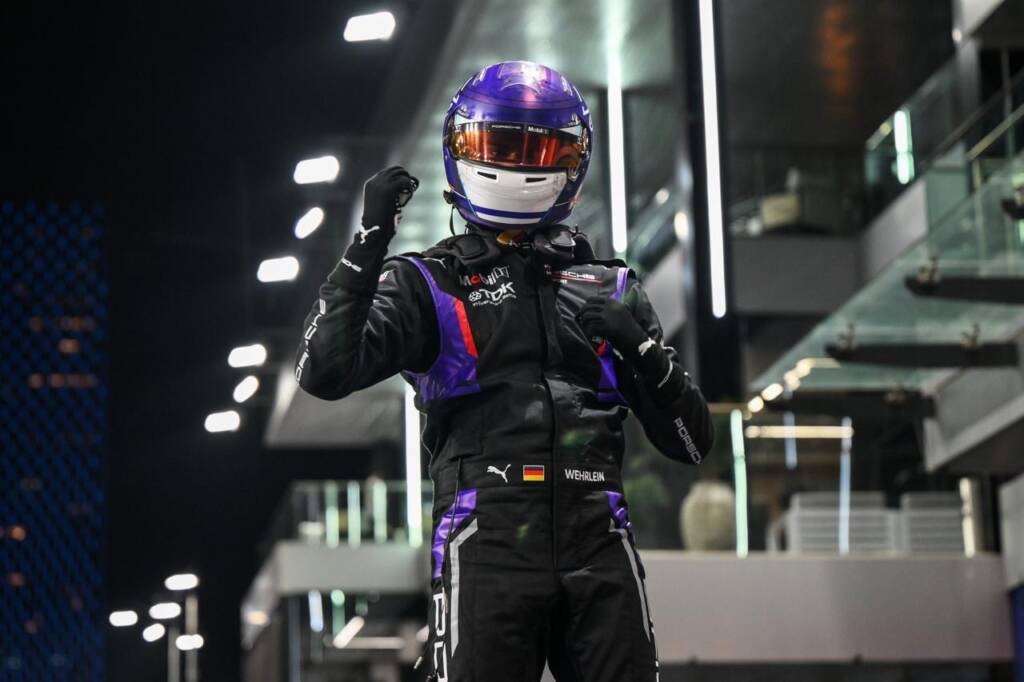
Jeddah marks a clear turning point in Wehrlein’s season. Celebrating his 100th Formula E start, the reigning world champion delivered a performance that underlined why he remains one of the category’s most complete drivers. The introduction of mandatory PIT BOOST reshaped the race’s internal logic, creating room for overlapping strategies and delayed attacks (a scenario that rewarded discipline over impulse).
Wehrlein’s decision to postpone ATTACK MODE until after his PIT BOOST stop was central to the outcome. By aligning peak power with a moment when rivals had already spent their strategic capital, he transformed a temporary performance advantage into a decisive one. The gain was not marginal; it was structural, allowing him to open a gap that no late reaction could realistically close.
With the 26-point haul, Wehrlein heads into Round 5 as championship leader, while Porsche also strengthens its position at the top of both the Teams’ and Manufacturers’ standings.
PIT BOOST reshapes the race dynamic
The mandatory PIT BOOST fundamentally altered the rhythm of the Jeddah E-Prix. With additional energy guaranteed, traditional conservation strategies lost relevance, and the race shifted toward a more aggressive, positioning-driven contest.
Early neutralisations played into that shift. Nyck de Vries’ car was removed from the grid before the start, and an incident involving Zane Maloney and Pepe Martí soon triggered a Safety Car, compressing the field and further reducing energy pressure. From that point on, the race was less about saving and more about sequencing.
In this environment, PIT BOOST became a true strategic filter. Drivers who combined their stop with patience and clean positioning gained flexibility later on. Wehrlein exploited that context perfectly, moving forward before his stop and then capitalising on the overlap between PIT BOOST and ATTACK MODE to establish a clear advantage over rivals such as Mitch Evans and Jake Dennis.
By the final phase of the race, the pattern was evident: late attackers were best placed to dictate the outcome.
Mortara’s recovery, opportunity lost at the start
If Wehrlein’s race was defined by control, Edoardo Mortara’s was shaped by recovery. Starting from pole, the Mahindra driver was immediately compromised by a technical limitation at launch. Running in 2WD mode at the start, without all-wheel drive, Mortara suffered excessive wheelspin and lost four positions before the opening lap was complete.
From there, the race became a salvage operation. Mortara showed strong pace, managed his tools efficiently and deployed ATTACK MODE late to climb back through the field, eventually securing second place. Internally, the feeling was clear: without the compromised start, victory was a realistic possibility.
Even so, the result confirmed Mahindra’s competitiveness in Jeddah and highlighted how fine the margins had become once strategy entered the equation.
Less energy management, more race intelligence
With energy concerns largely neutralised by the Safety Car and PIT BOOST, Jeddah rewarded drivers who could read the race rather than simply react to it. Track position, traffic timing and tool availability mattered more than absolute efficiency.
Wehrlein embraced that reality. He resisted the temptation to commit early, allowing others to reveal their hands first. As the race stabilised, it became clear that those who had spent their advantages too soon were exposed, while those who waited retained leverage.
ATTACK MODE as a consequence, not a shortcut
In Jeddah, ATTACK MODE did not function as a shortcut to the front. It amplified prior decisions. Early activation delivered short-term gains at the cost of flexibility. Late activation came with traffic but offered greater influence when the field settled.
The decisive moment came when Wehrlein combined PIT BOOST with ATTACK MODE, converting that overlap into sustained lap-time advantage rather than isolated overtakes. It was this sequence, not a single move, that effectively settled the race.
Solid recoveries, clear limits
Mortara’s climb from fifth to second was impressive, but the early loss proved too costly to challenge for the win. Evans followed a similar trajectory, growing into the race and securing another strong result through late progress.
Cassidy, meanwhile, spent most of the race limiting damage. Lacking the pace to fight at the front, his focus shifted to minimising losses in a weekend that never fully came together.


Control as the ultimate statement
By the time Wehrlein assumed effective control of the race, there was no need for defensive aggression. The gap he had built allowed him to manage the final stages calmly, responding only to the clock rather than to threats on track.
That composure explains why the Jeddah victory carries such championship significance. This was not a situational win, but one rooted in preparation, regulatory understanding and competitive maturity.
Formula E returns tomorrow (14) for the second race of the Jeddah double-header. Without PIT BOOST, the strategic landscape will change entirely. But after Friday’s race, one reference point is clear: the championship now runs through Pascal Wehrlein.


2 Comments