


The cancellations of Jeddah and Bahrain for the Formula 2 calendar don’t just remove races, it reshapes the entire championship dynamic. At the beginning of March, the FIA announced the rounds held in the Middle East wouldn’t happen, and no substitution will take place either.
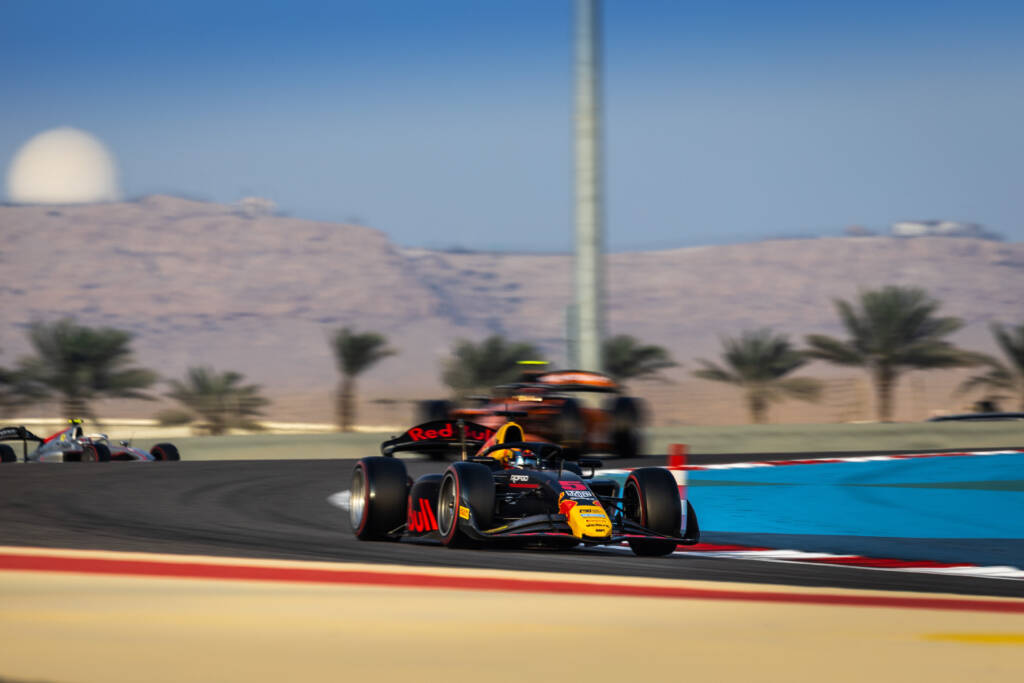
This reduced calendar transforms the championship into a high-stakes sprint where consistency, adaptability, and mental strength matter more than ever. With fewer races, drivers have less margin for error and fewer chances to recover from a bad weekend. From now on, consistency would be the deciding factor in a title fight.
The importance of consistency
The cancellations of Jeddah and Bahrain, both being early rounds, are normal to help drivers settle into the season. However, drivers won’t have the luxury to warm up as the season progresses.
Those drivers with more experience might struggle less to perform immediately, but rookies, especially, are thrown straight into the deep end. Without early-race experience, they are forced to learn racecraft, strategy, and tyre management in real time.
Without the early preparation that tracks like Jeddah and Bahrain offered, drivers might struggle to build confidence and establish momentum. With the cancellations of Jeddah and Bahrain, drivers lose rhythm and the championship gets more compressed.
How it impacts the drivers’ development
Formula 2 is essentially the final proving ground before Formula 1, where drivers are evaluated not just on results but on consistency, adaptability, and race intelligence. With fewer races, the drivers lose valuable opportunities to demonstrate these qualities.
Following the cancellations of Jeddah and Bahrain, the remaining race weekends become disproportionately important. While one standout performance can significantly boost a driver’s reputation, a poor result can have lasting consequences. This new calendar also limits the ability to show progression over time. In a full season, drivers can perform recovery drives and build momentum, proving their capacity to learn and improve.
Without those additional rounds, there is less room for narrative development, and drivers risk being overlooked. For junior drivers without strong financial backing or academy support, which already proves to be essential in Formula 2, pressure is even greater. Fewer races mean fewer chances to attract attention from teams, making every session critical to their future.
Championship fairness in question
The cancellations of Jeddah and Bahrain also raise important questions about the championship’s competitive balance. Every track brings something characteristic to the season and by removing two of the most distinctive ones, the overall balance of the season is altered.
Bahrain is known for its emphasis on tyre degradation and strategic racing, while Jeddah rewards precision and confidence at high speeds. Drivers who might have excelled at these venues lose key opportunities to score points, while others may benefit from a calendar that better suits their strengths.
This creates a scenario where the championship may not fully reflect the most well-rounded driver, but rather the one best suited to the revised schedule. Additionally, teams that had prepared strongly for these specific rounds lose a potential competitive advantage.


3 Comments