The persistent lack of female talent in Formula 2 highlights one of the most significant bottlenecks in the pathway to Formula 1. As the final and most competitive step on the single‑seater ladder, F2 should be a proving ground for the best emerging drivers. Yet, it remains a category where women are almost entirely absent.
This gap isn’t about ability but about access, opportunity, and the structural challenges that prevent talented female drivers from progressing through the junior series at the same rate as their male counterparts.
Factors that pose a problem for women
The shortage of female talent in Formula 2 is rooted in issues that begin long before drivers reach the final step of the junior ladder. At every stage of progression, girls represent only a small minority. By the time teams are selecting drivers for F2, the pool of women with the necessary experience, funding, and competitive results is dramatically smaller than that of men. The problem is not a lack of capability; it’s that too few women are given the sustained opportunities required to reach this level.
Funding remains one of the biggest barriers. Many young female drivers struggle to secure sponsorship due to outdated assumptions about marketability, physical demands, or their perceived chances of reaching Formula 1. Meanwhile, male drivers often benefit from long‑established networks, greater visibility, and a history of male success in the sport. This imbalance directly affects who can realistically climb high enough to contend for a seat in Formula 2.
The lack of visible female role models in F2 and F1 creates a self‑reinforcing cycle. With so few women progressing through the ranks, fewer young girls see motorsport as a viable path. Breaking that cycle requires more than isolated success stories; it demands a system that consistently supports women from the earliest stages of their careers, ensuring that more female drivers reach the point where Formula 2 becomes a realistic target.
F1 Academy impulses progression
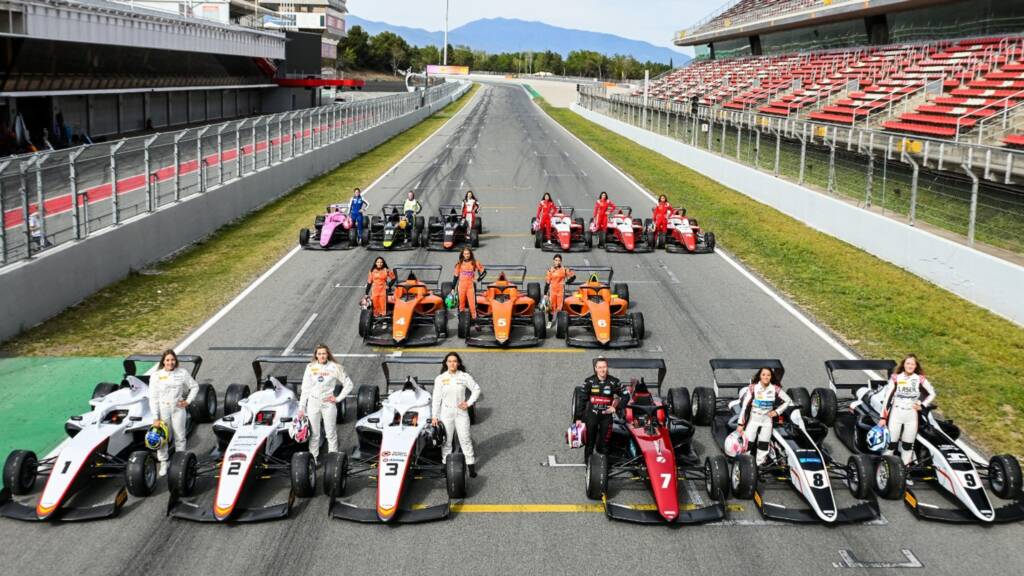
There are, however, signs of meaningful progress. Under the leadership of Susie Wolff, the F1 Academy launched in 2023, intending to build a stronger, more structured pipeline for young female drivers. The series provides professional coaching, high‑level competition, and global visibility, all essential ingredients for developing future female talent in Formula 2.
Several Formula 1 teams have already integrated F1 Academy drivers into their development programmes, giving rising talents access to resources previously out of reach. The series has produced promising names such as Marta García, Abbi Pulling, and, most recently, Doriane Pin. While the Academy does not yet guarantee a direct path into Formula 2, it has opened doors to other competitive series, allowing these drivers to gain the experience needed to move closer to F2 readiness.

Real change, however, requires long‑term commitment. If Formula 2 is ever going to feature multiple women competing at the front, the sport must invest earlier, support consistently, and create an environment where women can develop on equal footing. Only then will the presence of female talent in Formula 2 become the norm rather than the exception.