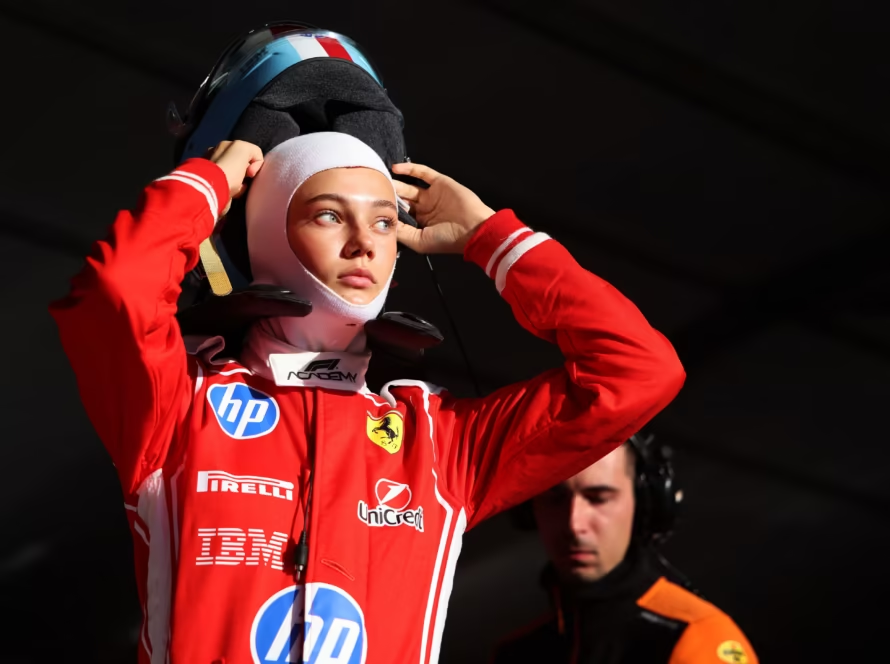
For a Wild Card driver in F1 Academy, that is the entire opportunity for a developing driver to make their case at championship level. They arrive on a race weekend and are immediately compared against drivers who have been competing together all season, learning the same cars and circuits over time.
There is no gradual build-up. From the first practice session, they are trying to understand the car, the track and the competition while also delivering a representative performance.

It is a short window, but one that can reveal how a driver handles pressure, adapts to change and performs when there is no second chance to reset.
What is a Wild Card driver?
For one weekend only in an F1 Academy racing season, a selected driver is able to claim the spot of Wild Card and join the other full-time drivers out on the track.
The Wild Card programme has quickly established itself as a launchpad for emerging talent. Since its debut in 2024, it has introduced 13 drivers to F1 Academy, with eight going on to secure full-time seats for the 2026 season. It’s an incentive to strengthen the competition and allow more young girls the exposure that F1 Academy offers.
When the initiative first launched, Wild Card drivers were only featured at six races throughout the season. This usually coincided with showcasing regional talent, with Saudi Arabian driver Reema Juffali making her debut in Jeddah, American driver Courtney Crone competing in Miami and Dutch driver Nina Gademan making her first appearance at Zandvoort.
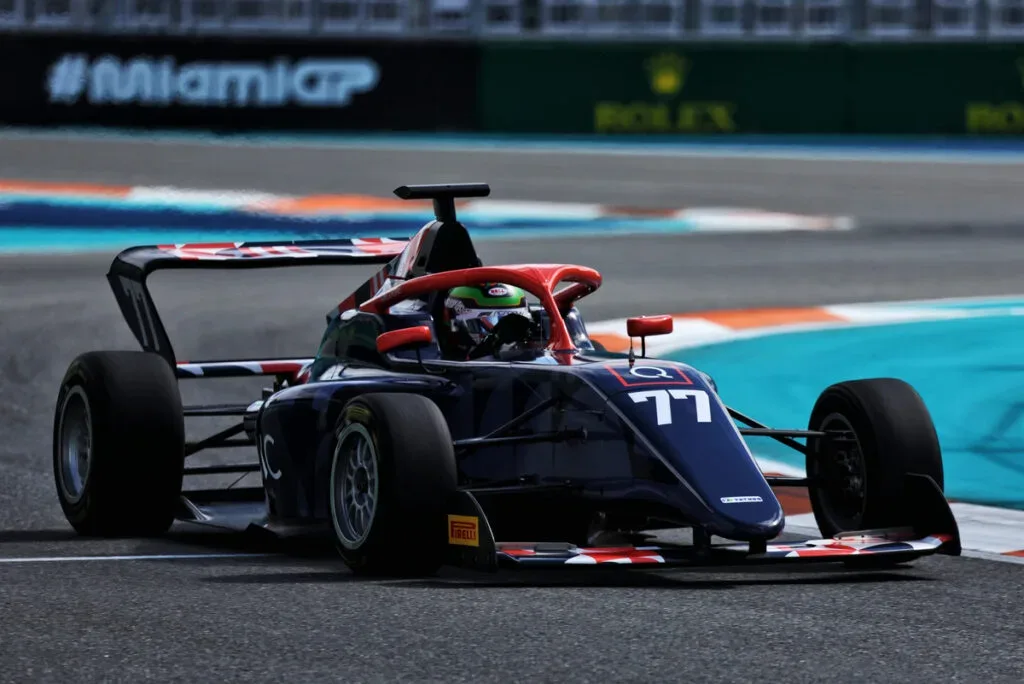
In 2024, the Wild Card drivers would race under the host team PREMA Racing, despite already having three full-time drivers competing on the grid. With this in mind, the drivers were able to score individual points for the Drivers’ Championship but not the Teams’ Championship. This prevented the team from gaining an advantage simply because they happened to run the extra Wild Card car. Ultimately, it just meant that the drivers in the Wild Card seat could access the same operational support from engineers, mechanics and coaching, without intruding on the full-time championship battles.
PREMA Racing moved to Hitech for the 2025 and 2026 seasons, acting as the sixth team to bring the grid up from 15 drivers to 18. Similarly to PREMA, Hitech has two full-time entries and runs a Wild Card at every stop on the F1 Academy calendar.
This gives the Wild Card driver a more consistent home, allowing them to fully soak in their first experience of racing in an F1 Academy car.
Why do they exist?
Wild Card drivers exist to give emerging and local talent a chance to compete, creating an ever-growing, inclusive path for women to enter motorsport.
Unlike other motorsport divisions, F1 Academy acts as a stepping stone for drivers to launch their careers from. So, what happens if you add an extra stepping stone to test out talent before they make the cut for the official F1 Academy line-up?
Many Wild Card drivers actually end up securing a full-time seat in the following season, allowing both the teams and the driver a one-off chance to determine whether they will be a good fit in the series.
Eight Wild Card drivers have progressed into full-time F1 Academy seats since the programme was introduced, demonstrating that a single race weekend can be enough to launch a full-time career. Among the names of drivers in the full-time line-up include Courtney Crone, Nina Gademan and Alisha Palmowski.
Essentially, it’s a great way for drivers to gain exposure within the world of motorsport and showcase their talent to hopefully secure either an F1 Academy seat or attention from other racing series.
The pressure to perform as a Wild Card driver
The pressure is ramped up to new heights for Wild Card drivers, as this is often their first time operating an F1 Academy car. Not to mention the additional pressure that naturally comes with a race weekend, including media, crowds and a jam-packed schedule. Most of the drivers that step up to the challenge are between 16 and 20 years old, with a lifetime of pressure compressed into one qualifying session and two races.
Rather than framing a slightly slower pace or general race-day mishaps as “failures”, it’s all about learning the ropes. For the other full-time drivers on the grid, there’s an expectation to perform, as they have been vetted as capable of competing at a high level, while Wild Card drivers are there for the experience.
Wild Cards often overachieve expectations, showing consistent pace, speed and resilience when it matters most. In her 2024 debut, Nina Gademan became the first Wild Card driver to score points, totalling 13 championship points across the weekend.

More recently, Chiara Bättig became the first Wild Card driver to take pole position, while simultaneously being the youngest ever pole sitter at just 16-years-old. While Bättig wasn’t able to convert the pole into a race win,it wouldn’t be surprising to see the Swiss driver racing in a full-time seat next year.
Despite the pressure, the women stepping into these cars are among the best at what they do and show strong performances each weekend.
Why does it matter to include a Wild Card Driver?
For a series built on inclusion and accessibility, the Wild Card initiative is a natural extension of those parameters. F1 Academy is the only all-female single-seater championship in motorsport, with a limited number of full-time seats compared to the wider pool of drivers aiming to break through.
Wild Card entries widen those parameters further, giving additional drivers the chance to step into the championship, experience a race weekend, and measure themselves directly against established competition in identical machinery.
With only one weekend to adapt and perform, it becomes a clear test of how quickly a driver can learn and deliver under pressure. In doing so, it adds another route into the championship structure and helps ensure more drivers have a visible opportunity to be evaluated at this level.