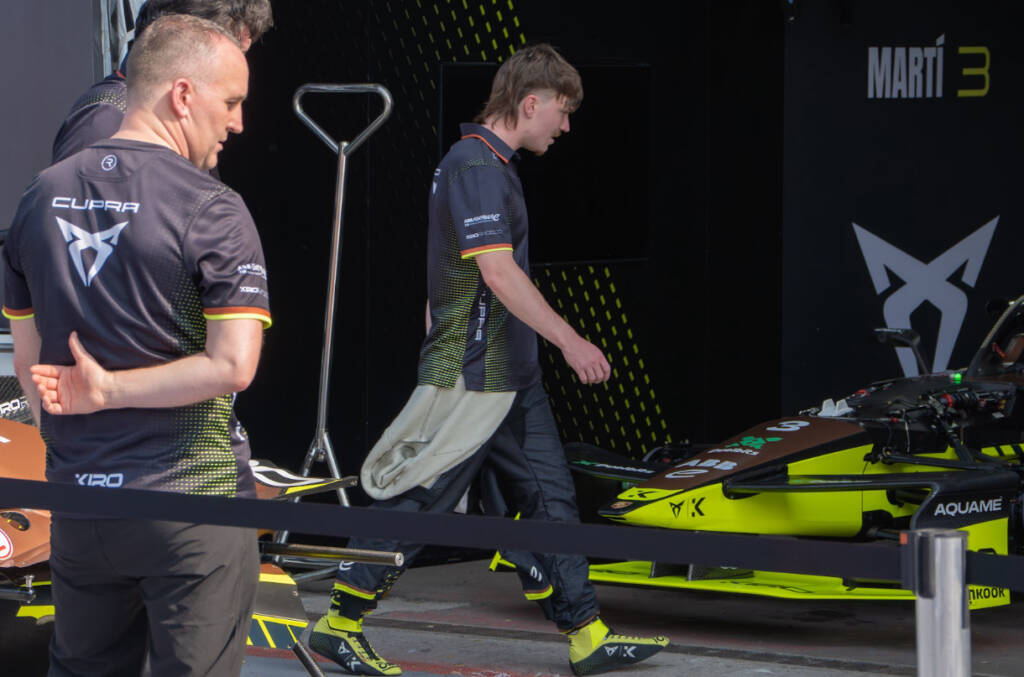
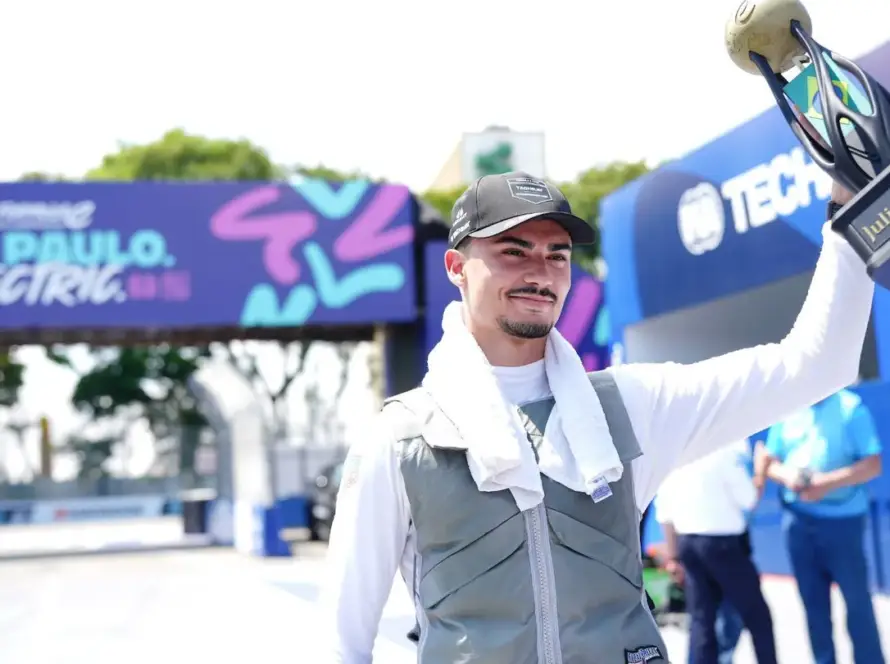
The weekend had been shaping up positively for the team: Dan Ticktum qualified strongly and started second on the grid, while rookie Pepe Martí secured 14th place, lifting morale in the garage… but luck would change just hours later.
Dan Ticktum retires from the São Paulo E-Prix (Photo: Yuri Rosa)
The São Paulo E-Prix marked the opening round of the 2025 Formula E season and delivered a start that was both promising — and frustrating — for Cupra Kiro. The Spanish team, buoyed by Dan Ticktum’s strong qualifying performance and Pepe Martí’s solid debut, left the Anhembi circuit with a double DNF that halted what had been a weekend of steady progress.
The race began with a clean start, but into Turn 1, Ticktum’s car was hit, immediately compromising the entire strategy built by the team. The accumulated damage led to Cupra Kiro’s first retirement of the São Paulo round. The British driver explained that a sequence of issues left him with no realistic chance of recovery:
“I really didn’t have a chance. To be honest, I’m a bit delirious, because before the race I told a lot of people that this race would depend heavily on luck — and I think my situation was a pretty good example of what happens when it just doesn’t show up.”
Ticktum further detailed the decision to retire the car:
“When I exited the pit lane, the car snapped and I received my second drive-through penalty. The decision to retire came because we were already a lap down after the first penalty and, on top of that, I had another technical failure. It was a brake issue, something related to the braking system. So someone up there really didn’t like me at that moment — it was definitely terrible luck.”
With Ticktum out, all attention turned to rookie Pepe Martí, who had been putting together a strong and surprising debut.
Solid debut for Martí and top-five pace
For Martí, the São Paulo E-Prix represented not only his first race with Cupra Kiro, but also his official debut in the ABB FIA Formula E World Championship. In an unusual weekend marked by the cancellation of Friday practice sessions due to organisational technical issues, the Spaniard was forced to adapt to both the category and the circuit in record time.
With only a single free practice session on Saturday morning, learning came quickly. Even so, Martí delivered a consistent qualifying performance, finishing seventh in his group and 14th overall — a result viewed as highly encouraging within the team.
The race itself showed even more progression. With precise energy management and flawless strategic execution, Martí climbed as high as fifth place, opening up a genuine chance of finishing his debut among the standout performers on the grid.
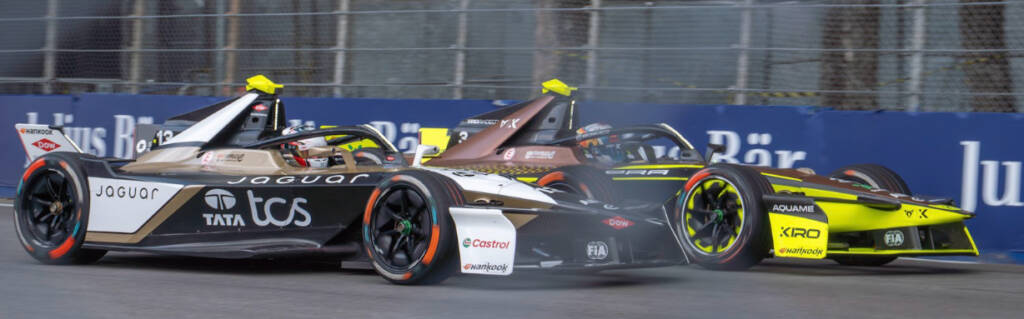
Jaguar and Cupra Kiro battle during the São Paulo E-Prix (Photo: Yuri Rosa)
Full Course Yellow incident ends Martí’s race
However, the final phase of the race changed Cupra Kiro’s fortunes. During a Full Course Yellow period, Martí slowed to comply with the prescribed delta, but the cars ahead reduced speed earlier than expected. Contact was unavoidable, ending his race and prompting concern at the circuit — although the driver exited the car uninjured and under his own power.
Following a review, Race Control issued a penalty for the next round, forcing Martí to start from the back of the grid in Mexico City, in addition to assigning four penalty points on his super licence. Reflecting the attitude he showed throughout the weekend, Martí took full responsibility:
“It was a very intense weekend. We only had one free practice session because Friday’s was cancelled, so we arrived at qualifying with very little track time. It was quite difficult to understand the car at the beginning, but we made a significant step forward. Still far from where we want to be, but it was positive progress.”
He also commented on the race itself:
“The race strategy was very well executed. I was managing energy efficiently throughout the first half of the race. In the first attack mode, I wasn’t as effective in overtaking, which left us slightly behind around lap 22.”
On the incident, he explained:
“At the final restart, when everyone was already pushing almost flat out, I activated attack mode. Unfortunately, when the Full Course Yellow was deployed, I slowed down to respect the limit, but I didn’t react quickly enough to António and Nico Müller ahead and ended up making contact. I take full responsibility. We received a very harsh penalty for Mexico, where we’ll start from the back of the grid. It’s a serious penalty at the start of the season.”
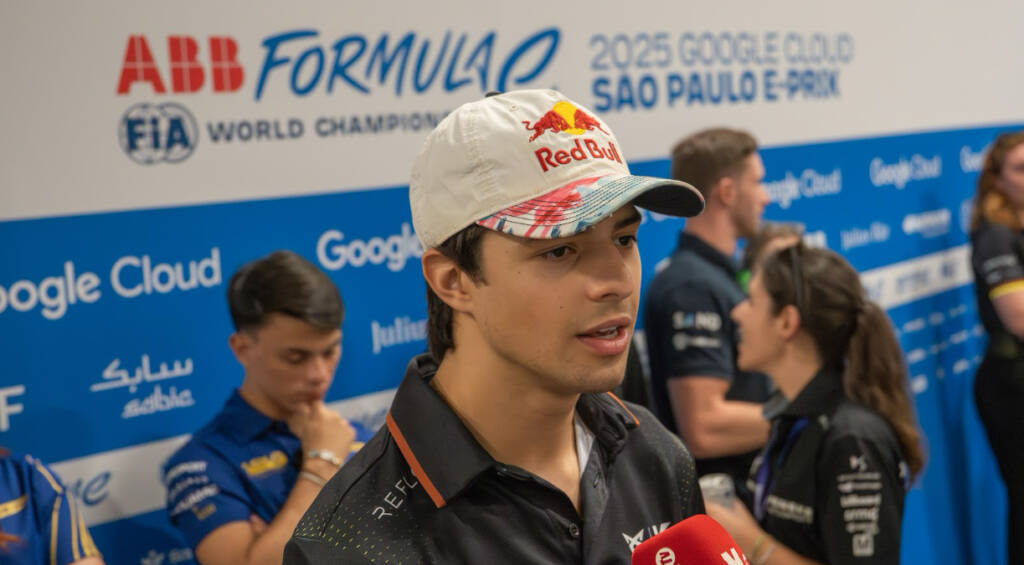
Pepe Martí takes responsibility for São Paulo crash (Photo: Yuri Rosa)
He concluded:
“It’s a shame because we were genuinely having a very strong race and fighting for a top five on my debut. The team did a fantastic job, the car was very good, and we deserved to fight for a solid result. I apologise to the entire team.”
Season outlook
Despite the double retirement, Cupra Kiro leaves São Paulo with clear signs of competitiveness: strong qualifying performance, consistent race pace, solid strategy and the potential to fight at the front. The team acknowledges that, under normal circumstances, Martí had the speed to finish inside the top five. Now, the Spaniard and the experienced Ticktum turn their focus to Mexico, where they will aim to transform lessons learned — and the challenge of the penalty — into a new chapter in a season that is only just beginning.
Contains information related to marketing campaigns of the user. These are shared with Google AdWords / Google Ads when the Google Ads and Google Analytics accounts are linked together.
90 days
__utma
ID used to identify users and sessions
2 years after last activity
__utmt
Used to monitor number of Google Analytics server requests
10 minutes
__utmb
Used to distinguish new sessions and visits. This cookie is set when the GA.js javascript library is loaded and there is no existing __utmb cookie. The cookie is updated every time data is sent to the Google Analytics server.
30 minutes after last activity
__utmc
Used only with old Urchin versions of Google Analytics and not with GA.js. Was used to distinguish between new sessions and visits at the end of a session.
End of session (browser)
__utmz
Contains information about the traffic source or campaign that directed user to the website. The cookie is set when the GA.js javascript is loaded and updated when data is sent to the Google Anaytics server
6 months after last activity
__utmv
Contains custom information set by the web developer via the _setCustomVar method in Google Analytics. This cookie is updated every time new data is sent to the Google Analytics server.
2 years after last activity
__utmx
Used to determine whether a user is included in an A / B or Multivariate test.
18 months
_ga
ID used to identify users
2 years
_gali
Used by Google Analytics to determine which links on a page are being clicked
30 seconds
_ga_
ID used to identify users
2 years
_gid
ID used to identify users for 24 hours after last activity
24 hours
_gat
Used to monitor number of Google Analytics server requests when using Google Tag Manager