


The first day of the second week of F1 2026 Bahrain Testing reinforced a pattern already visible in pre-season running, headline lap times remain secondary to operational consistency, programme discipline and structural reliability under the new technical regulations.Resuming action at the Bahrain International Circuit, teams approached the opening day of week two with refined run plans and clearer development priorities. While Charles Leclerc set the early pace and George Russell ended the day fastest overall, the broader picture of F1 2026 Bahrain Testing continues to resist simple competitive conclusions.
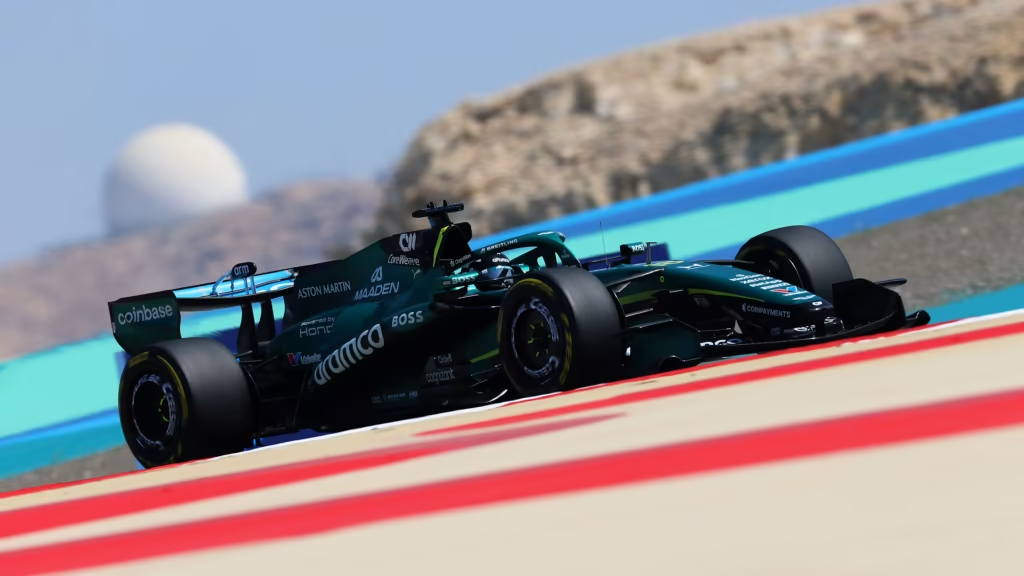
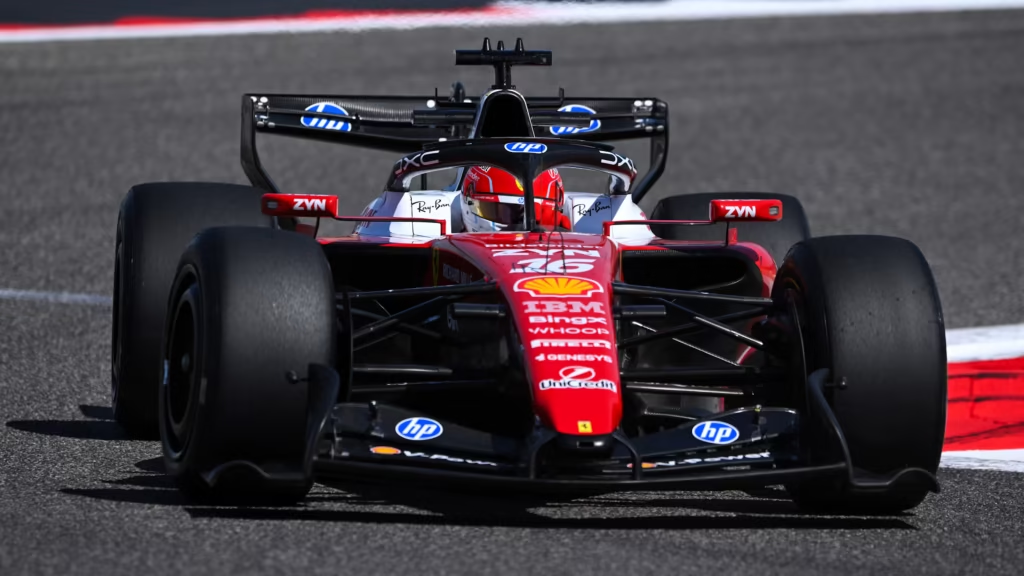
Morning: Ferrari establishes the early reference
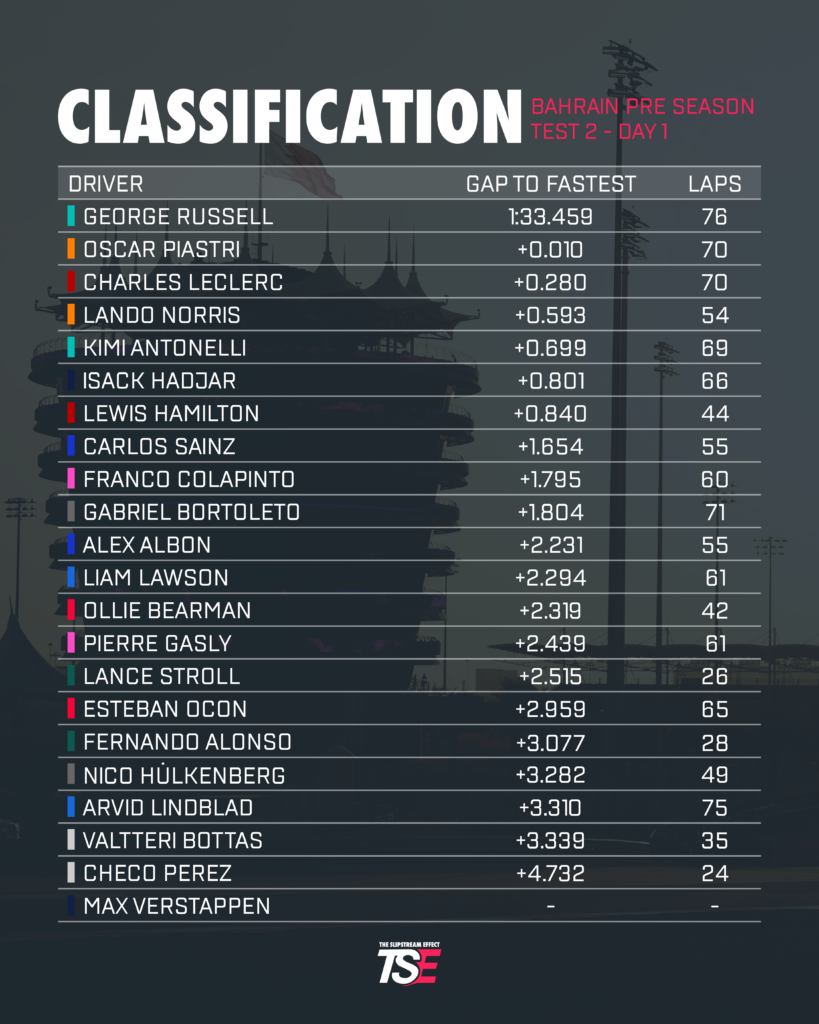
Charles Leclerc led the opening phase of F1 2026 Bahrain Testing with a 1m35.739s lap, completing 70 tours of the circuit. Lando Norris and Andrea Kimi Antonelli followed on the timesheets, though as is typical in testing, raw classification requires careful interpretation.
Fuel loads, engine modes and structured programme variations remain decisive variables. Direct performance comparisons, therefore, remain unreliable at this stage of F1 2026 Bahrain Testing.
Cadillac encountered operational disruption early in the day due to sensor-related issues, delaying its programme and limiting Sergio Pérez to 24 laps. Isack Hadjar also saw reduced running, completing only 13 laps as the team worked through technical checks.
Track evolution added complexity. Desert wind and limited grip produced several minor off-track moments across the field, routine occurrences within exploratory set-up work rather than indicators of instability.
In terms of mileage, Arvid Lindblad completed 75 laps, narrowly ahead of Leclerc and Antonelli, reinforcing that cumulative data collection remains the central objective.
Afternoon: Mercedes combines pace and productivity
If the early phase suggested controlled experimentation, the latter half of the day highlighted execution. George Russell posted a 1m35.459s lap to conclude the first day of week two of F1 2026 Bahrain Testing at the top of the timesheets, edging Oscar Piastri by 0.040 seconds.
More revealing than the lap time itself was Mercedes’ overall output. The team accumulated 145 laps across the day, the highest total among the field, signalling programme stability and mechanical consistency.
Aston Martin experienced a less linear session, continuing a week marked by earlier power unit concerns. Lance Stroll triggered a red flag after spinning into the gravel under braking. Although he returned to the circuit later, a further off-track moment limited his total to 26 laps.
Audi briefly drew attention when its car appeared partially disassembled in the garage early in the afternoon. Gabriel Bortoleto returned to the track roughly 40 minutes later, allowing the team to proceed with its scheduled running.
Cadillac introduced Valtteri Bottas only midway through the session, further constraining its daily mileage.
Week two begins without hierarchy
The opening day of the second week of F1 2026 Bahrain Testing reinforces an increasingly clear conclusion, mileage, reliability and execution discipline remain more instructive than the order on the timesheets.
Mercedes combined competitive pace with the strongest daily workload. Ferrari demonstrated controlled consistency, while McLaren maintained proximity in single-lap performance within structured run plans. Cadillac and Aston Martin continue to navigate programme interruptions as teams refine their understanding of the new regulations.
At this stage of F1 2026 Bahrain Testing, development trajectory matters more than provisional rankings. In Sakhir, understanding the car remains the priority, and comprehension continues to outweigh headline pace.

1 Comment