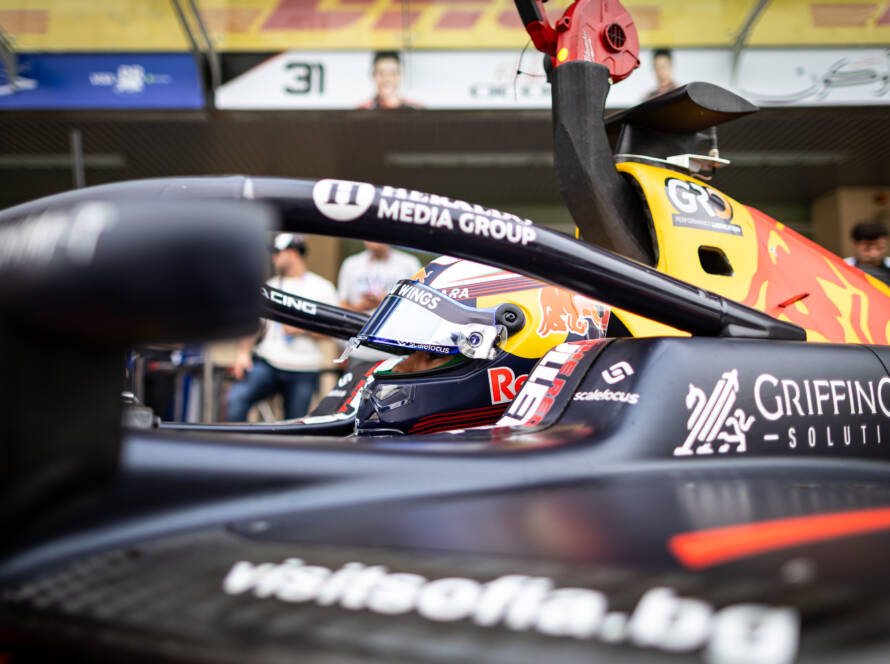
Formula 2 presents itself as a championship. In reality, for many drivers, Formula 2 funding is a conditional agreement where money decides how long it lasts and how far a driver progresses.
Every season, the grid is presented as stable, with 22 drivers, the same teams, and a championship narrative that unfolds race by race. But beneath that structure sits a reality that does not always make headlines. Sponsorship deals are rare, funding is often paid in installments, and for more than one, the biggest threat to their season isn’t performance, but their financial situation.
In Formula 2, talent determines how fast you go, but Formula 2 funding decides how long you stay.
The myth of a “full season”
Formula 2 contracts may guarantee the first round, but not all rounds. However, fans assume that, once the grid has been settled and drivers have secured a seat, they are guaranteed the chance to end the season.
However, many Formula 2 contracts are not season-long commitments. They mainly depend on funding and sponsorship; the drivers that can bring those and aid the team, they get to stay.
It is not a recurrent occurrence, but sometimes, by the midpoint of the year, some drivers are no longer fighting rivals on track, but time. One withdrawn sponsor, one change in circumstances, and a seat can disappear overnight. When that happens, the stability collides, the midfield gets distorted, and the story of the championship is altered.
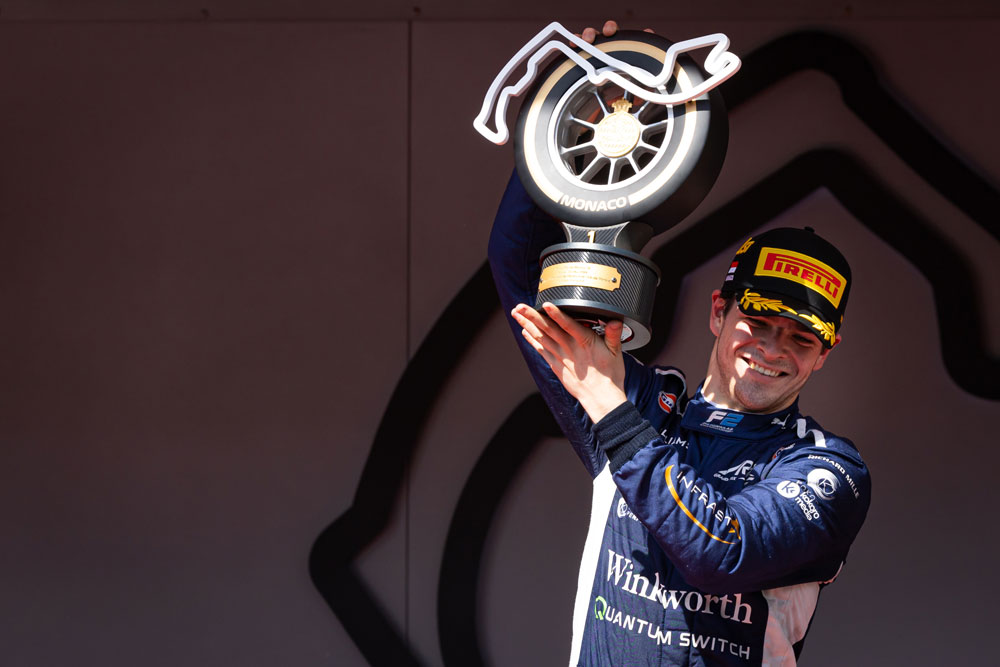
Take Zak O’Sullvian’s case in 2024. A competitive driver from the Williams Academy, a professional, and with a strong performance that included two wins. Mid-season, O’Sullivan announced that he could no longer afford his seat with ART Grand Prix because his Formula 2 funding wasn’t enough, and therefore, he had to abandon the competition. His seat was immediately taken by Niels Koolen.
How Formula 2 funding affects the drivers
For drivers, experiencing funding instability changes far more than just their presence on the grid; it reshapes their season itself. Racing in Formula 2 already poses physical pressure on the drivers, but financial issues add an invisible opponent. Aside from the physical and psychological pressure, financial instability is a challenge that cannot be out-driven or out-prepared.
When a driver realizes their seat depends on a sponsor or external backing that could disappear, every weekend takes on a different meaning. Unconsciously, risk is no longer sporting; aggressiveness and bold strategy calls become calculations to survive.
The moment confidence is replaced by caution, the development stalls. Preparing for races while unsure whether you could race the next one undermines focus, trust, and long-term planning. In a category meant to measure readiness for Formula 1, these disrupted seasons often say less about a driver’s talent and more about financial timing and external support.
Is the funding challenge fixable?
Now the uncomfortable question is whether this is the new reality of Formula 2. As a championship designed to find the best-prepared drivers for Formula 1, one can’t expect it to be fully supported financially. The economic structure of the series assumes that drivers will arrive with backing.
Teams expect drivers to contribute to the survival, hence in that sense, the replacement of drivers mid-season is proof of the functionality of the series. From a purely business perspective, seats go to those who can afford to keep them, and teams act to protect their own stability.
Yet, this presents a fundamental contradiction. The Formula 2 championship presents itself as a fair comparison of talents, but becomes compromised when participation itself is conditional. When drivers enter a season without equal security, the competitive field is uneven.
Until that contradiction is addressed, Formula 2 funding will continue to shape seasons as decisively as performance.