


The impact of Rookie Free Practice goes far beyond technical data or symbolic track time. Formula E’s recent history itself proves that these sessions can indeed become definitive gateways to the electric championship grid. What started as a development initiative has, over the seasons, evolved into a real mechanism for observation, evaluation, and talent recruitment.
In the current championship, several drivers who now hold full-time seats previously went through sessions dedicated to rookies. Names such as Zane Maloney, Taylor Barnard, Felipe Drugovich, Nick Cassidy, Norman Nato, Nyck de Vries, Joel Eriksson, Nico Müller, and Maximilian Günther show that the model works. What they all share is an initial opportunity to demonstrate speed, adaptability, and technical understanding of the electric car in controlled environments, exactly what happened during the Rookie Free Practice in Miami.
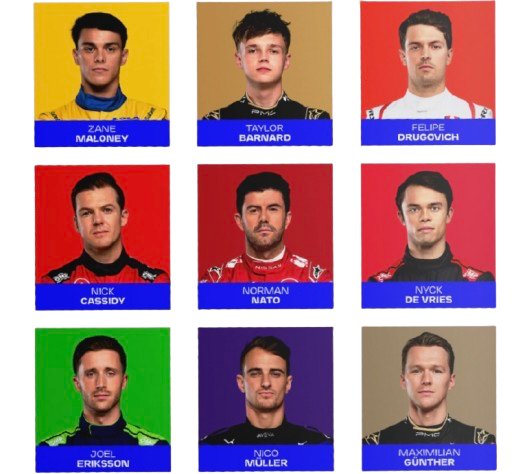
These examples reinforce that the session is not merely a technical or procedural Friday exercise, but a structured observation process that allows teams to identify drivers capable of dealing with Formula E’s unique demands: energy management, strategic race reading, use of regeneration, and decision-making under pressure.
A history that goes beyond the current grid
Beyond the drivers who effectively made it to Formula E, the list of names who have taken part in rookie sessions throughout the championship’s history includes well-established talents from other major categories in global motorsport.
Alex Albon, now a driver for Atlassian Williams in Formula One, was involved in initiatives of this kind early in his career. Jamie Chadwick and Bianca Bustamante recently took part in Formula E’s Women’s Test, held during preseason testing in Valencia, further reinforcing the category’s commitment to female development in motorsport.
Felipe Drugovich, the Formula 2 champion, also spent time in Formula E, testing with Maserati before joining the Andretti project. Paul Aron, who will serve as Alpine’s reserve driver in Formula One in 2026, is another example of a talent who used Formula E as part of his technical development. The same applies to Ella Lloyd, a McLaren driver in F1 Academy, and Arthur Leclerc, a development driver for Scuderia Ferrari.
Even when they do not immediately result in a contract within the electric championship, these sessions add experience, visibility, and technical knowledge, elements that stay with drivers throughout their careers. It is within this context that the Miami Rookie Free Practice fits, not as an exception, but as part of a well-established philosophy.
The Miami session format
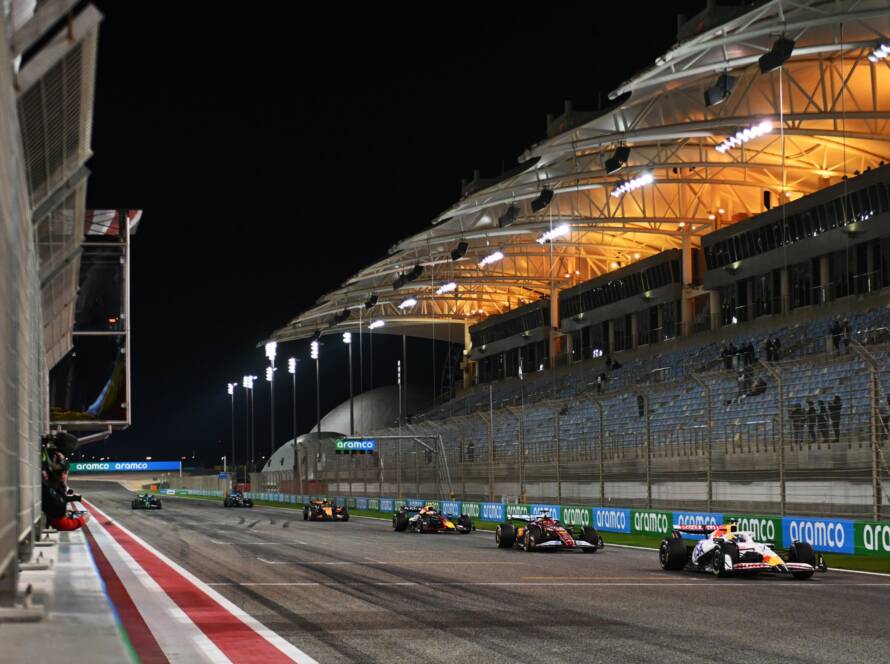
Ahead of the Miami E-Prix, Formula E held an exclusive Rookie Free Practice session on Friday, January 30. The 40-minute session took place at the Miami International Autodrome. Following the success of previous editions in Rome, Misano, and Jeddah, the initiative returned by offering rookies the chance to drive the GEN3 Evo, the most advanced generation ever used by the championship.
The session also continued the work initiated with Formula E’s Second Women’s Test, held in Valencia during preseason testing, reinforcing the joint commitment of Formula E and the FIA to more diverse and inclusive pathways for the next generation of drivers.
In total, 11 drivers took part in the session, representing almost the entire grid and different development programs:
Porsche: Ayhancan Güven
• Jaguar TCS Racing: Alessandro Giusti
• Nissan: Abbi Pulling
• Nissan: Gabriele Mini
• Mahindra Racing: Chloe Chambers
• DS Penske: Nikita Bedrin
• Andretti: Dennis Hauger
• Envision Racing: Zak O’Sullivan
• Citroën Racing: Théo Pourchaire
• CUPRA KIRO: Pepe Martí
• Lola Yamaha ABT: Hugh Barter
A new circuit and a real adaptation test
The session took place on a brand-new layout for Formula E, measuring 2.32 km, which raised the level of complexity of the challenge. In addition to their first competitive contact with the GEN3 Evo, the rookies had to quickly absorb the characteristics of a circuit that demands precision, regeneration awareness, and energy adaptation.
Despite overcast skies, rain did not appear, allowing the session to run uninterrupted. From the opening minutes, lap times dropped quickly, with early laps already dipping below the one-minute mark.
How the session unfolded
Théo Pourchaire was the first to set a solid benchmark, posting a 58.8s lap for Citroën Racing. Shortly after, times fell significantly, with Pepe Martí taking the lead after the first ten minutes.
Classified as a rookie until the end of the season under the updated FIA Formula E regulations, the CUPRA KIRO driver showed early control of both the layout and the car, despite already being a familiar name within the championship.
At the halfway point, Alessandro Giusti impressed with Jaguar TCS Racing, just 0.145s off the best time, showing quick adaptation after previous experience with a different manufacturer. Meanwhile, full-time drivers watched the rookies’ work directly from the garages.
With 15 minutes remaining, Pourchaire returned to the top of the timesheets with a 55.903s lap, while Abbi Pulling, a champion in her junior category and Nissan representative, made a small mistake while exploring the circuit limits, running slightly over the kerbs. It was a clear illustration of the GEN3 Evo’s demanding nature.

The decisive moment and the final result
In the final minutes, the session entered its most representative phase, with several teams simulating 350 kWh laps, bringing the scenario closer to race conditions. It was in this context that Zak O’Sullivan, Envision Racing’s simulator driver, found his best lap.
The Briton clocked a 55.810s lap, securing the fastest time of the Miami Rookie Free Practice, almost a tenth ahead of Pourchaire. The top five finished as follows:
- Zak O’Sullivan, Envision Racing
- Théo Pourchaire, Citroën Racing
- Gabriele Mini, Nissan
- Pepe Martí, CUPRA KIRO
- Nikita Bedrin, DS Penske
Much more than a practice session
The Miami Rookie Free Practice once again reinforced that Formula E treats talent development as a structural part of the championship. By combining sporting opportunity, technical data collection, and inclusion, the series has built a model that benefits drivers, teams, and the future of the grid.
The 11 rookies who took to the track in Miami were not just chasing lap times. They were competing for visibility, confidence, and possibly a permanent place in Formula E. And the category’s own history shows that, for some of them, that journey may have started right there.


1 Comment