


Aston Martin’s Bahrain running was interrupted by a suspected Honda PU issue, casting fresh doubt over the team’s preparation ahead of the 2026 Formula 1 season. What was meant to be a crucial data-gathering session quickly turned into damage limitation at Sakhir.
The Silverstone-based team entered testing already on the back foot. After limited mileage during the private Barcelona shakedown, Bahrain represented a key opportunity to understand the new AMR26 and its Honda power unit under race-representative conditions. Instead, reliability once again became the headline, and the early narrative around the Honda PU issue began to overshadow performance.
Running cut short in Sakhir
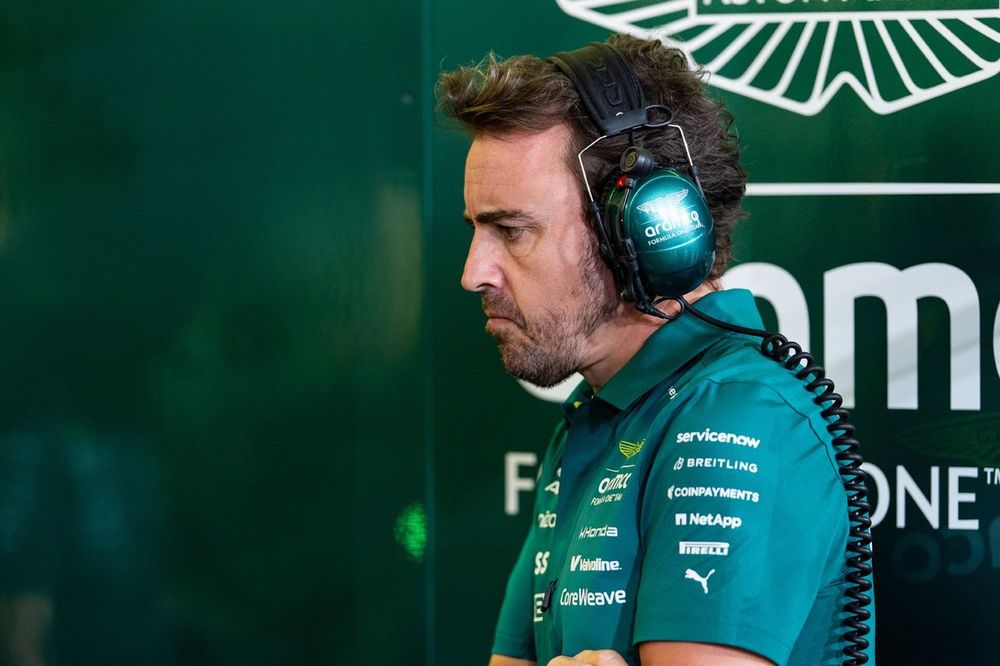
Fernando Alonso was behind the wheel when the problem emerged. After completing just 28 laps, the Spaniard returned to the garage with what the team described as a power unit-related issue.
Trackside observations suggested the situation may be more serious than initially indicated. Screens were pulled across the garage, and Honda engineers were reportedly seen using a borescope to inspect the internal condition of the engine. Such procedures typically indicate concern about potential internal damage rather than a minor electronic fault.
If the suspected Honda PU issue proves structural, it could significantly reduce Aston Martin’s remaining testing time. In a shortened pre-season under radically new regulations, every lost lap carries multiplied value. This is not just about missing mileage, but about missing correlation between simulation and reality.
Why mileage matters more than lap time
Testing headlines often focus on who tops the timing sheets, but early-season preparation is built on reliability and understanding. The Honda PU issue does not simply affect Aston Martin’s ability to chase performance. It affects their ability to validate systems.
Under the new regulations, the power unit architecture has shifted toward a heavier electrical emphasis and revised energy deployment balance. Managing harvesting, braking integration and thermal efficiency requires thousands of kilometres of clean running. Interruptions break that feedback loop.
A team that completes 140 uninterrupted laps gains exponentially more usable data than one forced into repeated garage inspections. Even if the pace looks similar on paper, the developmental confidence is not.
So while a Honda PU issue may appear like a testing inconvenience, strategically it can reshape the opening phase of a season.
A fragile start to the Honda partnership
TThe 2026 season marks Aston Martin’s first year as Honda’s exclusive works partner. The project represents a major identity shift, moving away from Mercedes power units and into a full factory alignment with Honda.
Works status brings advantages in theory. Packaging freedom, integration control and long-term development alignment can create competitive upside. But it also brings exposure. Any Honda PU issue now lands directly at Aston Martin’s door.
Unlike customer teams, there is no external benchmark. If something underperforms or fails, the responsibility is shared internally.
The transition was always expected to be complex. New fuel suppliers, new gearbox architecture, revised cooling concepts and a completely different hybrid balance mean integration challenges are inevitable. However, repeated interruptions linked to a Honda PU issue suggest the adaptation curve may be steeper than anticipated.
Across both Bahrain test weeks so far, Aston Martin has logged fewer laps than most of its direct rivals. That gap in data accumulation could prove more significant than early lap times.
Pressure under new leadership
This setback arrives during a transformative period for the team. Adrian Newey’s technical influence has reshaped internal structure and raised external expectations. The Newey-Honda combination was framed as a long-term project capable of fighting for championships.
But Formula 1 does not wait for projects to stabilise. It measures outcomes immediately.
Both Fernando Alonso and Lance Stroll have acknowledged that the AMR26 still requires refinement under braking and energy management phases. These are precisely the areas most sensitive to power unit calibration and hybrid deployment mapping.
If the Honda PU issue limits extended race simulations, Aston Martin risks arriving at the first Grand Prix with unresolved questions about consistency across a full stint.
Under stable regulations, such uncertainty might be manageable. Under a complete technical reset, it is magnified.
The bigger picture before Melbourne
Testing is not about headlines. It is about foundations. And foundations require reliability.
A single Honda PU issue can be dismissed as part of pre-season exploration. A pattern of interruptions becomes structural concern. The distinction will only become clear over the remaining test days.
There is still time to stabilise the situation. Engine swaps, conservative run plans and preventative inspections are normal in early-season programmes. But each precaution also consumes resources and focus.
For now, Aston Martin remains in evaluation mode rather than attack mode. The objective is no longer to chase outright pace, but to build trust in the package.
Under the 2026 regulations, reliability is not a supporting pillar. It is the core architecture. And until the Honda PU issue is definitively resolved, Aston Martin’s season narrative remains uncertain.
Testing offers clues. Racing delivers answers.



1 Comment