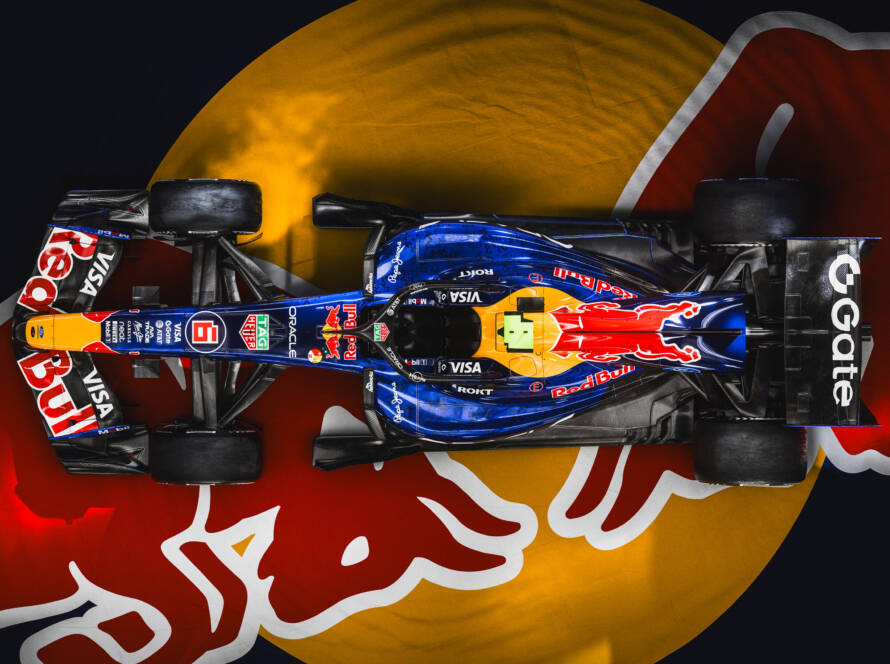
Red Bull Resets for 2026 with one of the biggest structural shake-ups either Red Bull Racing or Racing Bulls has made in years. The team is preparing aggressively for the new regulations by resetting both driver line-ups at once. Isack Hadjar steps up to the senior team next to Max Verstappen, Arvid Lindblad makes his full Formula 1 debut, Liam Lawson is retained after a season of steady growth, and Yuki Tsunoda is moved into a reserve role after five campaigns on the grid. It is a complete strategic recalibration designed to position Red Bull at the front of the new era.
The Hadjar promotion: a rapid rise backed by results
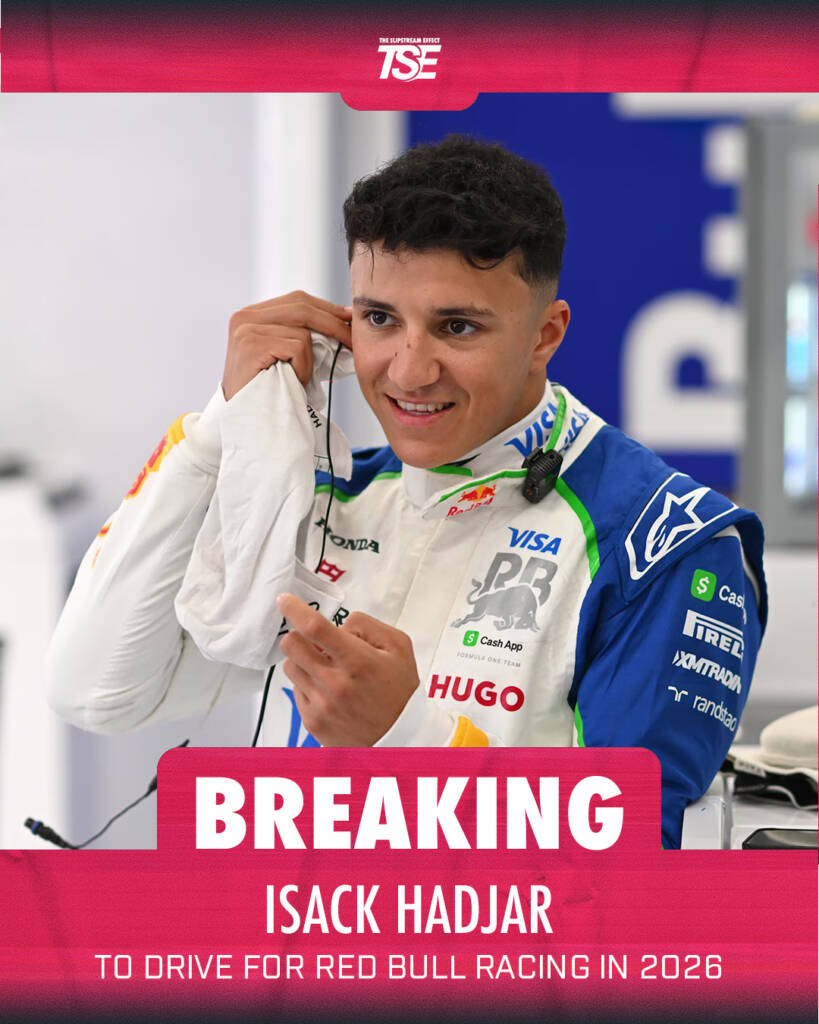
Isack Hadjar’s season began with heartbreak in Melbourne after he spun on the formation lap and walked back to the garage in tears, but his response to that moment set the tone for the rest of his rookie year. He rebuilt quickly, delivered points in ten Grands Prix and grabbed his first F1 podium in Zandvoort with a calmness that caught Red Bull’s attention.
Across the entire season he displayed the qualities Red Bull value most. He learned fast. He remained aggressive without being reckless. He showed natural speed in both qualifying and race conditions and developed the confidence to manage wheel-to-wheel fights with experienced rivals. His qualifying head-to-head against Lawson was dominant and his consistency in long runs impressed the engineers.
For Red Bull, this was enough. They saw no need to delay. The team believes Hadjar will grow faster by learning directly next to Verstappen rather than spending another year in the junior squad. It is a high pressure environment, but that intensity is part of the Red Bull identity. Prove yourself early and the rewards arrive quickly.
A star in the making: why Lindblad gets the nod
Arvid Lindblad has been one of Red Bull’s longest planned investments. They picked him up as a child, monitored his karting rise and fast tracked him through single seaters with an increasingly clear goal. Everything about his development has been built around readiness for Formula 1.
In 2024 he delivered one of the most memorable moments in junior racing when he carved through half the grid at Silverstone in mixed conditions. This year he gained more attention with sharp FP1 outings at Silverstone and Mexico. His feedback, composure and raw one-lap pace immediately impressed both the engineers and senior management.
Lindblad has not fought for the F2 title this year, but that was not the priority. Red Bull were focused on how he handled pressure, how he adapted to more powerful machinery and how he communicated with the team. The answer across all metrics was positive.
At eighteen, he becomes one of the youngest drivers to debut for a Red Bull affiliated team. He joins Lawson at Racing Bulls in a pairing that combines stability and future potential.

Why Lawson won the final Racing Bulls seat
Liam Lawson went into 2025 knowing he needed to prove himself again after losing his Red Bull seat earlier in the season. Red Bull wanted to see if he could respond with resilience, and he did exactly that. His consistency improved, his qualifying became sharper and his performances under tricky conditions stood out.
Racing in Baku, Las Vegas, Austria and Japan demonstrated a level of maturity that convinced the decision makers he is worth retaining. He has shown he can develop the car, provide stable feedback and deliver points when opportunities arise.
His growth over the season pushed him ahead of Tsunoda in the final evaluation. Red Bull want a dependable foundation at Racing Bulls for 2026 and Lawson provides exactly that.

What the reserve role means for Tsunoda
Yuki Tsunoda moves out of a race seat for the first time since joining AlphaTauri (now Racing Bulls) in 2021. His personality, energy and connection with fans made him one of the grid’s biggest characters, but his on-track performances this year were not strong enough across the full season.
He struggled to match Verstappen in the senior team. His pace deficit in qualifying was too large and his points tally too low for Red Bull’s standards. Even with flashes of brilliant speed, the overall trend pointed in the wrong direction.
However, Red Bull still value him. The organisation is keeping him deeply involved as reserve for both teams. It gives him time to regroup while maintaining visibility, access to development work and the potential to step back into a seat if opportunities arise mid-season. It also keeps him within reach of a possible future move with Honda’s incoming Aston Martin project.

Verstappen’s role in the reset
Max Verstappen remains at the heart of the project. With a contract running to 2028 and a decade of experience at the team, he becomes the anchor around which the new structure is built. Red Bull wanted a line-up that complements his style and accelerates their performance through the 2026 regulation shift.
Hadjar brings raw speed and the motivation of a newcomer. Verstappen brings guidance, race craft and unmatched consistency. Together they provide a blend of youth and experience that Red Bull believes will help them adapt quickly to the new cars.
Why Red Bull chose this moment to restructure everything
The 2026 regulations redefine almost every aspect of car behaviour. New aero principles, hybrid changes, active aero systems and broader power unit shifts mean that teams expect unpredictable performance swings.
Red Bull want drivers who are young enough to adapt, technically sharp enough to learn new behaviours quickly, and experienced enough to manage complex race situations. Their new structure gives them:
- A proven champion
- A rising talent with elite potential
- A consistent second team leader
- One of the brightest young drivers in the sport
- A reserve driver with five seasons of experience
It is the most balanced and future focused line-up they have fielded in years.
The wider impact on the F1 grid
Red Bull’s reset finalises the 2026 grid and sets the tone for how teams will approach the new regulations. It shifts the competitive landscape across both driver markets and team strategies. Lindblad’s debut reinforces Red Bull’s commitment to youth. Hadjar’s promotion confirms that rookies can rise fast if they hit the level early. Lawson’s retention shows Red Bull still rewards consistency. Tsunoda’s step back sends a reminder that performance always decides in the end.
With Cadillac joining and several teams expecting huge performance swings under the new rules, this reset may end up defining the next era of Red Bull dominance or setting the stage for a completely reshaped competitive order.
Red Bull have chosen who they believe will lead them through the turbulence. Now the pressure is on to prove they chose correctly.