


Formula 1 returned to Shanghai with a single hour of practice and very little room for error, and by the end of it Mercedes looked just as sharp as they had in Melbourne. George Russell topped the only practice session of the Chinese GP with a 1:32.741, finishing ahead of team-mate Kimi Antonelli and reinforcing the sense that the Silver Arrows have arrived in 2026 with the strongest all-round package on the grid. Antonelli was just 0.120s back, while Lando Norris ended the session third for McLaren.
With Sprint Qualifying coming later on Friday, the stakes of that opening session were higher than a normal FP1. Teams only had sixty minutes to understand a very different circuit to Albert Park, work out tyre behaviour, manage energy deployment and commit to setup choices before the weekend moved straight into competitive running. That makes clean preparation invaluable, and no team handled that transition better than Mercedes in the opening phase of the Chinese GP.
Mercedes the team to beat
If Australia hinted that Mercedes might have the early advantage under the new regulations, the first hour of running in Shanghai did little to challenge that view. Russell looked comfortable from the start, and more importantly, he never gave the impression that he was forcing the lap time out of the car. The balance looked settled, the tyre behaviour looked predictable, and the car appeared compliant through the long, demanding corners that define this circuit.
Antonelli’s pace added even more weight to that impression. The Italian ended the session second and stayed close enough to Russell to suggest Mercedes are not relying on one driver producing something exceptional. Instead, both cars looked naturally fast. On a Sprint weekend, that matters because there is less time to chase a solution if the baseline is not right. Mercedes already seem to have theirs. Russell’s margin over the nearest non-Mercedes car was more than half a second, which is a significant gap however early in the weekend it may be.
McLaren and Ferrari still in the conversation
The picture behind Mercedes was more nuanced. McLaren ended the session as the closest challenger on paper, with Norris third and Oscar Piastri fourth, but their hour felt less tidy overall. Both drivers had moments where the car looked unstable, especially through the opening complex, and while the final times were respectable, the underlying impression was that McLaren still have work to do to feel fully in control of this package. Reuters reported that both Norris and Piastri struggled with rear-end instability through Turn 1, which fits with how the session unfolded on track.
Ferrari, meanwhile, were more difficult to read. Charles Leclerc and Lewis Hamilton finished fifth and sixth, but their session carried more of an experimental feel than an all-out chase for headline pace. Hamilton’s run was interrupted by an early spin and minor contact with Norris, while Leclerc’s pace came in flashes rather than across a completely clean programme. Formula 1’s official report also placed Leclerc fifth behind the two Mercedes and two McLarens at the end of the session.
Even so, Ferrari did not look out of the fight. If anything, the Chinese GP practice session suggested they remain close enough to capitalise if Mercedes falter later in the weekend. The issue is that close enough is not the same as equal, and right now that final step still appears to belong to the Silver Arrows.
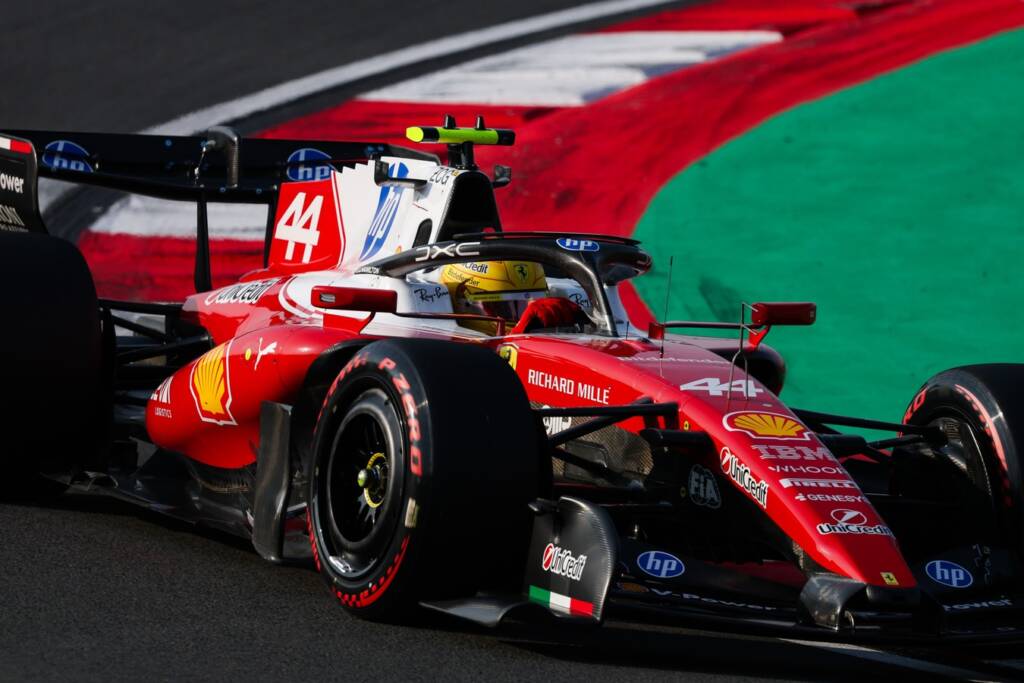
Ferrari’s rear wing remains a fascinating subplot
One of the more interesting technical stories of the Chinese GP so far has been Ferrari’s continued use of its alternative rear-wing concept in Shanghai. The track’s long straights make efficiency especially valuable here, so this was always going to be one of the weekends where Ferrari would want to assess whether that solution can genuinely shift the balance in their favour.
That did not make the session easy to interpret. When a team is evaluating a visible technical development during the only practice hour of a Sprint weekend, the lap times rarely tell the full story. Ferrari were not simply chasing performance in isolation. They were also trying to understand how that concept behaves in braking zones, through transitions and under different deployment patterns. That makes their fifth and sixth places less straightforward than they look, but it also means they head into Sprint Qualifying with less certainty than Mercedes.
Red Bull on the back foot
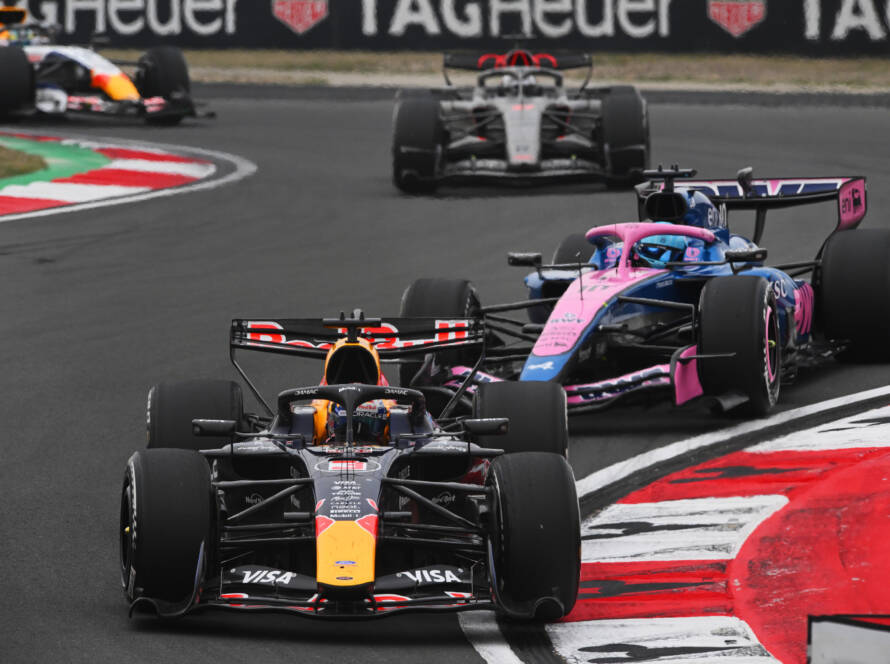
If there was one leading team that came away from the session with more questions than answers, it was Red Bull. Max Verstappen could only manage eighth, finishing 1.800s off Russell’s benchmark, while Isack Hadjar ended the session down in thirteenth. For a team expected to be in the front-running mix, that was a subdued start to the Chinese GP weekend.
Practice sessions always need context, especially on a Sprint weekend where run plans can vary significantly, but Red Bull never looked entirely comfortable. Verstappen did not appear to find a clean rhythm, and Hadjar’s session felt fragmented as well. That does not mean they are destined to stay there, but it does mean they have more ground to recover than Mercedes, Ferrari or McLaren before Sprint Qualifying begins.
A tight midfield battle is taking shape
One of the clearest themes of the Chinese GP practice session was just how competitive the midfield already looks. Oliver Bearman continued the good impression he made in Australia by putting Haas solidly into the mix, and although he spun late in the session, the overall pace was encouraging. Reuters noted that Bearman outpaced Verstappen during the session, which underlines both Haas’ strength and Red Bull’s relative lack of performance in that opening hour.
Audi also looked capable of getting involved in the fight for the lower end of the top ten, while Alpine and Racing Bulls showed enough pace to suggest this group could remain tightly packed all weekend. On a circuit like Shanghai, where overtaking opportunities exist but confidence in the car still matters enormously, that midfield battle could become one of the more compelling storylines of the Chinese GP.
Reliability troubles hit at the worst time
The biggest losers from the session were the drivers and teams who lost running, because on a Sprint weekend every lap carries more value than usual. Arvid Lindblad completed just six laps before stopping on track with a mechanical issue, ending his session early and denying Racing Bulls crucial data before Sprint Qualifying. Reuters reported that the rookie’s problem significantly limited his running, which is especially damaging at a circuit where he has little experience.
Carlos Sainz also lost time after a data issue kept him in the garage for much of the session, only returning later to salvage some mileage. Under a normal format, those interruptions would be frustrating but manageable. During the Chinese GP Sprint weekend, they carry much greater weight because there is no second or third practice session to rebuild confidence or correct mistakes. Teams that lost time on Friday morning may feel the consequences for the rest of the weekend.
Sprint Qualifying now carries even more weight
The opening hour in Shanghai did not settle the weekend, but it did sharpen the outline of it. Mercedes still look like the reference point, with Russell and Antonelli once again setting the standard at the front. McLaren and Ferrari remain in touch, but neither appears fully settled yet, while Red Bull already look to be playing catch-up.
That is what makes the next session so important. Sprint Qualifying will not just decide the grid for Saturday’s Sprint, it will also reveal which teams understood the demands of the Chinese GP quickest and which are still trying to make sense of their cars. On a weekend with so little preparation time, Friday can shape everything. Right now, Mercedes look best placed to take advantage.

1 Comment