Every winter, Formula 1 promises a period of quiet preparation. And every winter, secrecy in Formula 1 quietly unravels as something meant to stay hidden slips into public view.
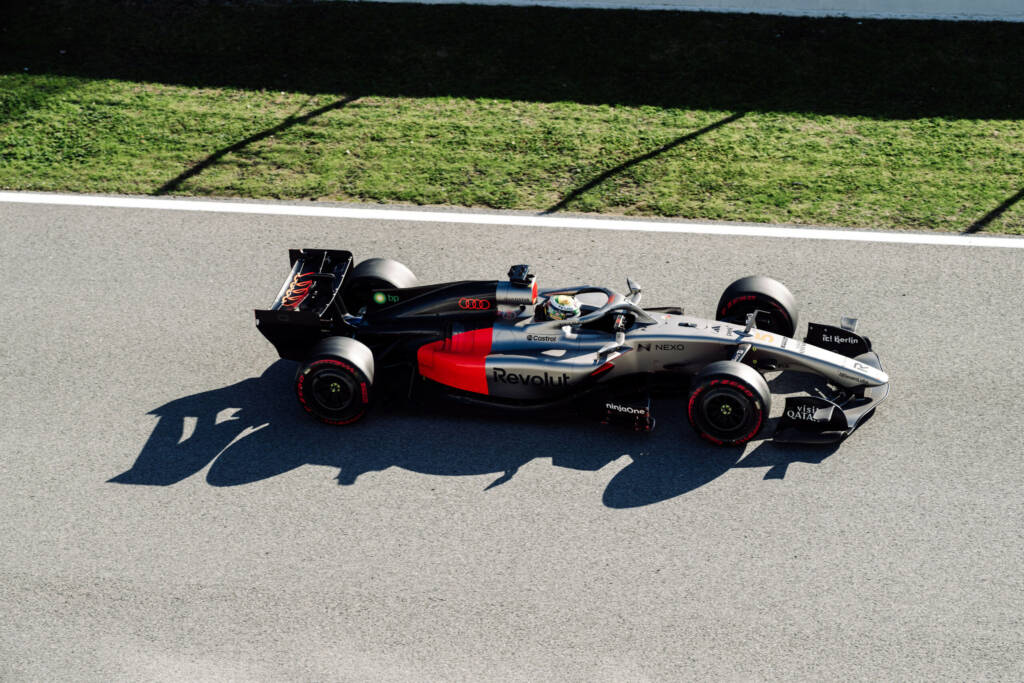
The recent Barcelona shakedown, intended as low-key running ahead of official testing in Bahrain, became the latest reminder that secrecy in Formula 1 is increasingly difficult to maintain. In today’s sport, visibility is unavoidable, even when silence is intended.
The illusion of the hidden test
Pre-season shakedowns are often described as private or discreet. In reality, they are carefully managed rather than genuinely hidden. The Barcelona running followed a familiar pattern: minimal public comment, controlled access and an expectation that little would leak out.
Yet photos, eyewitness accounts and speculation quickly spread. What teams call “secret” is often better understood as “unofficial”, not unseen. In modern Formula 1, secrecy is rarely absolute.
When formula 1 moved into the public eye
There was a time when teams could test for days with little outside attention. Fewer cameras, fewer channels and slower information flow allowed secrecy to act as a competitive shield. That world no longer exists.
Formula 1 now operates in an environment of constant documentation. Fans, photographers and local observers capture moments that once went unnoticed, and those moments reach a global audience in seconds.
Technology changed what secrecy means
The shift is not driven by intent alone, but by technology. Smartphones, high-resolution lenses and social platforms have transformed every circuit into a public space, even during moments that were once considered private. A car leaving the garage, completing installation laps or stopping at the end of the pit lane is no longer an isolated event observed by a handful of people.
Even when no lap times are shared, the mere presence of a car on track becomes information. Images are analysed, bodywork is scrutinised and assumptions are made long before teams offer any explanation. In this environment, secrecy has become almost impossible to enforce, not because teams are careless, but because visibility is now built into the sport itself.
Why teams still perform the ritual of secrecy
Despite this reality, teams continue to frame early running as private. This is not denial, but strategy. By downplaying activity, teams limit expectation and control narrative. Appearing unremarkable can be useful.
If rivals see a car running without context, uncertainty grows. The lack of clarity can be more valuable than silence. Secrecy now operates as psychological misdirection rather than physical concealment.
What can still be hidden and what cannot
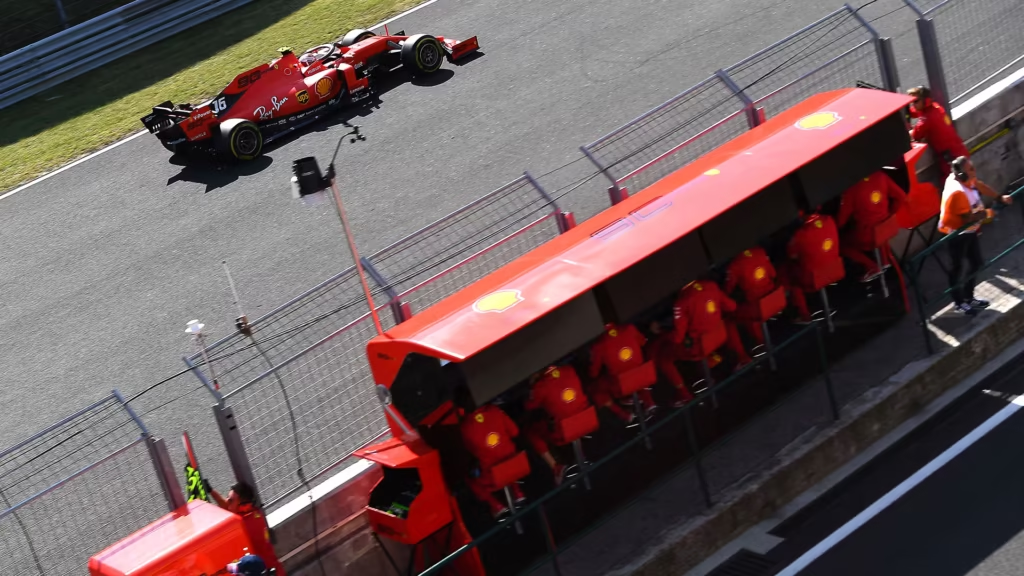
Visual elements are easy to spot. Bodywork shapes, ride heights and aerodynamic concepts are photographed, analysed and shared within minutes of a car running on track. Once a car leaves the garage, secrecy in Formula 1 already starts to erode at the surface level.
What remains hidden is meaning. Data, correlation, fuel loads and intent are invisible to anyone outside the team. A slow lap could signal caution, experimentation, cooling checks or deliberate disguise. Without access to context, visibility creates noise rather than understanding.
This is where secrecy in Formula 1 has shifted. Teams are no longer protecting what can be seen, but what cannot be interpreted. The real advantage lies not in hiding the car, but in controlling how its behaviour is understood once the cameras are already watching.
What this means for fans ahead of Bahrain
For fans, early sightings are irresistible, but often misleading. A shakedown is not a performance statement. It is a systems check, a confidence builder and a quiet step towards official testing.
The Barcelona running revealed cars, not competitiveness. As Bahrain approaches, the challenge is separating visibility from value. In modern Formula 1, everything can be seen, but secrecy in Formula 1 now lies in understanding, not concealment.
In that sense, secrecy in Formula 1 no longer depends on hiding cars or limiting access, but on controlling interpretation in a sport where visibility is unavoidable.