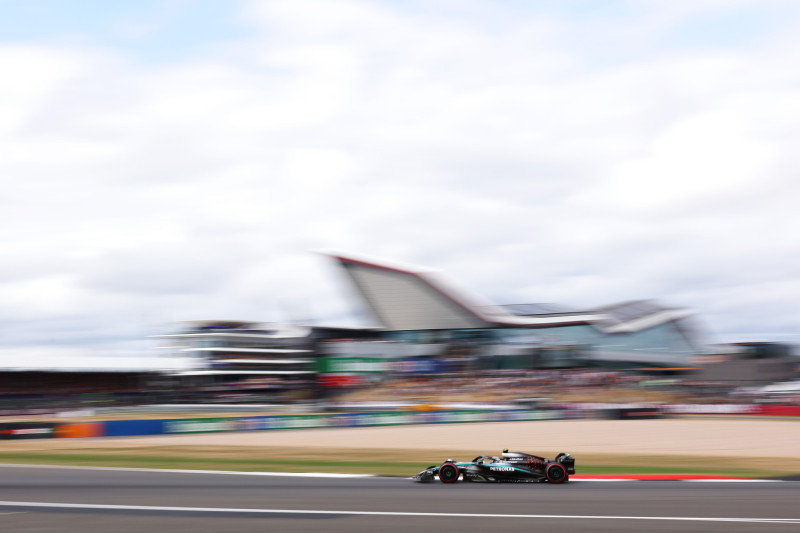
Silverstone is one of the fastest circuits on the calendar. Its layout shapes almost every strategic decision teams will make. Built on a former Royal Air Force bomber station, the 5.891 km track features 18 high-speed turns that dictate the flow of the entire grand prix. The lap opens with Abbey (Turn 1) and Farm (Turn 2) before feeding into the Village–Loop–Aintree sequence (Turns 3–5), a slow, technical pocket that contrasts sharply with the speed that follows. From there, the circuit stretches into Brooklands (Turn 6), Luffield (Turn 7), and Woodcote (Turn 8) before unleashing the car into its defining high‑speed personality.
The circuit’s open-airfield design exposes drivers to shifting crosswinds, while the surface is smooth and high-grip and the long corners generate significant tyre load. Together, these elements create the strategic backdrop teams have to work within.
The tyre story beneath Silverstone
Tyre wear is one of the defining features of a Silverstone race. The circuit’s long, high-speed corners create a constant tyre load, which is the amount of force a tyre is carrying as the car turns, brakes, or accelerates. In particular, the front-left tyre is stressed through eight different right-hand corners. The tyres work hard here, and teams need to manage that load to stay competitive. With Pirelli bringing the hardest compounds and expecting a one‑stop to be viable, teams will need to manage heat and stability through the big sequences. Much of the race becomes a balance between speed and preservation through Silverstone’s long, fast sections.
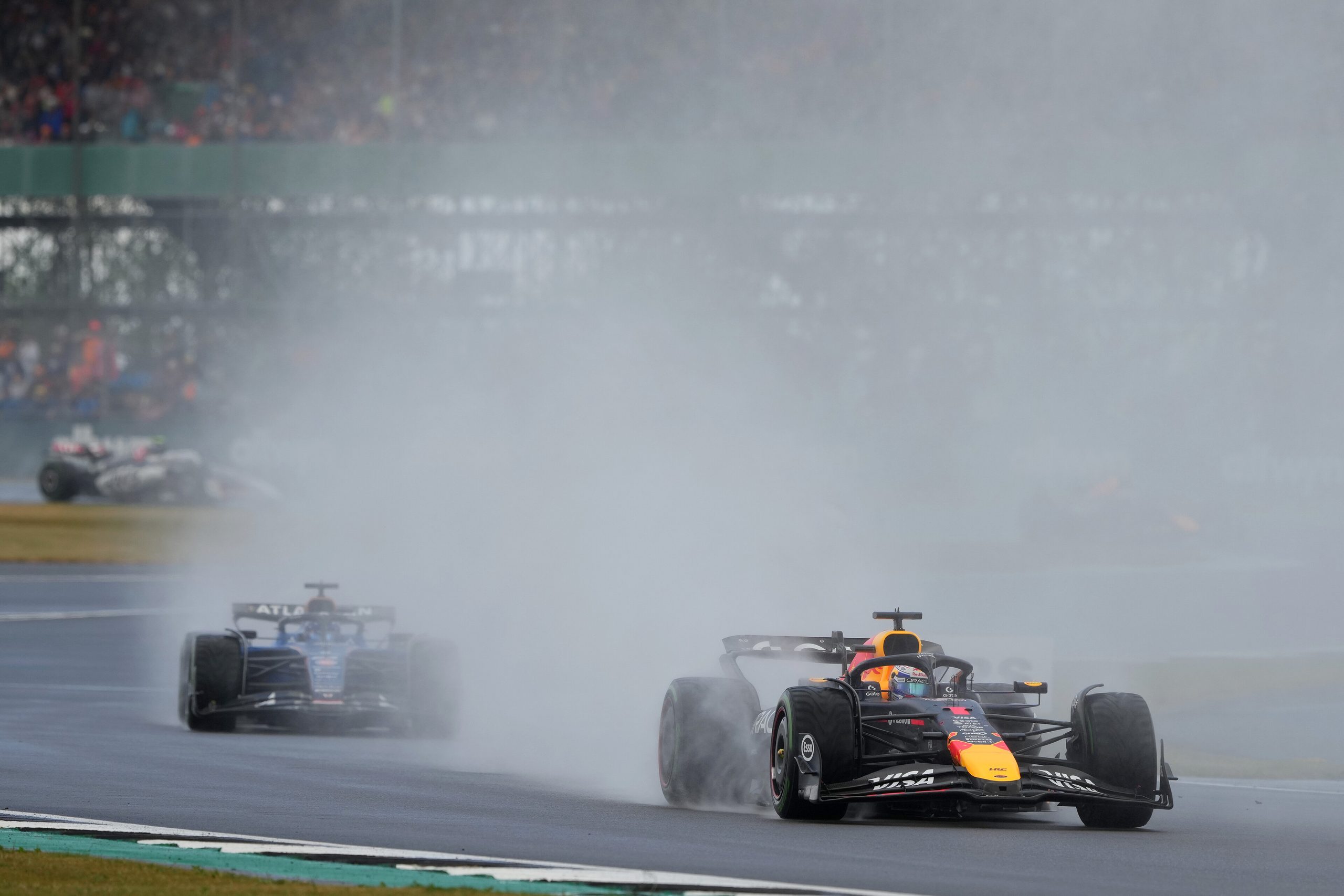
As Silverstone sits on an open airfield, conditions can shift quickly. Tailwinds can push the car into high-speed sections faster, but in an unstable fashion. A headwind will slow drivers on the straights, but gives drivers more confidence under braking. Even small changes in direction can alter a car’s balance, forcing teams to adjust targets and expectations throughout the weekend. Wind affects how aggressively teams can run their stints. As the wind picks up, cornering speeds rise and tyre load increases. At this point, strategy is focused on staying ahead of those shifts rather than reacting to them.
Where strategy meets chaos
Silverstone has a long history of safety‑car and VSC interruptions, largely because of its speed. When mistakes happen here, they tend to be costly, and incidents often occur in places where recovery is difficult. Fast corners like Copse (Turn 9) and Stowe (Turn 15) , or the rapid direction changes through Maggotts–Becketts–Chapel (Turns 10-14), leave little margin for error. Teams know this, so they avoid committing to rigid pit windows. A safety car can turn an early stop into a gift or leave a driver stranded on worn tyres. The timing matters: a neutralisation just before the pit window can offer a free stop, while one immediately after can trap cars on the wrong compound. Silverstone rewards teams who anticipate volatility rather than react to it.
Fresh tyres are powerful at Silverstone, which keeps both the undercut and the overcut in play. The undercut is usually king here because fresh tyres give an instant speed boost through the high-speed sections. The overcut is rare, only working if it’s cold enough that a rival struggles to get their new tyres up to temperature on their first lap out of the pits. Temperature, wind, and safety‑car timing all influence which approach becomes stronger. Silverstone rarely gives teams a straightforward answer; it’s a circuit where the right call often depends on reading the race as it unfolds.
Holding power, holding pace
Silverstone’s long full‑throttle sections make ERS management a quiet but important part of the race. Drivers use electrical energy to build momentum into the high‑speed corners, but every burst of deployment has a cost. The battery needs time to recover, and Silverstone doesn’t offer many natural recharge points. The braking zones are short, and the lap flows quickly, so it’s easy for a driver to drain their energy without realising it. This creates a rhythm to the race. A driver who spends too much ERS defending into Stowe may find themselves exposed on the next lap into Club. Someone who attacks through Chapel might arrive at Club with nothing left to finish the move.
Teams build their strategy around these moments. A well‑timed deployment can set up an overtake at Stowe or protect a position through the final sector. A poorly timed one can leave a driver vulnerable for half the lap. Silverstone rewards those who treat energy as part of the how they manage the battle, not just a button press. And once that energy is spent, the circuit channels the fight into a few key places.
Silverstone offers several places where drivers can make moves, and those zones shape how teams plan their stints. Stowe is the main overtaking point thanks to the long run from Hangar Straight. Village (Turn 4) allows late‑braking moves after the loop complex. Club (Turn 18) often decides close battles at the end of the lap. Depending on where their car is the strongest and how the race evolves, teams build their strategies around these moments: shorter stints to attack, longer stints to defend. All of it feeds into the same truth: Silverstone is a circuit that tests every part of a team’s approach.
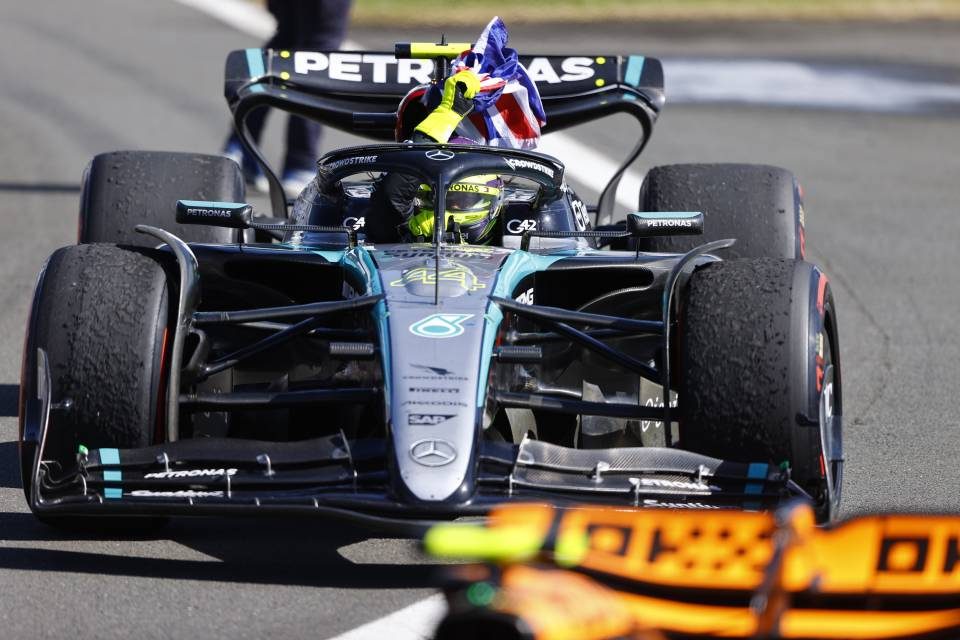
Silverstone remains the ultimate test of high-speed chess. It is a circuit where the fundamentals matter: tyre load, wind, safety‑car timing, pit strategy, and overtaking zones. It’s fast, it’s flowing, and it demands total adaptability. When the lights go out, the teams that master the thermal degradation, outguess the wind, and stay fluid in the chaos are the ones who will find the podium.