The Belgian GP has always represented more than another stop on the Formula 1 calendar. Spa-Francorchamps occupies a unique place within the sport, combining history, technical complexity and an unpredictability that few circuits can match. Drivers consistently describe it as one of the greatest challenges of the season, not simply because of iconic corners such as Eau Rouge, Raidillon and Pouhon, but because every lap demands complete commitment. Success at Spa has never been determined by outright pace alone. It rewards confidence, adaptability and teams capable of reacting to changing circumstances faster than anyone else.
This year’s visit to Belgium arrives carrying even greater significance. Formula 1 heads into the tenth round of the championship with momentum shifting at the front of the field and the competitive picture looking dramatically different to the one that emerged during the opening races. Mercedes remain at the top of both championships, yet the authority they established earlier in the season has begun to weaken. Ferrari have steadily developed into genuine title contenders, Red Bull continue searching for consistency after another frustrating run of weekends, and discussions surrounding the 2027 driver market have become impossible to ignore. With only Belgium and Hungary remaining before the summer break, the next fortnight could define both the remainder of the championship and the direction many teams choose for the future.
Spa has often been the stage for Formula 1’s biggest turning points. World championships have swung here, careers have been transformed and strategies have unravelled in conditions that can change from one corner to the next. There is little reason to believe this weekend will be any different. Instead, everything points towards another race where performance, reliability and decision-making may prove equally important.
A championship that suddenly feels far more competitive
Only three races ago, the Drivers’ Championship appeared to be firmly under Kimi Antonelli’s control. The Mercedes rookie had established himself as the outstanding performer of the opening phase of the season, building a remarkable sequence of victories that allowed him to open a commanding advantage over the rest of the field. His pace was relentless, his confidence continued growing every weekend, and Mercedes looked comfortably ahead of every rival. At that stage, the biggest question seemed to be whether anyone would be able to sustain a meaningful title challenge before the second half of the year.
The picture today is considerably more complicated. Antonelli still arrives at the Belgian GP leading the standings, but the margin separating him from his closest rivals has reduced significantly. Mechanical failures in Barcelona and Silverstone prevented him from capitalising on weekends where he possessed genuine race-winning pace, allowing both George Russell and Lewis Hamilton to close the gap. His lead now stands at 25 points, still healthy, but small enough that a single difficult weekend could transform the championship conversation entirely.
Perhaps the most encouraging aspect for Mercedes is that none of those lost points have resulted from a lack of outright speed. Antonelli has remained one of the fastest drivers almost everywhere Formula 1 has visited this season, regularly demonstrating exceptional tyre management alongside the raw pace that made his five consecutive victories possible. Instead, reliability has become the team’s biggest concern. In modern Formula 1, outright performance offers little comfort if mechanical problems continue interrupting race weekends, and Mercedes know they can no longer afford to surrender points through failures while Ferrari continue closing the gap.
George Russell has played an equally important role in tightening the championship battle. After an inconsistent start to the season, the Briton has produced some of his strongest performances since joining Mercedes, combining pole positions with race victories and reminding everyone why he remains one of the grid’s finest qualifiers. His performances have also added another layer to Mercedes’ challenge. Managing two drivers capable of winning races is an enviable position, but as the championship becomes increasingly competitive, every battle between teammates carries greater significance. Spa’s layout, with multiple overtaking opportunities and long periods spent racing wheel-to-wheel, could provide another fascinating chapter in what is rapidly becoming Formula 1’s defining intra-team rivalry.
Spa offers a completely different challenge
Every Formula 1 circuit asks different questions of both drivers and engineers, but few demand as many compromises as Spa-Francorchamps. Measuring over seven kilometres, it remains the longest lap on the calendar, forcing teams to balance conflicting aerodynamic priorities that simply do not exist elsewhere. Straight-line speed is essential along the Kemmel Straight, yet excessive compromises quickly become costly through the flowing middle sector, where maintaining stability and confidence through high-speed corners can make the difference between fighting for pole position and starting several rows further back.
The circuit’s elevation changes add another unique dimension. The climb through Eau Rouge and Raidillon remains one of motorsport’s defining sequences, even in an era where Formula 1 cars possess unprecedented levels of downforce. Further around the lap, Pouhon continues to reward commitment more than almost any other corner on the calendar, while Blanchimont remains one of the fastest tests of driver confidence in world motorsport. Together, they create a circuit where mechanical balance, aerodynamic efficiency and driver bravery must all work in harmony.
Weather only amplifies that complexity. Spa’s location deep within the Ardennes Forest has produced countless unpredictable weekends throughout Formula 1 history, with rain often affecting one section of the circuit while another remains completely dry. Early forecasts once again suggest that possibility cannot be ruled out this weekend. Should conditions become mixed, teams will face an additional challenge because the 2026 generation of Formula 1 cars has seen remarkably little competitive running in wet conditions. Most engineers therefore possess limited real-world data regarding tyre behaviour, setup choices and race strategy, increasing the likelihood that instinct and adaptability become just as valuable as simulation models.
That uncertainty makes Belgium particularly difficult to predict. Unlike circuits where outright pace usually determines the competitive order, Spa regularly rewards teams capable of making better operational decisions. Choosing the correct tyre at precisely the right moment or reacting more quickly to changing conditions has often proven enough to swing races, and with the championship becoming increasingly close, those decisions may carry even greater importance this season.
Ferrari have become genuine championship contenders
While Mercedes remain the benchmark, Ferrari arrive in Belgium arguably carrying more momentum than any other team. Lewis Hamilton’s victory in Spain initially appeared to represent an overdue breakthrough after an inconsistent start to life with the Scuderia, but recent performances have demonstrated that Ferrari’s progress extends far beyond a single strong weekend. Charles Leclerc’s commanding victory at Silverstone, combined with Hamilton’s continued presence at the front, has firmly established Ferrari as a team capable of challenging Mercedes on merit rather than simply capitalising on isolated mistakes.
The most impressive aspect of Ferrari’s resurgence is its versatility. Barcelona rewarded tyre preservation and long-run pace, while Silverstone demanded aerodynamic efficiency through sweeping high-speed corners. Ferrari looked competitive at both, suggesting the SF26 has developed into one of the most complete packages on the grid. That evolution is particularly encouraging ahead of Spa, where success depends on finding an effective compromise between low drag and stable high-speed handling. Recent evidence suggests Ferrari now possess the technical flexibility required to remain competitive regardless of circuit characteristics.
Hamilton’s adaptation to Ferrari has also accelerated noticeably over recent races. Earlier in the season, there were still moments where he appeared to be searching for complete confidence in the car, particularly over a single qualifying lap. Those doubts have gradually disappeared. His performances now resemble those of a driver fully comfortable extracting the maximum from his machinery, while Leclerc continues delivering the consistency expected from one of Formula 1’s fastest qualifiers. Together, they have transformed Ferrari from hopeful challengers into legitimate title contenders.
Momentum can be difficult to quantify, yet it often shapes championships. A few weeks ago, Ferrari arrived at race weekends hoping Mercedes might leave the door open. They now travel to Spa believing they have the pace to beat them outright. That psychological shift may ultimately prove just as valuable as any aerodynamic upgrade.
Mercedes have the pace, but can they finally put together a complete weekend?
While Ferrari’s upward trajectory has become one of the defining stories of recent races, Mercedes still arrive in Belgium as the benchmark. The W17 has consistently been one of the quickest cars across a wide range of circuits, giving both Antonelli and Russell opportunities to fight for victories almost every weekend. The concern inside Brackley is not whether the car is fast enough. It is whether the team can finally deliver a flawless weekend from Friday to Sunday.
Reliability has become the uncomfortable topic surrounding Mercedes’ championship campaign. Antonelli’s retirements in Spain and Silverstone both came when he looked capable of scoring heavily, costing him valuable points at a time when Ferrari were beginning to gather momentum. Those setbacks have reduced what once appeared to be an almost insurmountable championship lead into one that now feels vulnerable. It is a reminder that championships are rarely won by the fastest car alone. Consistency remains just as valuable, particularly during the middle phase of a season when every retirement carries greater weight.
Spa will also provide another examination of Mercedes’ approach to managing its drivers. The battles between Antonelli and Russell have become increasingly frequent over recent races, most notably in Canada, where the pair spent much of the Grand Prix fighting wheel-to-wheel before Russell’s retirement denied fans what could have been one of the drives of the season. Toto Wolff has repeatedly insisted both drivers remain free to race, believing that allowing them to compete naturally benefits both the team and the championship. That philosophy has worked so far, but the closer the standings become, the more difficult those decisions are likely to become.
Russell, meanwhile, arrives with quiet confidence. Few drivers understand Spa better than the Briton, whose combination of aggressive qualifying pace and measured race craft has repeatedly produced strong performances at demanding circuits. Having steadily reduced the gap to Antonelli in recent weeks, another victory in Belgium would not simply strengthen his own championship ambitions. It would fundamentally alter the internal dynamic at Mercedes heading into the second half of the season.
Red Bull continue searching for consistency
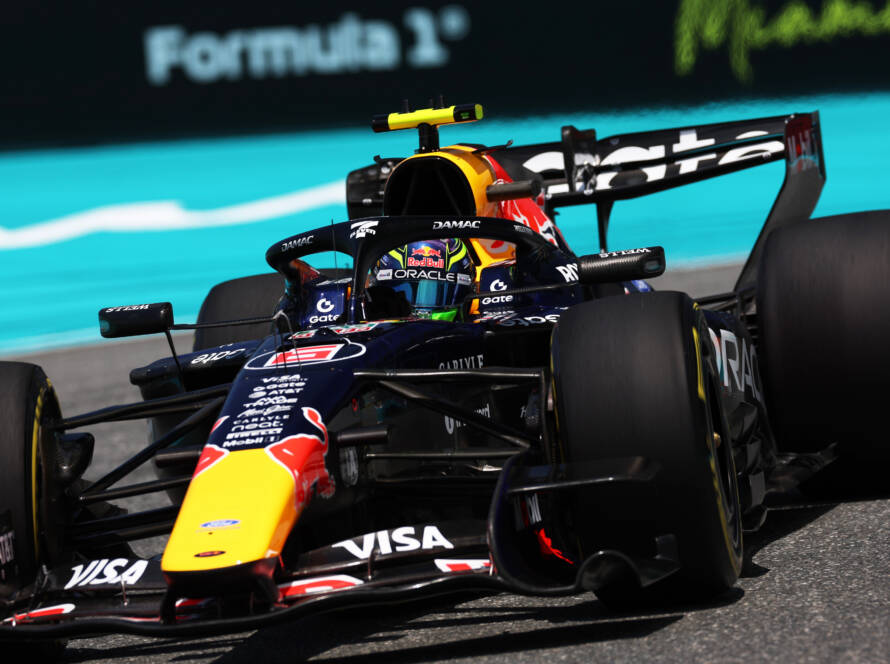
Red Bull’s challenge entering the Belgian GP feels very different to that of either Mercedes or Ferrari. The team’s outright pace has rarely looked disastrous during 2026, but converting that speed into consistent results has proven significantly more difficult. One encouraging weekend has often been followed by another frustrating setback, preventing Max Verstappen from building the sustained momentum required to launch a realistic championship challenge.
Austria appeared to mark a turning point. Verstappen looked increasingly comfortable with Red Bull’s latest upgrades and finally seemed capable of matching the leading Mercedes over a race distance. That optimism lasted barely a week before technical issues and another difficult weekend at Silverstone once again shifted the focus away from performance and towards reliability. For a team accustomed to setting the standard, it has been an unfamiliar position to occupy.
Spa, however, remains one of Verstappen’s strongest circuits. The combination of high-speed commitment and technical precision has suited his driving style throughout his Formula 1 career, and few drivers attack Eau Rouge, Raidillon or Blanchimont with greater confidence. If Red Bull have genuinely solved the issues that limited them at Silverstone, Belgium could provide their best opportunity yet to return to the fight for victory. Equally, another disappointing weekend would raise further questions about whether the RB22 has simply fallen too far behind its principal rivals.
The other encouraging story inside Red Bull continues to be Isack Hadjar. The French rookie has adapted impressively to Formula 1, showing flashes of genuine pace while gradually reducing the mistakes that inevitably accompany a first season. His development has perhaps gone slightly unnoticed amid the attention surrounding Verstappen, yet Red Bull will be pleased by the progress he has made. Another strong weekend at one of Formula 1’s most demanding circuits would represent another important milestone in his development.
The paddock battle extends well beyond the racetrack
Not every significant story in Belgium will unfold between the white lines.
As Formula 1 approaches the summer break, attention inevitably begins shifting towards the following season. This year, however, those discussions carry even greater significance because so many important decisions remain unresolved. The 2027 driver market is still remarkably fluid, with several teams yet to confirm their long-term line-ups and numerous experienced drivers weighing up their futures.
Much of that uncertainty continues to centre around Max Verstappen. Rumours linking the four-time World Champion with a move away from Red Bull have refused to disappear despite repeated attempts from both Red Bull and McLaren to cool speculation. Publicly, everyone continues to insist there is little substance behind the reports. Privately, few believe the story will truly disappear until Verstappen confirms where he intends to race next season.
His decision extends far beyond a single driver changing teams. A move involving Verstappen would inevitably trigger one of the biggest driver market reshuffles Formula 1 has experienced in years. Teams currently negotiating extensions may delay final decisions while waiting to see whether unexpected opportunities emerge elsewhere, creating uncertainty throughout both the front of the grid and the midfield.
Fernando Alonso also remains an important figure in those conversations. Although Aston Martin have remained relatively quiet regarding their future plans, Alonso’s experience and continued competitiveness ensure any decision he makes will influence several other drivers. Belgium and Hungary therefore represent more than simply the final races before Formula 1 pauses for the summer. They may become the weekends during which the foundations of the 2027 grid are quietly established behind the scenes.
Belgium could become another defining moment in the championship
One of the reasons Spa-Francorchamps remains so highly regarded is its ability to produce races that continue influencing a season long after the podium celebrations have ended. Championships have repeatedly swung in Belgium through changing weather, strategic gambles or moments of individual brilliance, and there is little reason to expect 2026 to behave differently.
For Mercedes, the objective is straightforward. They need to combine the pace they have demonstrated throughout the season with the reliability that has recently deserted them. Antonelli remains the championship leader, but another weekend compromised by mechanical issues would hand fresh encouragement to Ferrari while allowing Russell to close further from within his own garage.
Ferrari, meanwhile, have an opportunity to confirm that their recent performances represent the beginning of a sustained title challenge rather than simply a strong sequence of races. Victory in Belgium would further strengthen the belief that the Scuderia have finally produced a package capable of fighting for championships once again, while another podium would maintain the pressure on Mercedes heading into Hungary.
Red Bull’s priorities are perhaps even simpler. The team need a clean weekend. They have shown enough pace to suggest they belong in the fight at the front, yet too often operational problems, reliability concerns or setup difficulties have prevented Verstappen from converting potential into results. Spa offers another opportunity to reset before the championship reaches its decisive phase.
The Belgian GP therefore arrives at exactly the right moment. Momentum is shifting, confidence is changing hands, and the margins separating the leading teams have become smaller with every passing weekend. Add Spa’s unique ability to reward bravery, punish mistakes and produce unpredictable conditions, and all the ingredients are present for another memorable chapter in what is becoming one of Formula 1’s most compelling seasons in recent years.
When the chequered flag falls on Sunday afternoon, there will still be fourteen Grands Prix remaining. Yet it would be surprising if the paddock left Belgium believing this was just another race. Whether through the championship battle, the driver market or the competitive order at the front of the field, Spa has a habit of changing the direction of a season. The 2026 Belgian GP feels perfectly positioned to do exactly that.