


On the Sunday after the 2022 United States Grand Prix, FIA steward Silvia Bellot became the answer to a question nobody likes to ask out loud. The question: what actually happens to the people who make an unpopular call in Formula One. Bellot sat on the panel that reinstated Fernando Alonso to seventh place after the race in Austin. In the day that followed, she received death threats, despite the decision having come from a full panel rather than her alone. Her case became the reason the FIA launched the United Against Online Abuse campaign two years later.
Where the campaign began
She was not the first, and the problem was not new even then. Former Race Director Michael Masi received death threats after the contested 2021 Abu Dhabi finale. Nicholas Latifi, whose late crash triggered the safety car that decided that race, was targeted so badly he hired bodyguards for a trip to London weeks later.
It took until 2023 for that pattern of one-off statements to become policy, when FIA President Mohammed Ben Sulayem pointed to Bellot’s case and launched the United Against Online Abuse campaign. He called what happened to her as “utterly deplorable.” The coalition was built on three ideas: strength in unity, a research-led approach and a commitment to action.
Three years later, it counts more than 70 members, spanning governments, sports federations and technology platforms.
When the campaign shows up
The clearest test of the United Against Online Abuse campaign is what happens when a specific driver becomes a target overnight. Recent cases show a clear pattern.
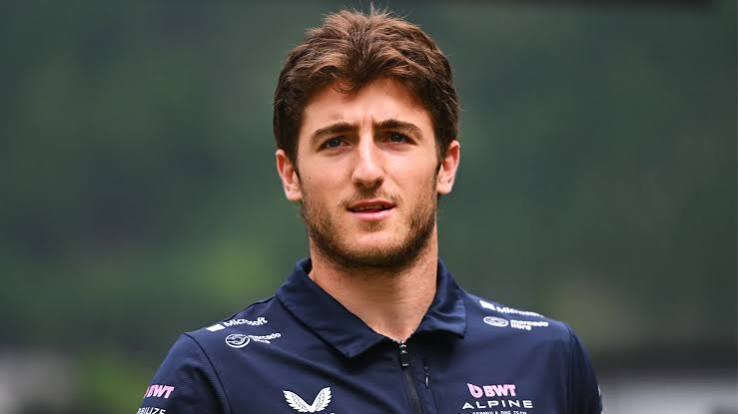
In May 2025, Jack Doohan was dropped by Alpine after six races and replaced by Franco Colapinto. What followed was not ordinary fan frustration. A fabricated image falsely attributed to Doohan’s father, Mick, spread across social media. By the Miami Grand Prix, Doohan said he had received emails threatening violence if he stayed in the seat. It was serious enough that he needed a police escort and armed security.
“Please stop harassing my family,” he wrote on Instagram.
Red Bull’s Yuki Tsunoda was targeted with racist comments that same month after a practice incident with Colapinto at Imola. Ben Sulayem issued a statement condemning both cases. The FIA pointed directly to the United Against Online Abuse campaign as its response.
Seven months later, it was Kimi Antonelli. After a late mistake at the Qatar Grand Prix let Lando Norris through, Red Bull’s Helmut Marko and Gianpiero Lambiase suggested, wrongly, that he had let it happen deliberately. Mercedes logged more than 1,100 severe or suspect comments aimed at Antonelli within hours, including homophobic slurs and death threats. The young rookie blacked out his social media profile as a way of protecting himself.
“A lot of insults, even some death threats,” he said afterwards. The FIA released a statement standing behind him through the United Against Online Abuse campaign, though it landed roughly four hours after Red Bull’s own apology, a gap the motorsport press was quick to point out.
This March, Esteban Ocon collided with Colapinto at the Chinese Grand Prix, took the blame himself and apologised in parc fermé. None of that stopped the death threats that followed. Ben Sulayem sent Ocon a personal letter, and the United Against Online Abuse account posted that “disrespect, harassment and hate have no place in sport.” Ocon later said he wanted to see “big consequences” for those responsible.
The drivers it hasn’t shown up for
What’s harder to find is a United Against Online Abuse statement for the drivers who describe this as a permanent condition rather than a single bad week. Their histories go back further than any case above.
Lewis Hamilton is the clearest example of how this looks over time. In late 2025, three consecutive Q1 eliminations at the end of a miserable first season with Ferrari, in Las Vegas, Qatar and Abu Dhabi, turned ordinary criticism into something sharper. “Lewis Hamilton, it might be time to go spend time with the family,” read one widely shared post after his exit in Qatar. Hamilton had already called the season a “nightmare” and his own words made clear how personal it had become.
Around the same period, Hamilton spoke publicly about how the sport had changed since his rookie year, describing “online abuse that we didn’t have when I got into the sport.” He was speaking generally about the pressure younger drivers face, but the qualifying pile-on made the point about his own experience just as well. No individual United Against Online Abuse statement followed either moment.
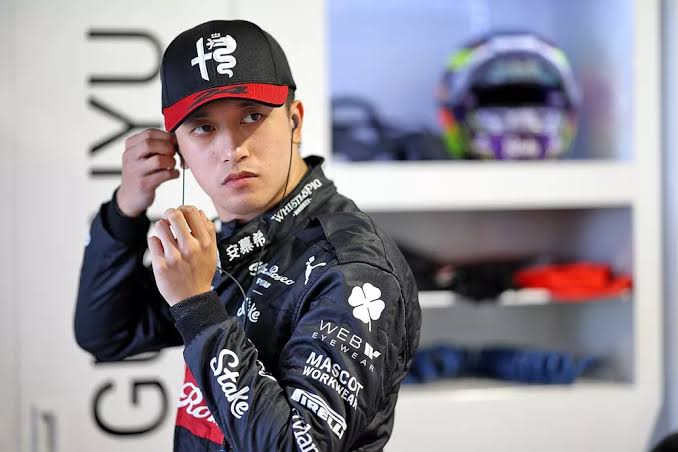
Guanyu Zhou has lived a quieter version of the same story. When Alfa Romeo announced he would become the first Chinese driver on the grid, he was met with racist abuse online before he had turned a wheel in F1. Much of the abuse questioned whether he belonged there at all. “It hurt quite a bit,” he said ahead of his 2022 debut.
Two years later, with the campaign by then in place, he was still describing the same pattern to reporters. He explained that he had lived through it many times over his career. There has been no individual United Against Online Abuse statement in his name either.
Lando Norris has talked about receiving death threats since 2019, along with hate pages built around his then-girlfriend, Luisinha Oliveira, and what he calls “very creepy” behaviour from fans who target his friends. “Not enough gets done and it is tough,” he said in 2022, a year before the campaign existed. He has repeated versions of that line since.
The clearest recent example came after the 2024 São Paulo Grand Prix, when Verstappen carved through the field from 17th to win in the wet. Norris, having led from pole, finished sixth. He claimed that the timing of the safety car and the changed outcome of that in the race was “not talent, just luck.” The comment, made minutes after a race that effectively ended his title challenge, triggered a wave of abuse severe enough that even neutral fans started pushing back on it. “Lando hate is going too far,” one widely shared post read, arguing his words had been stripped of context.
Norris retracted the comment weeks later at the FIA’s end of season gala in Rwanda, but the pile-on in between was specific, public and traceable to a single quote taken out of context by a Red Bull fan account on X. This was exactly the kind of flashpoint that had triggered a response for Doohan and Ocon. This time, none came.
George Russell’s example is more recent still. After a stewards’ room dispute with Verstappen at the 2024 Qatar Grand Prix, where Russell reported comments he says Verstappen made about deliberately crashing into him, Verstappen accused Russell of being “two-faced” in public. Russell later said he received a wave of abusive emails from Verstappen’s fans in the weeks that followed, though he said he did not personally see the worst of the threats sent his way.
The saga ran across December 2024 without an individual United Against Online Abuse response, even as Russell continued serving as a GPDA director, a role in which he has admitted the drivers, collectively, do not feel they have “a power seat at the table” in shaping the FIA’s response to problems like this one.
What it comes down to
The difference seems to come down to what counts as a trigger. A viral flashpoint, tied to one race weekend and one villain online, gets a response from the United Against Online Abuse campaign, as Doohan, Tsunoda, Antonelli and Ocon all found. A slower, more personal accumulation, the kind Hamilton’s qualifying exits, Zhou’s decade of racist comments, Norris’ “luck” remark and Russell’s stewards’ room fallout all produced, does not, even when each of those moments was public, dated and traceable to a single cause.
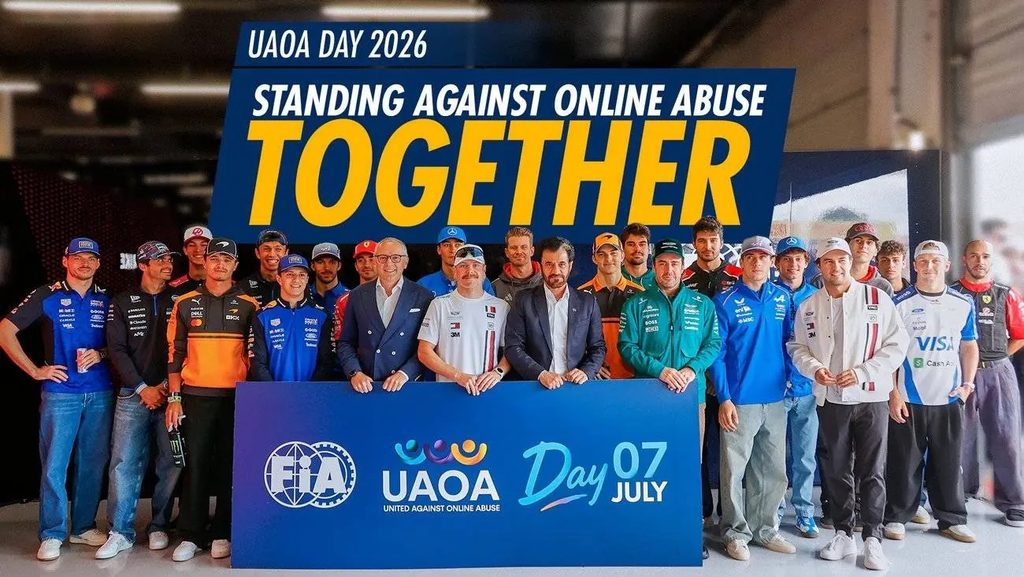
22 drivers stood together for a photograph at the first United Against Online Abuse Day on July 7, at Silverstone, and it was a genuine show of unity. Whether it changes anything for the next driver caught in exactly this kind of pile-on, and on the pattern above, there will be a next one, is the part of the story still being written.


1 Comment
Lameez
BEAUTIFULLY WRITTEN!!