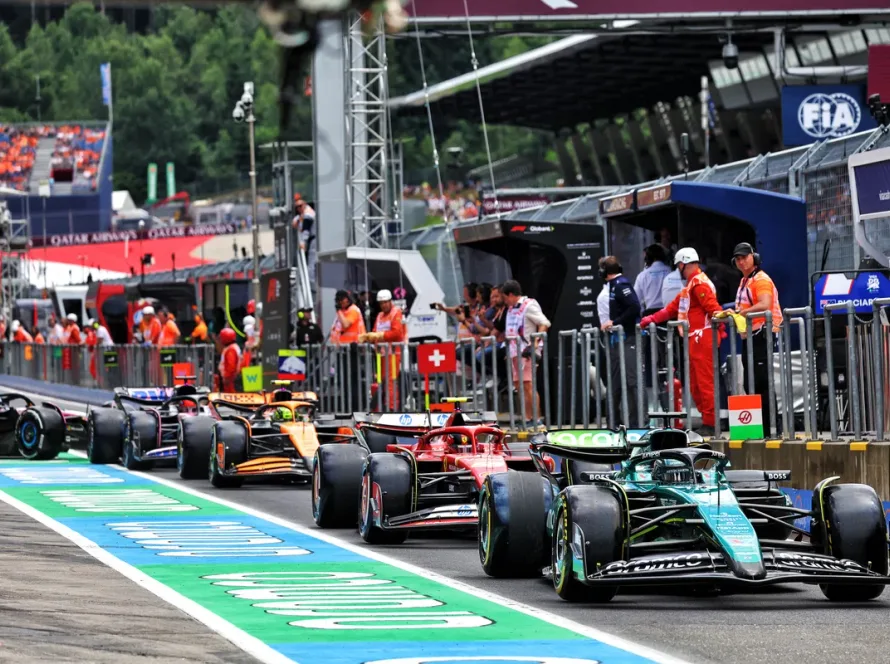
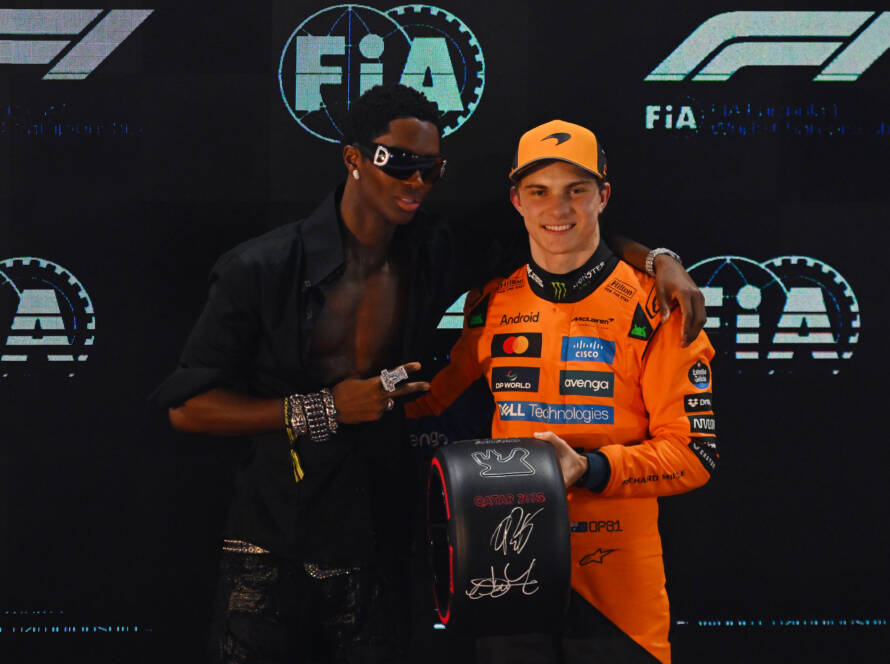
The pinnacle of motorsport loves to talk about what an F1 24-race calendar delivers: rivalries settled, records broken and sponsors sold new inventory. It talks far less about what a season costs the people who actually make those Saturday afternoons and photo-finish Sundays happen, week after week, for the better part of the year.
2026 has become the test case for that question. It is the biggest, busiest and most technically demanding calendar F1 has ever attempted to run. The season has not finished proving what the size actually requires from everyone standing behind it.
A season already at capacity
In April, the Bahrain and Saudi Arabian Grands Prix vanished from the 2026 season within the space of a weekend. Not postponed or shuffled to a gap later in the year. Simply gone, cancelled as war in the Middle East made two Gulf circuits impossible to safely visit.
F1 explored alternatives at Imola and Portimao and still could not find a way to slot two Grands Prix back into a 24-race F1 calendar already built for maximum capacity. The season that was meant to run 24 rounds settled for 22. Nobody could do a thing about it either.
That single fact says more about the health of F1’s calendar than any driver soundbite or team principal press conference ever could. A season with room to breathe absorbs a shock like that. A season stretched to its absolute limit simply loses two races and moves on.
This is the backdrop 2026 has unfolded against: F1’s record-tying 24-race calendar design with six sprint weekends that will bump up to nine or ten starting 2027. It also includes an entirely new set of chassis and power unit regulations, and a cost cap that jumped to $215 million to cope with it all.
Every part of that adds pressure somewhere in the paddock. The question is worth asking, now that the season is well past its halfway point, is whether F1 is actually built to carry it.
The weight behind the wheel
The 2026 cars were meant to be lighter and more nimble. On paper, they are a shorter wheelbase, a narrower floor and active aerodynamics shifting the car between high and low drag modes automatically. What remained unplanned was how much thinking that would demand of the people driving them.

Racing Bull’s Liam Lawson admitted to feeling mentally exhausted after the Japanese Grand Prix, one of the earliest rounds of the new era. This pointed to just how much more there is to process behind the wheel this season. Four-time champion Jacques Villeneuve put it more bluntly: “It’s not physical. It’s mental.”
That mental load does not reset between races. It compounds fastest across the sprint weekends, where the usual three practice sessions collapse into one. A driver who might normally get roughly three hours on track to learn a new circuit or a tyre compounds now gets closer to one, before qualifying for a sprint race that counts toward the championship by Saturday lunchtime.
There is no equivalent cut in what is expected of them once the lights go out. Multiply that by 22 rounds in nine months and the fatigue stops being an occasional headline and starts looking like the sport’s operating condition.
The ones who don’t get the highlight reel
On the bright side, the drivers get the podium, the interviews and the sponsors’ hospitality suites. However, the mechanics and engineers who build, rebuild and pack down the cars every single week do not. The numbers behind their season are considerably less glamourous.
A race week runs a minimum of 12-hour days from the Wednesday build-up through to Sunday night. Every single day with no built-in recovery before the next flight out.
Back in 2021, when the calendar first pushed past 20 races, one team mechanic spoke anonymously about what a triple-header does to a person by the end of it.
“The peak tiredness when it hits is a horrible, horrible thing.” The F1 mechanic said.
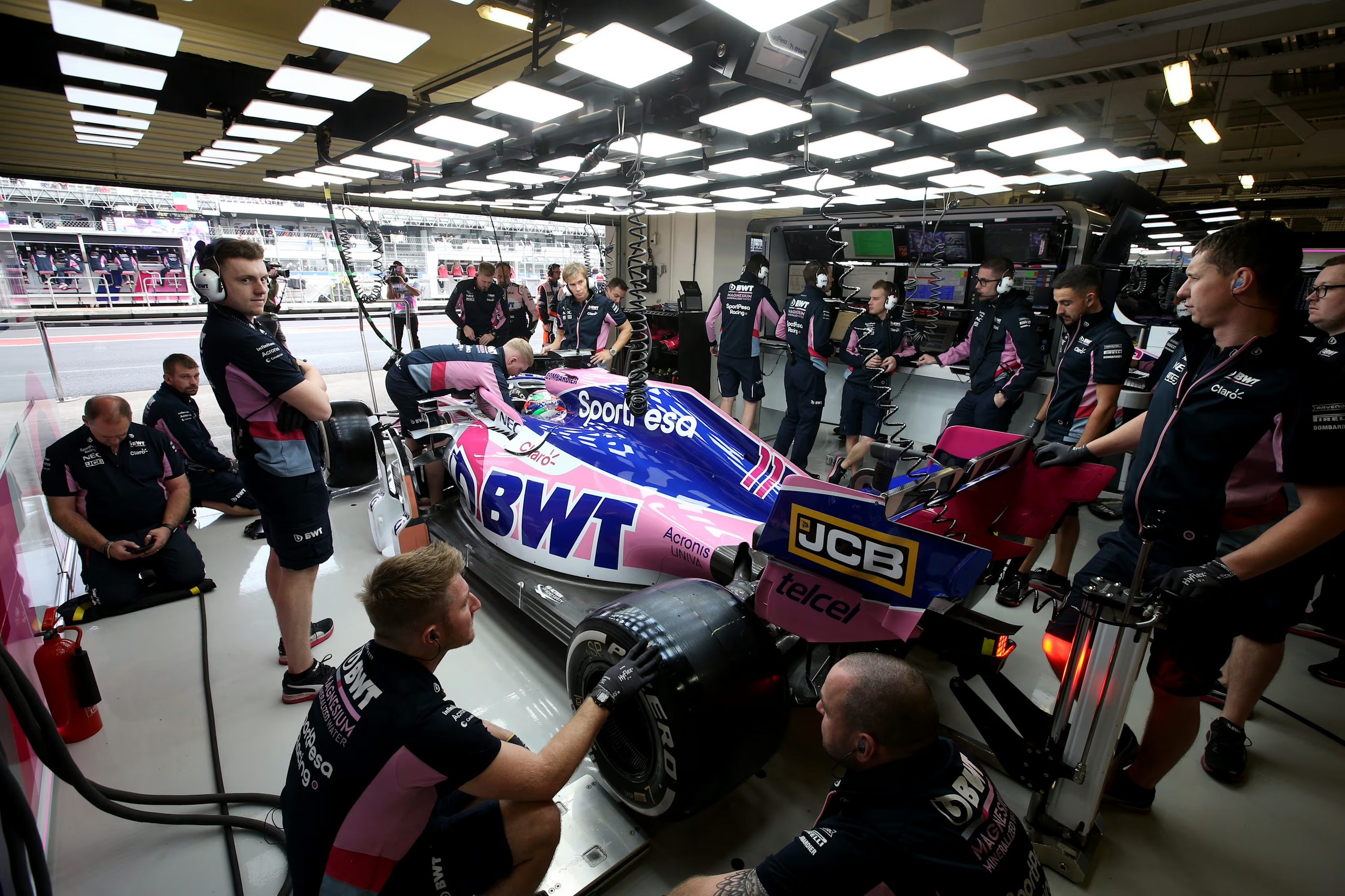
The same testimony pointed to a detail that rarely makes it into race coverage: mechanic pay is barely moved in two decades, even as the F1 24-race calendar attached to it has grown by a third. Five years and four more races later, that exhaustion has not gone anywhere. If anything, the gap between effort and reward has not closed.
The strain has not gone unnoticed inside the paddock. A handful of teams have quietly begun capping how many of the 24 rounds their garage staff and technicians actually attend. It is often around 18, deliberately building in recovery weekends the calendar itself no long provides.
Sports scientists working trackside have also flagged a longer-term concern. The irregular sleep patterns triple-headers create are, in other high-demand industries, linked to higher rates of chronic illness over a career, not just a bad week.
Race strategist turned pundit Bernie Collins has floated job-sharing and rotation as a further fix. But rotation and unofficial race caps are workarounds, not solutions. An F1 24-race calendar is more than one person should reasonably be asked to work. That fatigue shows up in the people who decide, at the end of a season, that they are not coming back.
An arms race with no off-season
The 2026 rules were supposed to level the technical playing field. Instead, the opening months of the season have turned into a development war unlike anything McLaren’s Andrea Stella says he has witnessed in F1 before. The teams are racing to design, manufacture and homologate upgrades under the new $215 million cap almost every fortnight.
Mercedes boss Toto Wolff has openly questioned how Ferrari kept pace with its rate of updates this year, admitting of his own team’s position in the fight. “We’re simply lacking the buffer.” he said.
Whatever the truth of that particular rivalry, the underlying pattern holds across the grid. Previous cost caps only ever had to cover in-season updates to a car whose fundamentals were already known. This year’s $215 million cap has to cover that and an entirely new car concept at the same time, designed, manufactured and then redesigned on a near-weekly basis for 24 rounds.
New regulations have not slowed development, they have accelerated it. Every upgrade race demands the same overworked design offices and factory staff who are already stretched thin by the F1 24-race calendar itself. The bill for a technical reset does not stay in the finance department. It lands on whoever has to physically build the parts in time for the next flight out.
A calendar with no slack left

Stefano Domenicali has been consistent in defending the size of the season, comparing it favourably to the far longer fixture lists in football and basketball.
“It is wrong.” Domenicali said on suggestions that the calendar is too long.
He is not wrong that other sports ask more of their athletes in raw fixture count. But football squads rotate. NBA teams do not rebuild their entire technical package overnight between games. F1 in 2026 has asked its people to do both at once: race almost every week, and reinvent the car underneath them almost every week too.
F1 can, at least, tell you exactly what the calendar costs the planet. The 2025 season produced 148,805 tonnes of CO2 equivalent, a 35 percent reduction against the 2018 baseline of 228,793 tonnes. This was achieved even as the calendar grew from 21 races that year to a record 24.
That works out to a roughly 6,200 tonnes per race weekend. Business travel, moving people rather than cars or freight, remains the single largest slice of that figure at 39 percent of the total, ahead of logistics, factories and cars themselves burning fuel on track.
There is no comparable ledger for what that same travel costs the people doing it. No published figure for how many mechanics quietly left the sport this year, no per-race count of missed birthdays or anniversaries, no sustainability report that measures burnout with the same rigour F1 applies to tonnes of jet fuel.
A season that can lose two Grands Prix to a war zone and simply absorb it, with no replacement and no flexibility to spare, is not a season with room to grow further. It is a season that has already found its ceiling. F1 has built the tools to count almost everything about what a 24-race calendar costs, except the one cost it would actually have to slow down to fix.