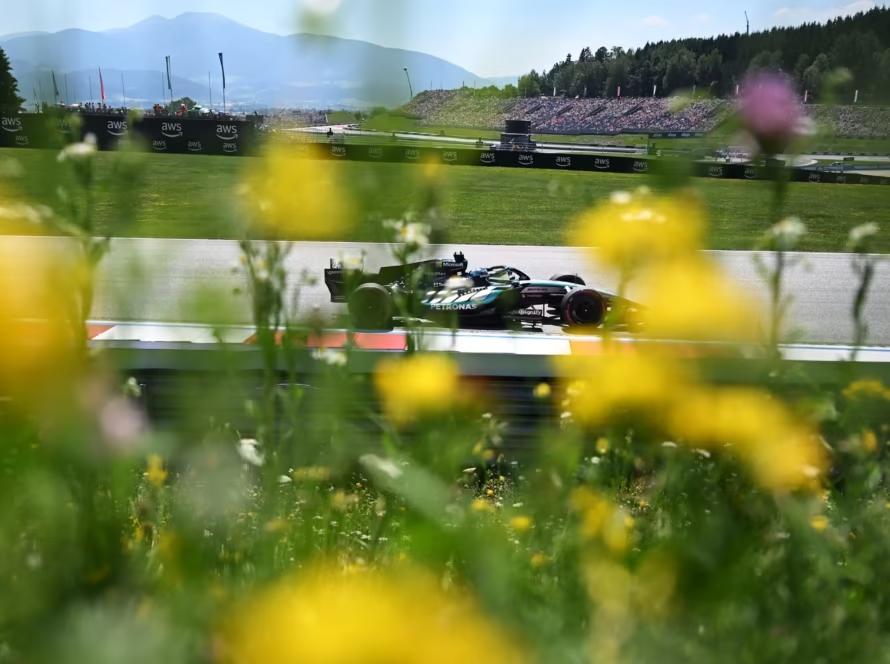
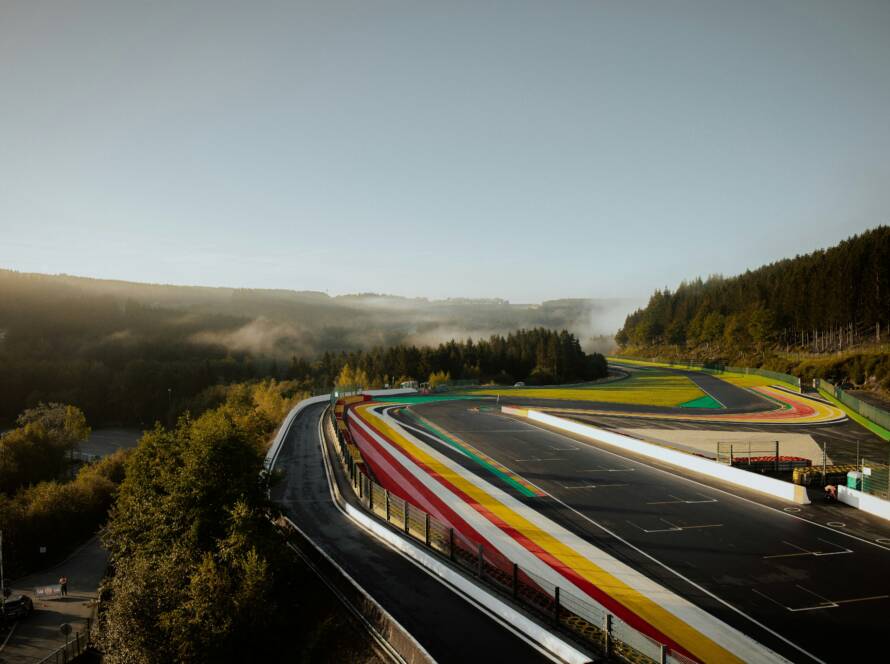
The Spanish Grand Prix has been a Barcelona fixture for more than three decades, a reliable stop on the calendar with a well‑understood circuit and a familiar competitive rhythm. This year breaks that pattern. The event moves to Madrid for the first time, and the debut of the new Madring circuit introduces a level of uncertainty that teams are not accustomed to at a European round. The shift means the Spanish Grand Prix arrives without the usual baseline of knowledge that teams rely on.
Madring measures 5.4 kilometres, and the race will run 57 laps. On paper, that places it within the typical range for a modern Grand Prix. In practice, the layout behaves less predictably. It is a hybrid circuit built from public roads, access routes, and new permanent sections, and that mix creates irregularities that will shape how teams approach the Spanish Grand Prix weekend.
Hybrid circuit, hybrid demands
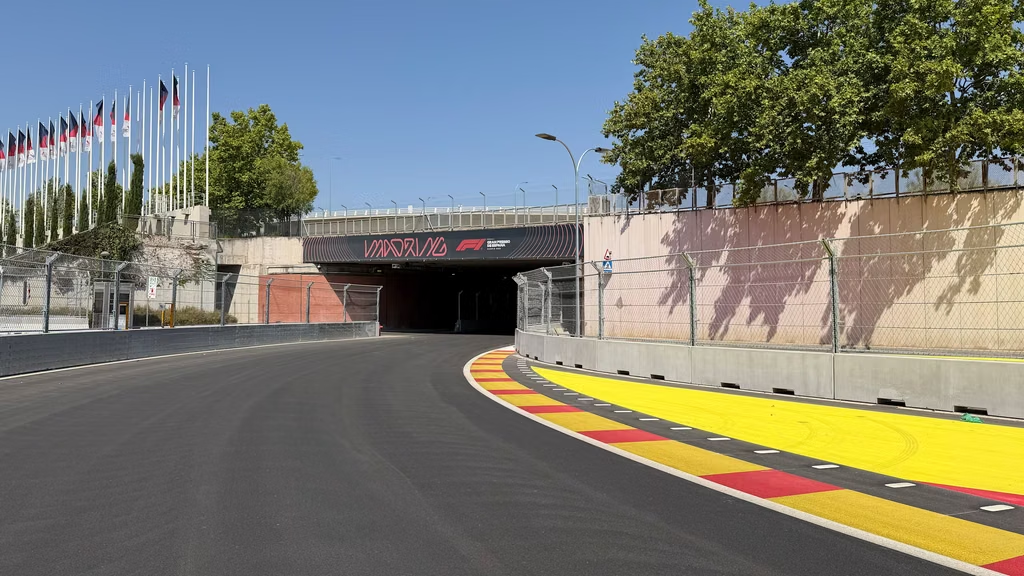
A typical street circuit is defined by narrow entries, limited runoff, and surface inconsistencies that force drivers to operate with caution. Permanent circuits, by contrast, offer stable grip, predictable corner profiles, and a clearer separation between high‑speed and technical sections. Madring sits between these categories. It has the confinement and surface variation of a street track, but the speed profile of a purpose‑built venue. That combination means the circuit will not behave uniformly from one sector to the next.
People can expect a lap that shifts character quickly. The long straights generate high speeds, but they feed directly into braking zones that leave little margin for correction. The middle sector is tighter and more technical, with surface changes that may unsettle cars and exits that punish over‑commitment. Grip will evolve as the new asphalt rubbers in, and tyre behaviour will only become clear once running begins. The 2026 aero package forces teams to choose between being fast and being stable, and Madring’s layout makes that choice more painful than usual. Madring is unlikely to produce a consistent Spanish Grand Prix weekend, and the teams that adapt quickest will be the ones who extract meaningful performance.
Spanish Grand Prix enters Madrid era
Driving a brand‑new track carries practical consequences that go beyond unfamiliarity. Teams arrive without historical data, which means they cannot rely on the modelling tools that normally shape their weekend plans. Long‑run simulations are less reliable, tyre degradation curves are speculative, and setup baselines are built from assumptions rather than experience. Engineers must treat early running as a discovery process rather than an optimisation exercise. Every lap becomes a data point, and the rate at which teams interpret that data will determine how competitive they are by qualifying.
For drivers, the challenge is equally direct. Reference points do not exist. Braking markers, grip levels, and corner sequences must be learned in real time. The first laps of meaningful running will be shaped by instinct rather than memory, and instinct varies across the grid. Drivers who adapt quickly to evolving conditions tend to perform well at new venues, while those who rely heavily on established rhythm may take longer to find stability.
The relocation of the Grand Prix also changes the competitive context. Barcelona has historically rewarded teams with strong aerodynamic efficiency and predictable tyre management. Madring disrupts that pattern. The hybrid layout introduces conflicting demands: straight‑line speed on the long sections, mechanical grip in the technical areas, and stability through surface transitions. No single setup philosophy will suit the entire lap, and teams will need to decide which compromises they are willing to accept.
The Spanish Grand Prix has long been a stable point in the season, a round where teams could rely on accumulated knowledge. Madrid removes that stability. It introduces a controlled disruption that will expose how quickly teams can adapt, how effectively drivers can learn, and how well the new circuit can support a modern Grand Prix. Hybrid tracks tend to reveal strengths and weaknesses that permanent circuits do not, and Madring is likely to follow that pattern.
The Spanish Grand Prix arrives in Madrid without precedent. By the end of the weekend, it will have one, and the paddock will decide whether it is a foundation or a warning.
Further track analyses are available under the circuit profile tag.