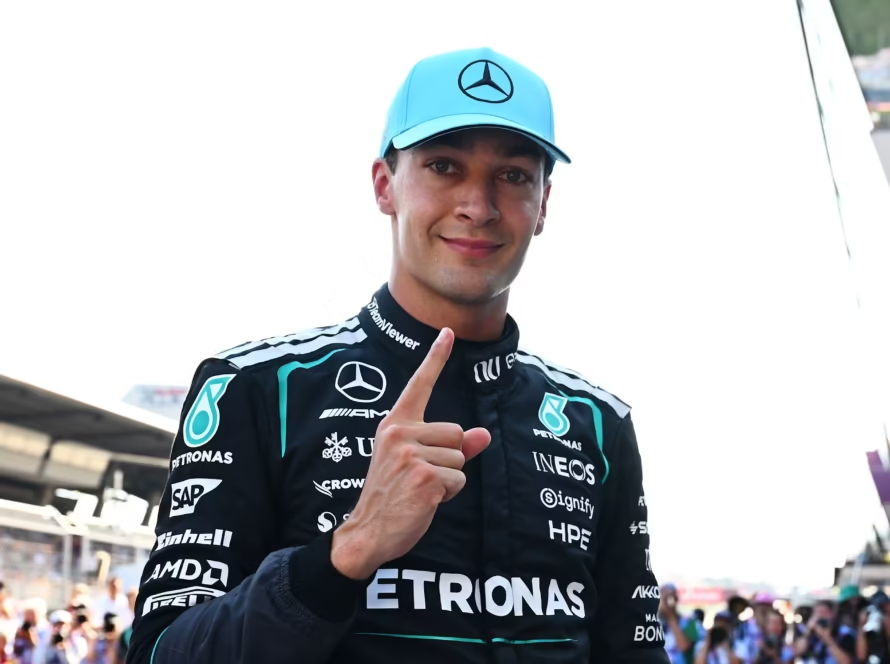
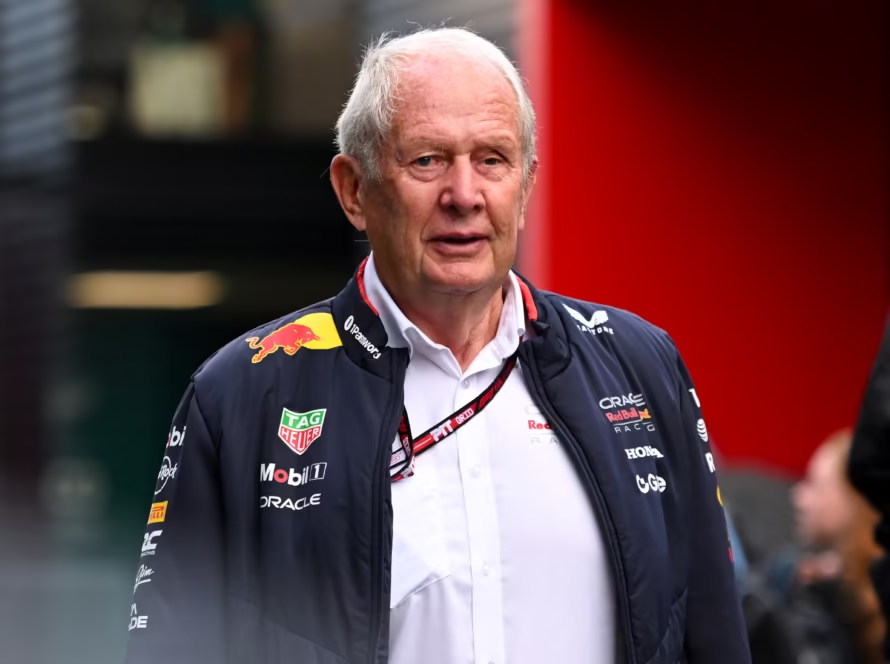
Baku rarely rewards a single strategic philosophy. Its long straights, heavy braking zones and unforgiving margins make track position valuable, while Safety Cars can rapidly rewrite the competitive order. In 2026, these characteristics produced a race where control was constantly contested, and strategic precision under pressure determined who was prepared when it disappeared.
Building a safety net
Pole position gave George Russell more than just clear air. It gave Mercedes the freedom to control the race without having to respond to the pressure of a rival’s strategy
With no immediate threat capable of forcing a response, the Mediums allowed Russell to settle into a stable rhythm rather than manufacture an aggressive launch. The W17 could prioritise aerodynamic efficiency without compromising its straight-line speed or tyre life. This turned clean air into a steady growing advantage.
This weekend, the Briton showed leading is not necessarily about maximising the gap on every lap. It is about creating enough distance so the car behind cannot dictate your decisions. Every second Russell added reduced the pressure to pit, defend or alter the plan. Mercedes were not simply gaining time, they were removing potential problems from its decision tree.
By halfway, the advantage exceeded 10 seconds, and Mercedes had effectively brought itself strategic freedom. Any unforeseen changes could be absorbed without surrendering track position. Once the Silver Arrows had built that freedom, the pressure of finding the next move shifted entirely to the cars behind.
Playing the waiting game
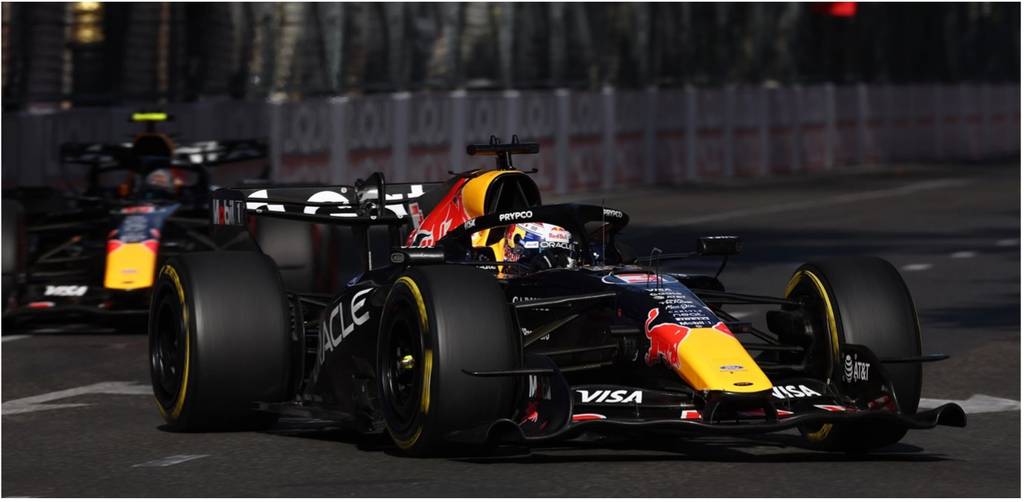
Max Verstappen’s aggressive recovery from P8 to P3 demonstrated Red Bull’s exceptional underlying pace. It seemed the race was theirs to dictate. Until Piastri’s defence shifted the narrative.
The Softs gave Piastri the grip to defend and the MCL40 was outperforming Red Bull in the middle sector, which neutralised Verstappen’s straight-line speed advantage. Red Bull could attempt an undercut as an obvious escape for fresher tyres and cleaner air. Doing so, however, meant paying the pit-lane cost and sacrificing P3 without guarantee that the gain would be enough.
With degradation negligible, waiting became the lower-risk option. Red Bull did not need to manufacture an advantage; they needed to preserve the options that remained. This is crucial in an unpredictable race. Strategy is not always about finding the decisive move immediately. In this case, the aim was to avoid making decisions that closed off better ones later.
When Alex Albon crashed on lap 20, that patience suddenly had value. Verstappen took the Softs while Piastri switched to Mediums. Red Bull did not predict the Safety Car; they simply retained enough flexibility for it to become an advantage.
The reset button
For Russell, the Safety Car changed the value of the lead rather than simply taking it away. His 10 second advantage disappeared, but P1 remained, leaving Mercedes free to switch from Mediums to Softs without giving up the position the Briton had spent the opening stint protecting. The earlier pace advantage had therefore served a second purpose: it had put Mercedes in a position to benefit when their strategy came under pressure.
For Max, the restart finally broke the constraint Piastri had imposed. The immediate grip from his new Softs were worth more than the Medium’s durability. The new tyres therefore became more than just a tyre advantage; they were the means of finally converting Red Bull’s underlying pace into track position.
The Safety Car showed that a controlled strategy is about having enough precision under pressure through decisive freedom when an advantage disappears. In Baku, the strongest teams were not necessarily those that predicted the next interruption, but those whose earlier decisions left them with something valuable when it arrived. Mercedes preserved their position and controlled the restart. Red Bull, by resisting the urge to force the race, exploited a new benefit.
What strategy cannot control
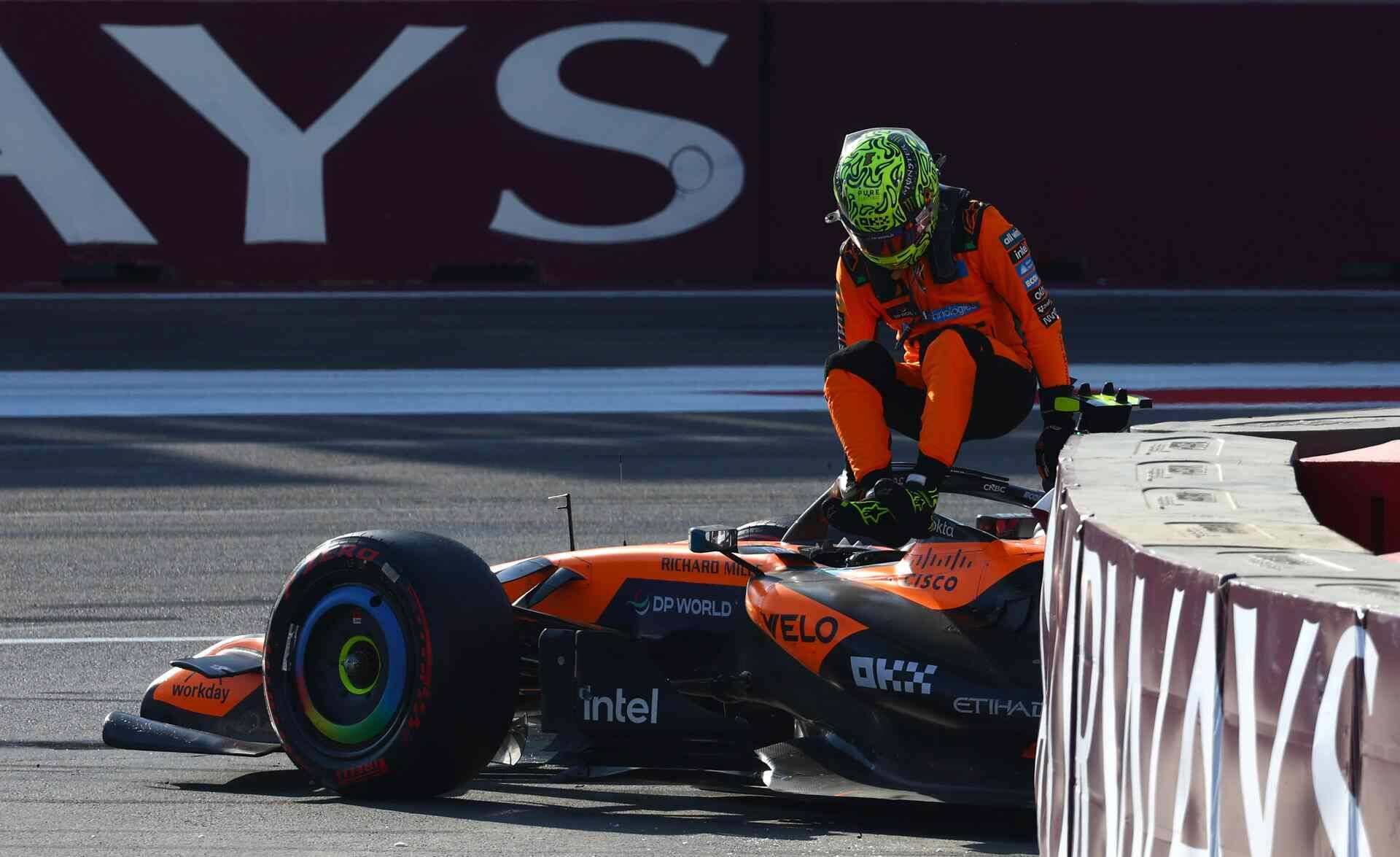
The first restart also showed how quickly strategy can become undone. Franco Colapinto’s lock-up and collision with Pierre Gasly and Lando Norris demonstrated an incident that unfolded too quickly for pit-wall intervention to matter.
Piastri’s eventual fall from podium contention illustrated a different limitation. His strategy had kept him in the fight for 30 laps, but one lock-up overturned that work in an instant.
This is the uncomfortable boundary of race strategy: it controls decisions, not events. Sometimes strategy does not fail, it just runs out of jurisdiction when unpredictability becomes a threat to survive. Strategy can preserve options, create margins and reduce risk, but it cannot remove the possibility that one moment will make all three irrelevant.
Surviving the surroundings
The midfield offered a different solution to the race: staying positioned to exploit when it changed.
Kimi Antonelli avoided forcing his recovery from P16, using the W17’s straight-line speed to take opportunities without exposing himself to unnecessary risk. Arvid Lindblad followed the same principle, preserving his position through the disruption and remaining close enough to convert later retirements into valuable points.
Carlos Sainz showed the alternative. Pitting before the Safety Car sacrificed immediate track position but created clearer air and left Williams better positioned to benefit when rivals stopped under neutralisation.
The common thread is optionality. Antonelli and Lindblad preserved the chance to gain from chaos. Sainz acted early to create one. In an unpredictable race, strategy is not about foreseeing the next incident. It is about ensuring that when it comes, you are positioned to benefit from it.
Mastering precision under pressure
In the end, Russell’s victory was a demonstration of control and precision under pressure rather than simply speed. Mercedes created the conditions to reduce risk, saved their options when the race reset, and never surrendered the initiative. Around him, Baku’s chaos reminded us how quickly strategy can lose its influence. This makes Russell’s composed, disciplined weekend even more impressive.