A week after the paddock sweated through Sepang, Formula 1 arrived at the one race that many drivers train for specifically. Marina Bay offers neither the longest straights nor the fastest corners on the calendar, yet it asks more of the human body than any other venue.
Cockpit temperatures regularly top 60°C, humidity can climb towards 90% and the race tends to run right up to the two-hour limit. The Singapore heat is the reason drivers talk about this weekend with a mixture of respect and apprehension. It is also the reason their preparation begins months before they board a plane.
It is one of the hidden factors in F1 performance that rarely shows up on a timing screen but often shapes how a race ends. After a rain-delayed, heat-hazard weekend in Malaysia, the sport now moves to the venue where conditions are least forgiving.
Why Marina Bay hits the body so hard
Heat alone does not explain Singapore’s reputation, because the circuit stacks several stressors on top of one another. The 4.9km lap contains 19 low-speed corners and a bumpy street surface. Only Monaco has a slower average speed, so the braking zones arrive with almost no recovery between them.
Drivers also wear fireproofs, a race suit, gloves and a fully visored helmet. This blocks the evaporation of sweat that normally cools an athlete. Every race at the track has featured a Safety Car apart from 2024, and those interruptions push the distance towards the two-hour cap.
The result is a long, sustained effort at a high heart rate with very little airflow in the cockpit. Combined with the Singapore heat, that effort means drivers can lose up to 3kg of body weight over a race. George Russell has spoken about shedding 4kg in 2024.
Training for the Singapore heat starts in January
The foundation is laid long before the season opens. Endurance and strength work over the winter builds the base that a long campaign demands. The drivers treat Singapore as the exam the base is eventually measured against.
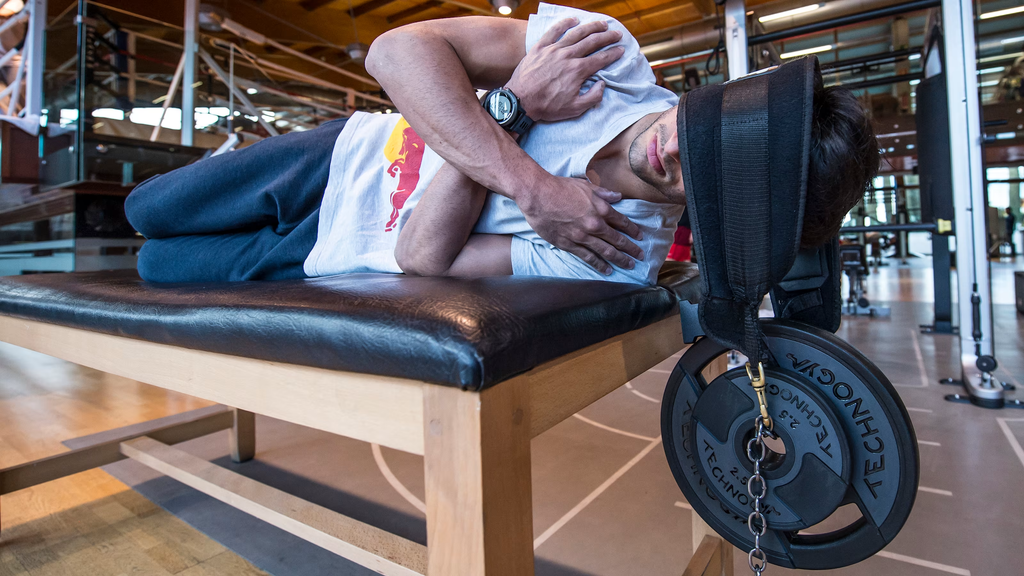
Carlos Sainz has said that when he trains in January and February, he is thinking about Singapore rather than the opening round. He has also described the Singapore heat as a benchmark for the entire calendar, a view he has summed up in a line that has become a paddock favourite.
“If you survive Singapore, then you’re fit for anything else in Formula 1.” – Carlos Sainz
It might sound like a boast, but it is the best description of the physiology involved. The Singapore heat taxes the same systems as every other race, namely cardiovascular fitness, strength and concentration. However, it does so for longer and with fewer chances to recover.
Drivers who build that capacity over the winter carry a margin into the hotter rounds, and Singapore is where the margin gets used. Heat acts as an amplifier rather than a separate skill, which is why the specialised work only begins once the general base is secure.
The summer break turns up the thermostat
Once August arrives, preparation for the Singapore heat becomes far more specific. Nico Hülkenberg’s former trainer Martin Poole has explained that the subject of Singapore comes up around July, after which sessions move outdoors and the aim is to accustom the driver to discomfort in the heat and humidity.
He described it as the only race the team trained for specifically. Typical methods include running in multiple layers to trap heat, long sessions in climate-controlled heat chambers and extended time in saunas. By the time drivers reach Marina Bay, they have already rehearsed what it feels like to push hard in sauna-like conditions.
The science behind this is well established. When Alex Albon worked with sports scientists at the University of Westminster, he cycled in a 35°C heat chamber for just under an hour while researchers tracked his body mass and fluid intake to estimate his sweat loss.

Repeated exposure raises body temperature, triggers heavy sweating and increases blood flow to the skin, all of which improve heat tolerance and lower the risk of heat illness. Alpine has also said its drivers begin heat chambers acclimatisation at least three weeks before the race.
The Singapore heat cannot be removed from the weekend, so the practical goal is to make the first hour in the car feel familiar rather than shocking.
Living on European time
Race week brings a different kind of preparation, because the schedule itself is part of the challenge. With the grand prix held at night, drivers and teams stay on European hours rather than adjusting to local time. That means waking in the early afternoon, eating breakfast around 2 PM and finishing the day well past 3 AM, with hotels fitted with blackout curtains to protect sleep.
The logic is that the body behaves as if it were an afternoon race at Monza or Budapest, even though Singapore is already deep into the night. Staying on home time also stops the body from fighting both the clock and the Singapore heat at once.
Teams reorganise meetings, gym sessions and media commitments around the same artificial clock, which turns the whole operation into a coordinated exercise. The aim is simple: arrive at the start with as much energy in reserve as possible.
Fluids, ice and a compressed schedule
Hydration is the first line of defence against the Singapore heat, and it begins well before the car leaves the garage. In the week before the race, drivers go through hydration loading, taking in large volumes of water and electrolyte drinks alongside extra salt to encourage fluid retention.
The aim is to begin the weekend as close to peak hydration as possible, because the loss cannot be avoided later. Each car carries a drinks system, but its capacity is limited to around 1.5 litres, which is nowhere near enough to replace what the body sweats out. Many drivers freeze their drinks bottle beforehand so that it thaws slowly and offers a little cooling as the cockpit warms.
The work done in the days before the race therefore has to carry the driver through the closing laps.
Between sessions the focus shifts to bringing core temperature down quickly after each run in the Singapore heat. Teams prepare ice baths in the garage so that drivers can climb in the moment they leave the car, and the garages are stocked with fans, ice towels and frozen treats for quick relief.
The sprint format adds a small wrinkle this year, since Singapore hosts its first sprint weekend, with first practice and sprint qualifying on Friday and then the sprint and qualifying on Saturday. That squeezes more running into the first two days and leaves less time to cool down and rehydrate between sessions.
The heat conditioning itself is unlikely to change, because it is built over months, so the sprint’s influence is more likely to show up in how efficiently drivers recover than in how they prepared. A compressed timetable simply gives the ice baths and the hydration routines less time to do their job.
Cooling vests divide opinion in the Singapore heat
Technology now sits alongside training as a second defence against the Singapore heat. Last year Singapore became the first race to have a heat hazard declared under regulations introduced after the 2023 Qatar Grand Prix, where several drivers needed medical attention.
The rule is triggered when the official forecast shows a heat index above 31°C, at which point teams must fit a driver cooling system, a combination of pump, plumbing and thermal store that circulates chilled fluid through a fireproof vest. Drivers can choose not to wear the vest, but their cars must then carry extra ballast so that nobody gains a weight advantage.
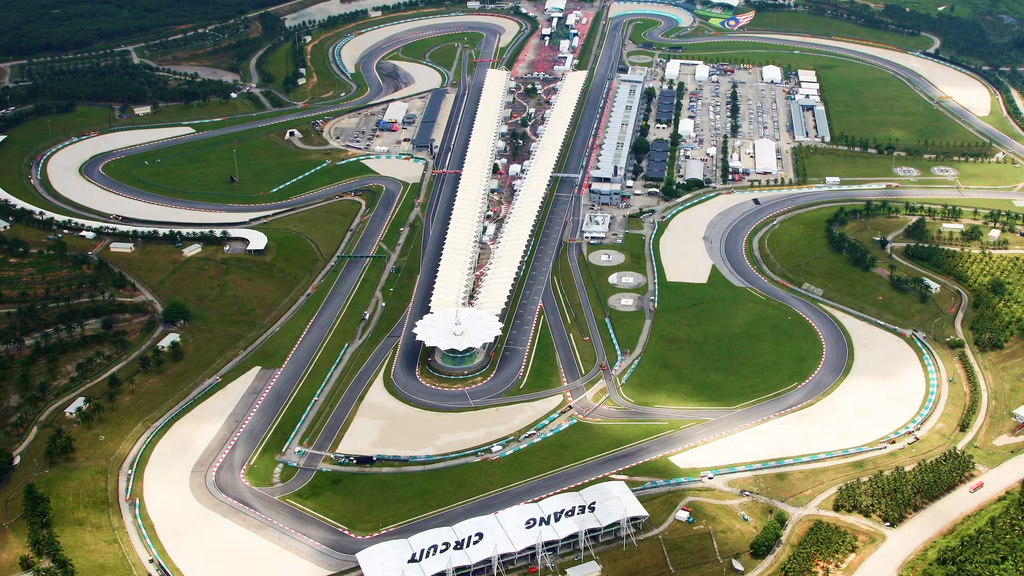
Sepang was the third heat hazard of 2026 after Austria and Italy, and last year’s declaration for Singapore arrived on the Thursday of race week, so teams will be watching the forecast for the Singapore heat closely.
Opinion on the vest has shifted as drivers have tried it. Albon wore one at the 2025 Saudi Arabian Grand Prix, and Hülkenberg has explained that he was convinced after sharing the flight home with the Williams driver, who looked remarkably fresh while he himself had gone without.
Lando Norris was among the drivers who tried a vest at the 2025 Spanish Grand Prix, which shows the technology was being tested well before the first heat hazard was declared.
Others remain unconvinced. Max Verstappen argued last year that the vest itself heats up after 15 to 20 minutes, and this season he is reported to rely on mental conditioning to handle the Singapore heat instead, while Lewis Hamilton has also questioned how much difference it makes.
Russell sits at the other end of the spectrum. As a director of the Grand Prix Drivers’ Association he welcomed the system when it arrived, and Mercedes used it at several hot races last year. Ahead of Sepang, he said he wanted to wear one there and again in the Singapore heat a week later. He was blunt about what the Malaysian conditions would feel like in full race gear.
“It will be like sitting in an oven.” – George Russell
Mercedes chose to direct its development resources towards the car, which meant neither Russell nor Kimi Antonelli had a vest in Malaysia. The team’s concern was reliability, because if the coolant warms up during a long race the vest stops helping and can even insulate the driver.
The decision therefore involves engineering as much as comfort, and it explains why even drivers who want the technology can end up racing without it. Whether Mercedes arrives in Singapore with a system it trusts is one of the quieter questions of the weekend.
Where the mind meets the cockpit
Physical conditioning tells only half the story, because the Singapore heat also erodes concentration. Sports science broadly accepts that rising core temperature and dehydration can dull attention and slow decision-making. That is a serious problem on a street circuit hemmed in by concrete walls.
Singapore leaves almost no margin for a lapse, and F1’s own analysis of the race notes that peak heart rate and focus must be sustained for longer than anywhere else. Verstappen’s reported reliance on mental conditioning is one answer to that problem, and the drivers using cooling technology are pursuing another.
Both approaches protect the same thing, a clear head late in the race, when a Safety Car restart or a tyre decision can reshape the result.
What Marina Bay means for the title race
Kimi Antonelli arrives with an 84-point championship lead after finishing second at Sepang, while Russell retired late on in Malaysia. Verstappen, who won in Sepang for his first victory of 2026, will want to carry that momentum to a venue where he raced last year without a vest.
The conditions will not decide the championship on their own, yet they will shape how each contender manages the closing laps. Marina Bay tends to reward composure as well as pace, and the first answers will arrive from Friday evening. The Singapore heat has been building in the drivers’ diaries since the summer break, and now it is time to find out who prepared best.