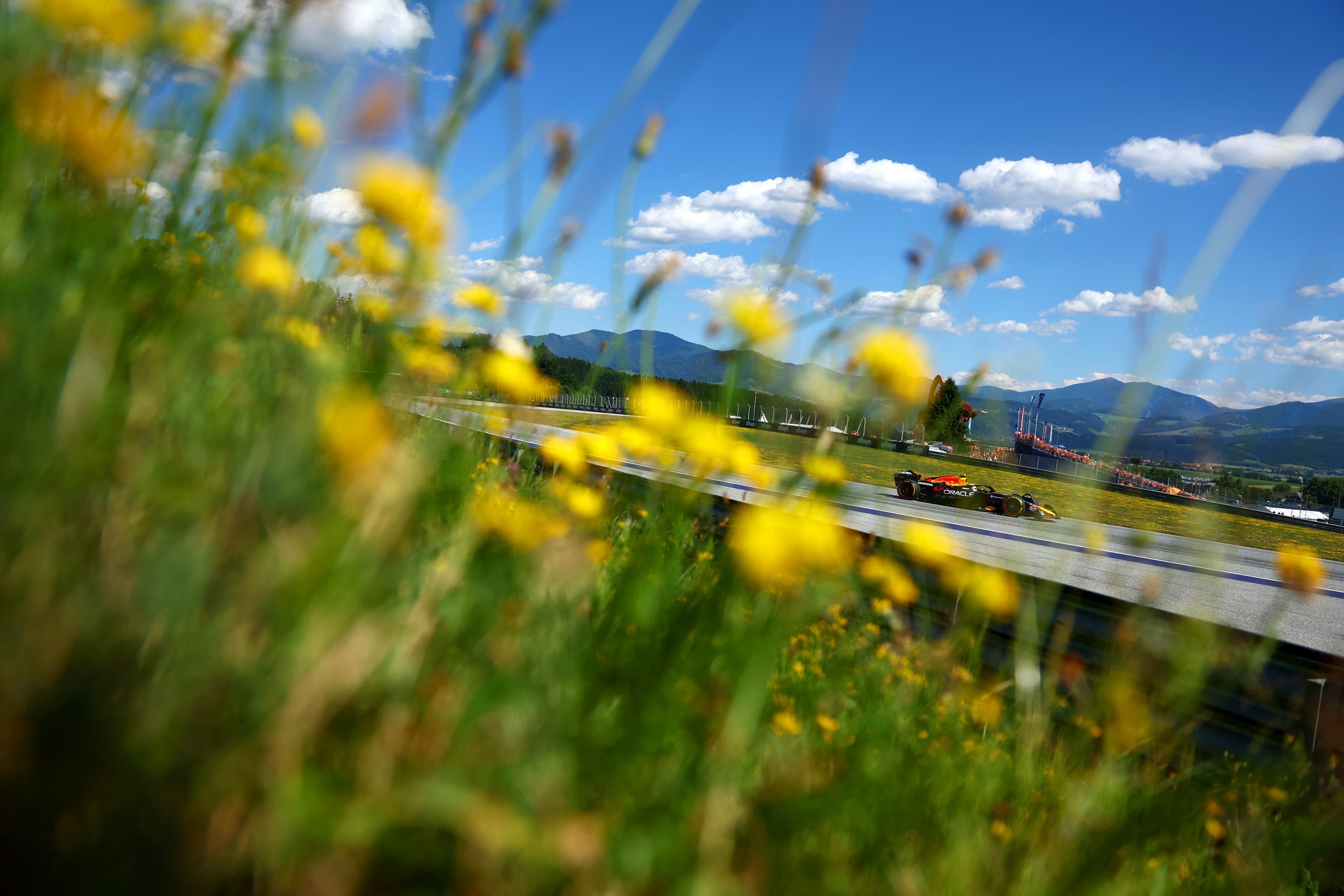
Nestled in the Styrian mountains, the Red Bull Ring blends high‑speed racing with the peaceful, idyllic setting of Spielberg, Austria. Built on fast laps and steep climbs, its layout rewards absolute accuracy from the very first turn.
Running at just 4.3km, the Red Bull Ring is the fifth‑shortest circuit on the F1 calendar. With only 10 turns, it produces quick laps that leave little room for performance error.
Originally built in 1969, the track has undergone several transformations over the decades, with modern‑day F1 returning in 2014. Its natural characteristics continue to challenge both drivers and their machinery. Currently, Carlos Sainz holds the official race record fastest lap at 1:05.609, set in 2020.
The shape of the Grand Prix
The elevation changes at the Austria Grand Prix are one of the Red Bull Ring’s defining features. Sitting roughly 700 metres above sea level, the circuit climbs as steeply as 12% and drops at 9.3%, creating an elevation change of 63.5 metres over a single lap. It’s a shift fans may not feel, but drivers absolutely do. The uphill sections demand more from the engine and battery, while the downhill runs change braking points and balance. These elevation changes consistently appear in team data and driver comments, shaping race strategy, including setup choices, tyre behaviour, and how much drivers can commit in each part of the lap.
Where the lap is won and lost
After the elevation shifts, the next defining feature of the Austria Grand Prix is how the lap links together. The circuit layout features three long straights that lead into heavy braking zones, giving drivers natural opportunities to attack. Tight corners come in rapid succession, so rhythm matters. What a driver does in one corner immediately affects the next, and the lap only comes together when those transitions are clean.
Turn 1 sends drivers into the start of a steep uphill climb, which drops again by the time they reach Turn 3. The long run and heavy braking at the top of the hill make Turn 3 one of the most reliable overtaking points on the lap.
Turn 9 is a fast, sweeping right‑hander taken on a downhill run, with a line that brushes the inside twice before feeding into Turn 10. Turn 10 is another quick right that closes the lap and punishes even small mistakes. These final corners are unforgiving and responsible for most of the track‑limit violations across the weekend. Drivers who can repeat the same line here gain time; those who can’t often lose laps to deletions.
How teams approach the Austria Grand Prix
Energy management becomes a major part of race craft at the Austria Grand Prix, especially with the uphill runs toward Turns 1, 3, and 4. These sections pull hard on the battery, so drivers must be deliberate about when to deploy the Energy Recovery System (ERS). With the 2026 regulations, ERS is now the main way drivers close gaps and make moves. Overtaking becomes less about a single assist and more about timing, patience, and using the car’s energy when it matters most.
Teams also need to consider how the short lap compresses strategy windows. A small mistake in timing can drop a driver into traffic, undoing the benefit of fresh tyres or a planned undercut.
What makes racing here so close
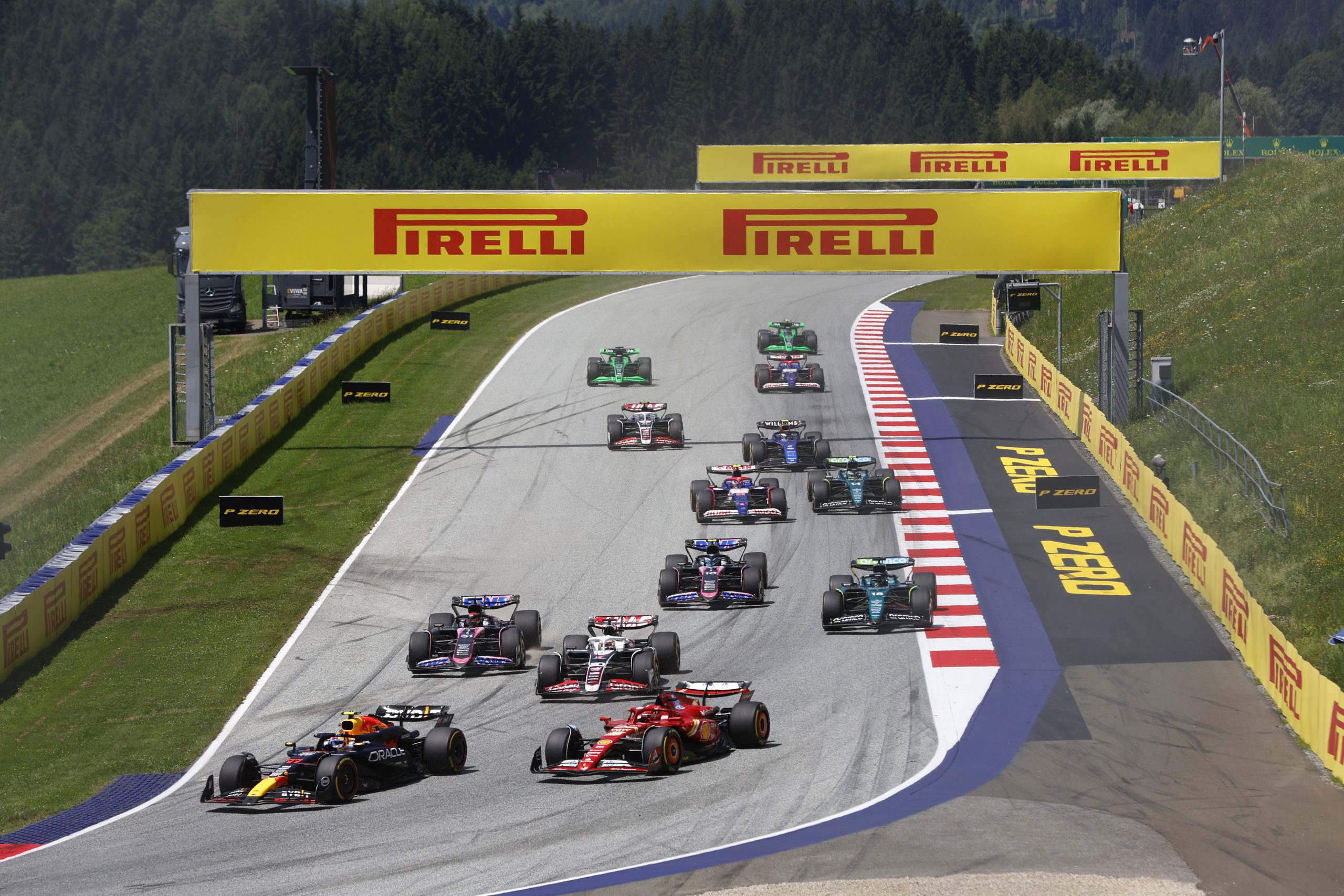
Because the Austria Grand Prix takes place on one of the shortest laps of the season, traffic becomes a major factor. A driver leaving the pits often rejoins straight into a pack, which makes undercuts less reliable and forces teams to think carefully about pit timing. Even a clean stop can become costly if the driver rejoins behind a midfield train. The same compression affects qualifying. Drivers need clean air, but with such a short lap, finding space becomes difficult, and a single yellow flag can disrupt multiple runs.
Tyre behaviour adds another layer. The Austria Grand Prix typically sees moderate wear, but overheating in Sector 1 can carry through the lap and affect grip in the tighter corners at the end. The Red Bull Ring’s mix of long straights and tight corners means tyres cool and heat quickly, making consistency hard to maintain. Drivers who can manage temperatures without sacrificing pace tend to gain time over a stint. Track limits also shape how close the racing stays. Turns 9 and 10 reward commitment but punish overreach, and drivers often run right to the edge of the white lines. Teams may instruct drivers to record a safe lap during qualifying or key race phases to avoid losing times or positions. Over a full race distance, deleted laps can influence strategy, pit windows, and even finishing order, another factor that keeps the field tight.
The Austria Grand Prix consistently delivers close battles, and several features of the lap explain why. Cars run in long lines on the straights, and Turn 3 is one of the clearest braking zones for drivers to attempt a move. The last corners are fast and easy to run wide, so track‑limit warnings tend to build up. Because the lap is short, the midfield stays tightly packed, and even small mistakes can cost several places. Teams with strong straight‑line speed often look more competitive here than they do elsewhere.
The Austria Grand Prix showcases how a compact circuit can reveal exactly what a car and driver have to offer. It looks simple at first glance, but there’s a lot happening underneath. It’s a place where precision matters more than complexity, and the Austria Grand Prix brings that into focus every year.