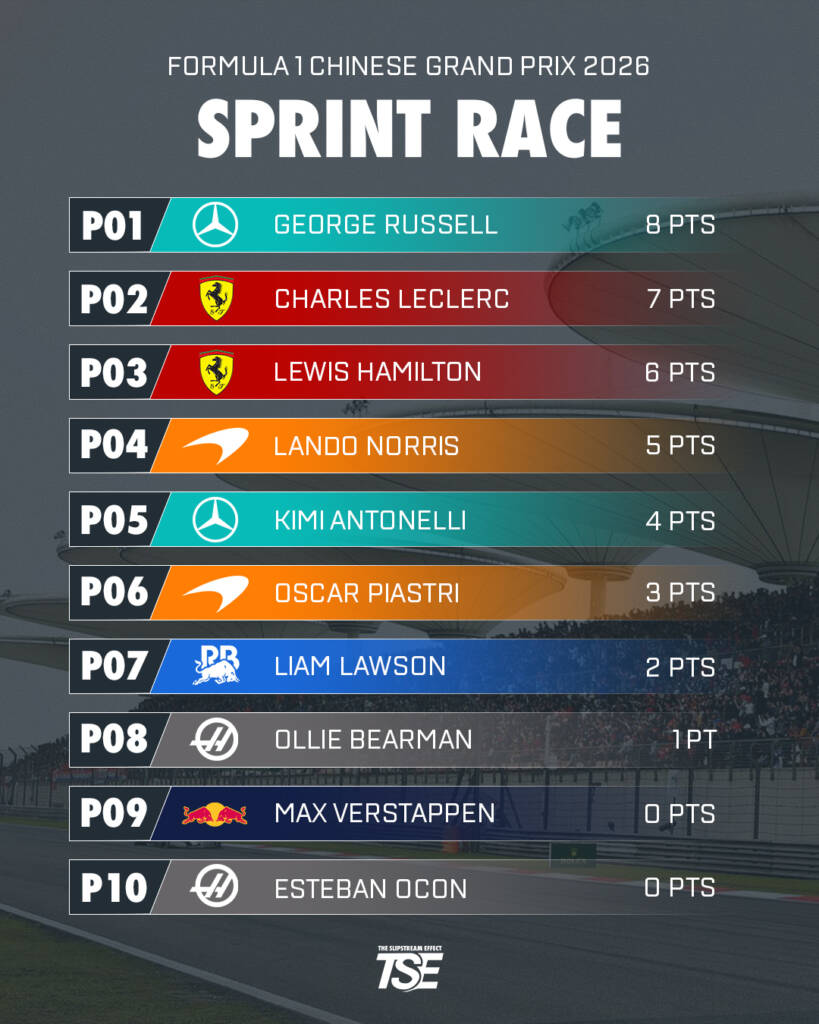
George Russell continued his brilliant start to the 2026 Formula 1 season by winning the Chinese GP Sprint at the Shanghai International Circuit, but this was not the kind of race he could manage comfortably from the front from start to finish. Instead, Russell had to absorb relentless early pressure from Ferrari, survive a race shaped by tyre degradation, and then execute one final restart after a late Safety Car brought the field back together.
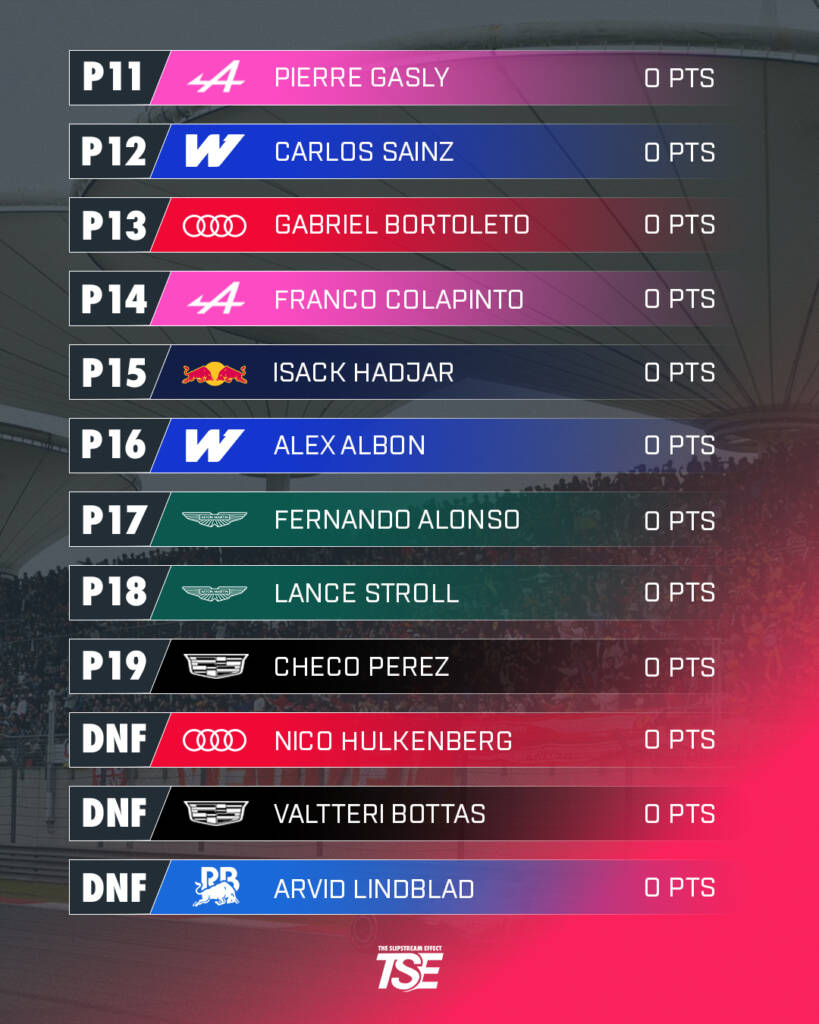
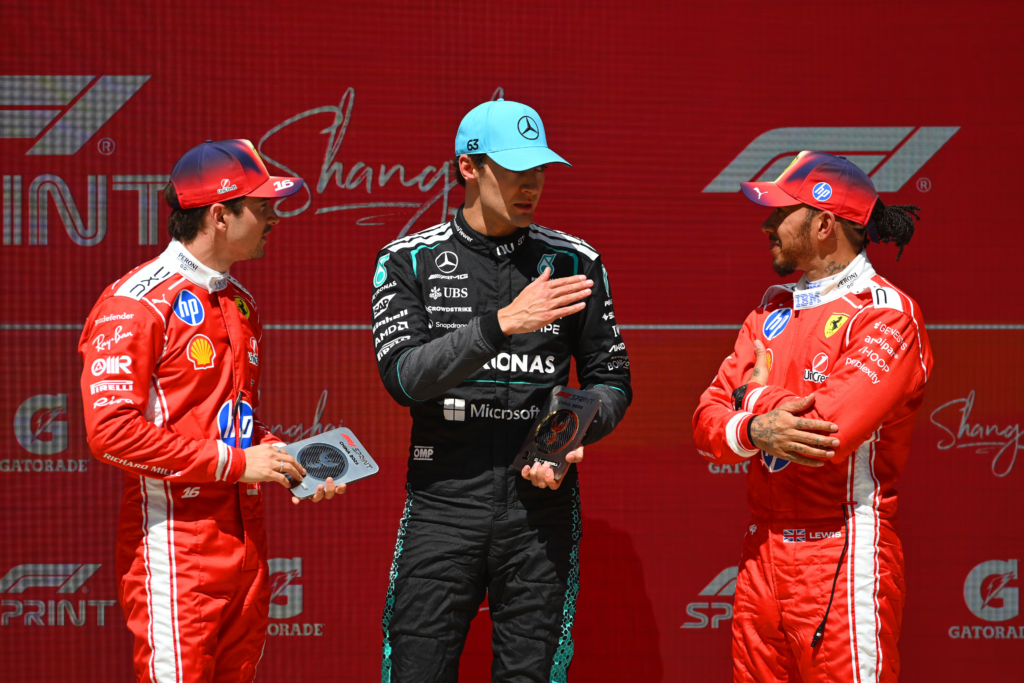
By the chequered flag, Russell had done enough to secure another important victory for Mercedes, crossing the line ahead of Charles Leclerc and Lewis Hamilton, with Ferrari putting two cars on the podium after a far more competitive showing in race trim than they had managed over one lap. Lando Norris finished fourth for McLaren, while Kimi Antonelli, Oscar Piastri, Liam Lawson and Ollie Bearman completed the points-paying positions in a Sprint that delivered far more tension than a 19-lap race might suggest.
Ferrari made Mercedes work for the win
Although Russell started from pole, Ferrari immediately showed that they had no intention of letting Mercedes control the Sprint uncontested. Lewis Hamilton made a strong getaway and quickly became Russell’s main challenger, with Charles Leclerc also positioning himself to take advantage of the fight unfolding ahead. That gave the opening laps a very different feel from a typical Sprint, because instead of one driver escaping up the road, the lead changed hands and the front three remained tightly locked together.
Hamilton in particular looked aggressive and committed in the early phase, using Ferrari’s strong launch performance and confidence under braking to take the fight directly to Russell. Their battle was one of the defining moments of the Sprint. Russell repeatedly looked to use Mercedes’ straight-line speed and energy deployment to move ahead, while Hamilton responded by braking later and positioning his Ferrari intelligently through the long opening complex. It was not just entertaining, it was significant, because every lap Russell spent fighting meant more pressure on his tyres and less chance to build the clean-air advantage that had served him so well in Melbourne.
Ferrari’s strength off the line and in wheel-to-wheel combat made this a genuine contest, and for a while it looked as though they might be able to turn that early aggression into a winning opportunity.
Russell found control once the tyres came into play
The race began to tilt more clearly in Russell’s favour once he finally managed to make the lead move stick and establish himself at the front. That moment mattered because it changed the nature of the Sprint. Up until then, Ferrari had been able to disrupt Mercedes’ rhythm, but once Russell had clean air and the freedom to manage the race from the front, his pace looked much more convincing.
The key factor was tyre management. Ferrari had the tools to fight hard in the opening phase, but the cost of that aggression became more visible as the laps went on. Hamilton’s tyres in particular began to suffer, while Russell looked more comfortable balancing speed with preservation. The Mercedes was still quick, but more importantly, it appeared easier on its tyres over the stint, which allowed Russell to edge clear without needing to overextend.
That ability to take control at exactly the right moment has become one of Russell’s biggest strengths. He did not panic when Ferrari attacked him early, and he did not force the issue too soon. Instead, he stayed close enough, chose his moments carefully, and once the opportunity came, he turned a volatile race into one he could dictate. Even in a Sprint, that kind of race management makes a difference.
Leclerc and Hamilton give Ferrari a deserved double podium
For Ferrari, second and third was still a strong return from a Sprint that underlined how competitive they can be in race conditions. Charles Leclerc drove a composed and intelligent race, staying close enough to the fight at the front to benefit when Hamilton began to lose grip. Lewis Hamilton, meanwhile, played a central role in the Sprint’s most exciting phase and gave Ferrari a real shot at taking the win, even if tyre wear ultimately prevented him from staying ahead.
There was a contrast between the two Ferrari drivers as the race developed. Hamilton looked the more aggressive of the pair in the early stages, and that helped create the opening for Ferrari to challenge Russell directly. Leclerc, by comparison, looked slightly more measured and benefited later in the Sprint when Hamilton’s front tyres began to show the effects of that earlier battle. That allowed Leclerc to move ahead and cement second place, while Hamilton still held on to complete the podium despite increasing pressure from behind.
The bigger takeaway for Ferrari is that their race pace appears far healthier than their qualifying pace. They were able to attack Mercedes, not just follow them, and they looked especially sharp in the first half of the Sprint. If they can improve tyre life over longer runs, they may become even more dangerous across the rest of the weekend.
Antonelli had the speed to recover, but not the race to match
Kimi Antonelli’s Sprint was one of the most eventful in the field, and in many ways it summed up both his immense potential and the rougher edges that still come with inexperience. Starting from the front row, he should have been in a strong position to support Mercedes at the front, but a poor launch immediately dropped him into the pack and forced him into recovery mode.
From there, his race became increasingly complicated. Contact with Isack Hadjar in the early laps led to a 10-second time penalty for causing a collision, and that penalty changed the terms of his Sprint entirely. Even so, Antonelli still showed impressive pace, fighting his way back through traffic and remaining competitive in battles with more experienced drivers. At times, he looked fast enough to threaten the cars immediately ahead, and that underlined just how much speed Mercedes had in Shanghai.
What cost him was not a lack of pace but a lack of control in key moments. Once he lost positions at the start, the race began to hurry him, and that urgency seemed to trigger the mistakes that followed. The upside for Mercedes is obvious, because the raw speed is there. The challenge for Antonelli is turning that speed into cleaner, more complete races.
McLaren scored solid points but never looked like winners
McLaren left the Sprint with points from both cars, but not with the sense that they had truly been in the fight for victory. Lando Norris came home fourth and Oscar Piastri finished sixth, which is a respectable return, but the race itself suggested that McLaren are still operating one step below Mercedes and Ferrari in China.
That gap was not enormous in every phase of the Sprint, but it was visible when the key moments arrived. Norris was unable to keep Hamilton behind once Ferrari found its rhythm, and Piastri, although competitive enough to stay in the points mix, never looked like he had the pace to attack the podium places. McLaren seem to have a stronger hand than the midfield, but they also look slightly isolated, quick enough to score well without quite having the performance needed to shape the race at the front.
There is still encouragement in that. Both drivers were comfortably in the points, and the car appears more stable and predictable than some of their rivals’ packages. But in performance terms, the Chinese GP Sprint suggested McLaren are not yet in a position to regularly dictate terms against Mercedes or Ferrari.
The late Safety Car changed the tone of the finish
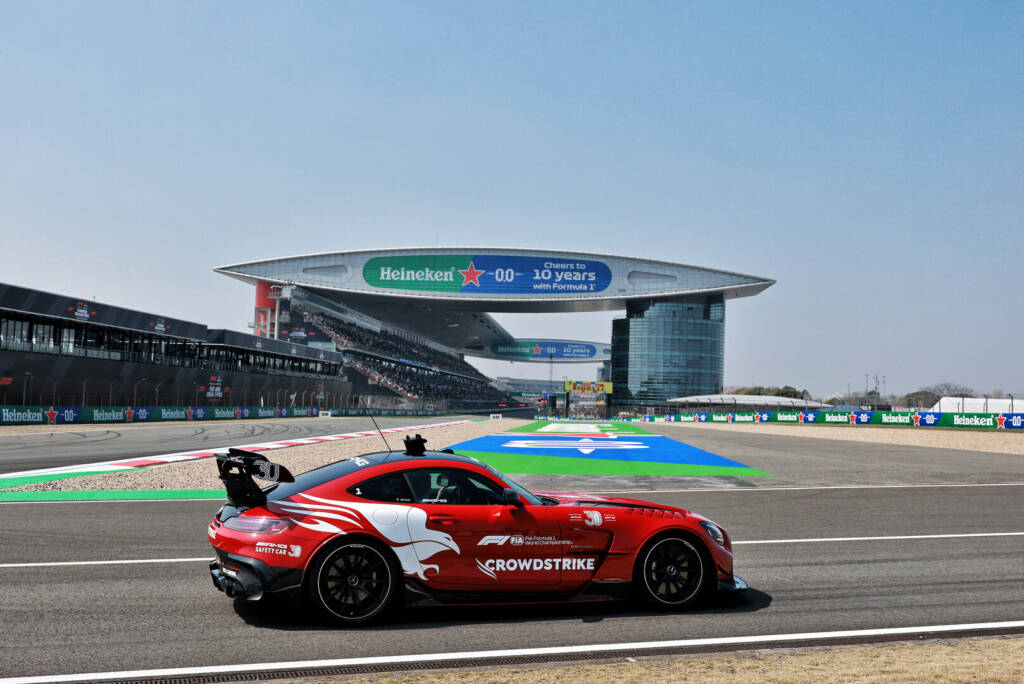
Just when the Sprint seemed to be settling into a clear pattern, Nico Hulkenberg’s retirement brought out the Safety Car and gave the race one final twist. That intervention wiped out Russell’s advantage and bunched the field back together, forcing the leaders into quick decisions and creating a restart scenario that briefly reopened the fight for victory.
Those moments mattered not only at the front but throughout the top eight. Pit stops under the Safety Car shuffled several positions, with some drivers losing out in double-stack situations and others briefly gaining momentum. For Russell, the challenge was obvious. He had done the hard work to create a margin, and suddenly he had to do it again with Leclerc right behind him. He handled it well, timing the restart cleanly and taking advantage of a small moment from Leclerc to rebuild enough breathing room to secure the win.
The Safety Car also added more complexity to the battles behind, particularly for drivers already managing penalties, tyre offsets or compromised races. In a Sprint, where opportunities are limited and every lap counts more heavily, that late neutralisation brought a level of unpredictability that the race had already deserved.
Red Bull’s lack of pace is becoming difficult to ignore
One of the most striking themes of the Chinese GP Sprint was Red Bull’s continued struggle. Max Verstappen finished outside the points in ninth, while Isack Hadjar’s race was shaped by early contact and tyre concerns before he fell well out of contention. Across the Sprint, neither Red Bull driver looked capable of seriously attacking the teams ahead, and that will be a concern heading into qualifying and the Grand Prix itself.
Verstappen’s poor start immediately put him on the back foot, but even after that he was not able to carve his way forward with the kind of authority usually associated with Red Bull machinery. Hadjar’s race was compromised in a different way, but the overall picture remained the same. This was not a one-off poor result caused by bad luck alone. The RB22 simply does not appear comfortable or competitive enough around Shanghai in its current form.
For a team used to operating at the sharp end, that is a serious problem. The Chinese GP Sprint did not just expose a bad race. It reinforced the sense that Red Bull are currently chasing answers rather than setting the standard.
Bearman and Lawson turned opportunity into points
Further down the order, Ollie Bearman and Liam Lawson both made the most of a chaotic and strategically complicated Sprint to score valuable points. Neither had the outright pace of the frontrunners, but both drove mature races and stayed close enough to the right battles to benefit when others around them began to struggle.
Bearman once again looked calm under pressure and continued the strong impression he has been building. Lawson, meanwhile, delivered one of the tidier races in the midfield and came away with a result that reflected both discipline and awareness. In a Sprint shaped by tyre management, incidents and a late Safety Car, those qualities mattered just as much as raw speed.
For teams fighting in the midfield, results like these are significant. The Sprint format does not offer many laps to recover from mistakes, which means drivers who avoid trouble and react well to changing circumstances can punch above expectation. That is exactly what Bearman and Lawson managed to do.
Mercedes head into qualifying with the advantage
By winning the Chinese GP Sprint, Russell has given Mercedes another boost in both confidence and momentum, and the team now head into qualifying with every reason to believe they remain the benchmark in Shanghai. The car looked fast, Russell looked composed, and even Antonelli’s messy Sprint still hinted at the depth of pace Mercedes have in hand this weekend.
Ferrari, however, look close enough to keep the pressure on, particularly if they can find a way to preserve their tyres more effectively over a full run. McLaren remain competitive without yet appearing ready to challenge for victory, while Red Bull’s struggles leave them with a much bigger job than expected before the next competitive session.
That makes qualifying especially important. Russell is the man with momentum, but the Chinese GP Sprint showed that Ferrari are more than capable of turning this weekend into a fight if they get the right track position. Mercedes may still have the upper hand, but Shanghai has already shown that nothing is coming easily.