


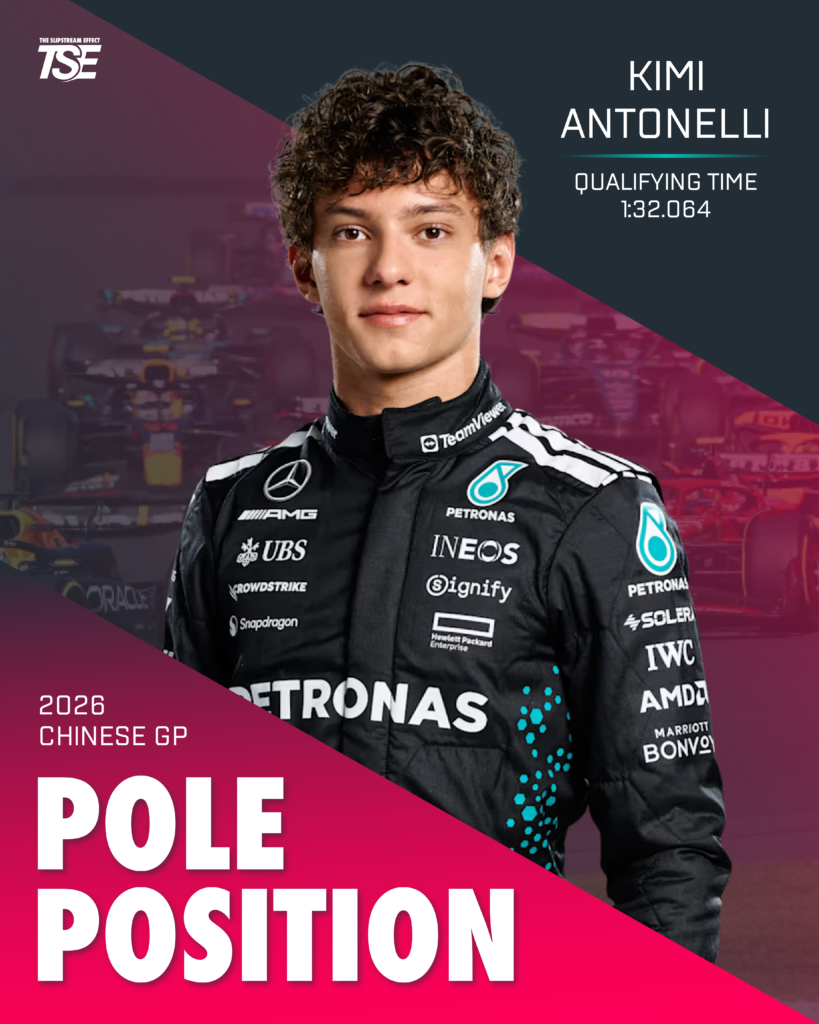
Kimi Antonelli delivered the biggest qualifying result of his Formula 1 career so far by taking pole position for the Chinese GP, becoming the youngest driver ever to secure pole for a full Grand Prix. At just 19, the Mercedes driver produced a clean and composed performance in Shanghai when it mattered most, beating team mate George Russell in a dramatic session that mixed outright speed with unexpected reliability trouble.
For Mercedes, the headline is clear: they locked out the front row again and confirmed they remain the benchmark over one lap. But the story of qualifying was not quite as straightforward as that result suggests. Russell, who had looked like the reference point for much of the weekend, was hit by technical issues in Q3 and only managed a single proper flying lap. Ferrari closed to within striking distance with Lewis Hamilton and Charles Leclerc taking the second row, while McLaren once again found themselves competitive without quite having enough to challenge the top two teams.
All of that leaves the Chinese GP with an intriguing shape. Antonelli has pole, but the drivers lining up behind him have already shown this weekend that track position alone may not be enough.
Antonelli turns speed into a record-breaking pole
Antonelli had already shown flashes of front-running pace this weekend, but qualifying was the first time he truly put the whole picture together. That was the most impressive part of the session. It was not just fast, it was controlled. Through the different phases of qualifying, he looked increasingly comfortable with the demands of the Shanghai circuit, and by Q3 he delivered the lap that defined the session.
His final benchmark of 1:32.064 gave him pole and secured a place in the record books, but the wider significance goes beyond the number itself. This was his first pole for a full Grand Prix, and it came in a session where the pressure on Mercedes was rising by the minute. Russell was dealing with issues on the other side of the garage, Ferrari were close enough to punish any mistake, and McLaren were still hovering just behind. In that context, Antonelli did exactly what Mercedes needed. He stayed focused, avoided errors, and produced the cleanest lap when the session reached its peak.
That matters because one of the themes around Antonelli so far has been that the pace is obvious, but the execution has not always followed. In Shanghai qualifying, it finally did.
Russell survives Mercedes drama to keep the front row
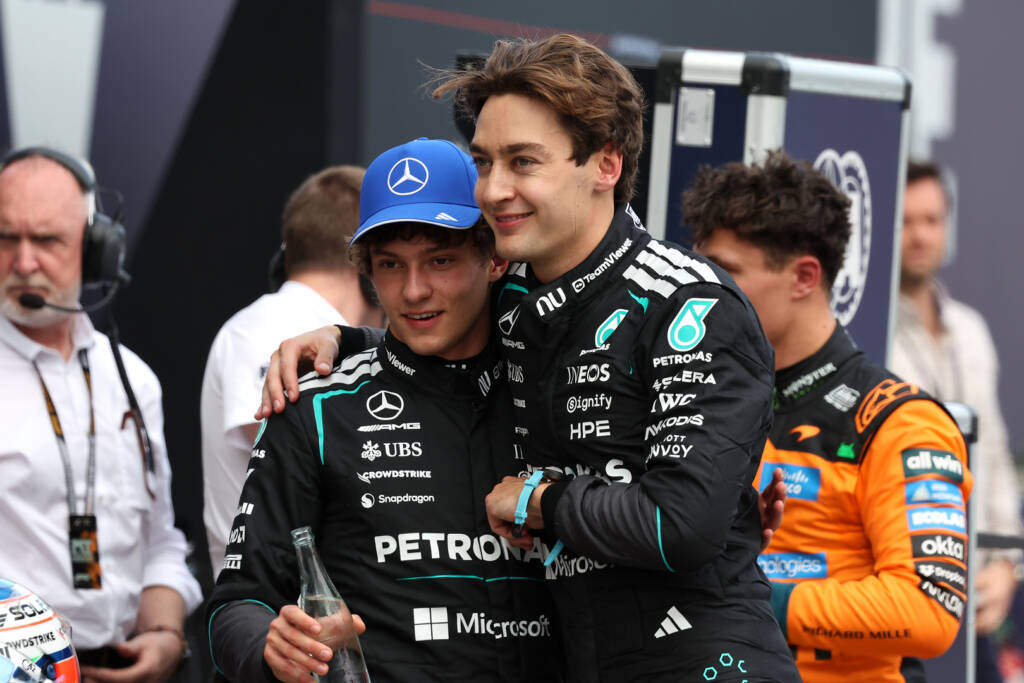
George Russell may have ended qualifying second, but his session was shaped as much by problem-solving as performance. After looking like the man to beat for large stretches of the weekend, Russell suddenly found himself wrestling with reliability issues at the worst possible moment. In Q3, he stopped on track on his out-lap and reported that the car was stuck in first gear, forcing Mercedes into a frantic recovery effort just to get him back to the pits.
That alone should have wrecked his session, but Russell still managed to salvage a front-row start. Mercedes power-cycled the car, worked rapidly in the garage, and somehow sent him back out for one final run. He had no ideal preparation, no rhythm, and by his own admission no proper battery or tyre temperature on the last lap, yet he still did enough to secure second place.
In a normal session, that would be frustrating. In this one, it was damage limitation of a very high standard. The bigger concern for Mercedes is what it means for Sunday. Their raw pace is still obvious, but the reliability gremlins that affected Russell in qualifying, added to other issues seen across the weekend, are a reminder that performance alone does not guarantee a clean race.
Ferrari are close enough to turn the start into a threat
If Antonelli’s pole was the headline and Russell’s recovery was the drama, Ferrari’s qualifying was the warning sign for Sunday. Lewis Hamilton and Charles Leclerc locked out the second row, and while neither had the outright pace to challenge for pole, both were close enough to keep Mercedes honest. The gap has clearly come down since Melbourne, and perhaps more importantly, Ferrari have already shown in both the Sprint and previous starts this season that they can be extremely dangerous off the line.
Hamilton ended up third, narrowly ahead of Leclerc, and looked satisfied with the progress Ferrari made between sessions. It was not a perfect qualifying for either driver, particularly with the wind making the cars more unpredictable through the lap, but it was good enough to put both scarlet cars in exactly the kind of position Ferrari would have wanted. Starting just behind the Mercedes pair keeps them firmly in play, especially with the long run to the opening corners in Shanghai.
That is what should concern Mercedes most. Pole is valuable, but if Ferrari launch well again, the race could look very different by the end of the first lap. Qualifying suggested Ferrari are not quite the fastest team over one lap in China, but it also reinforced that they are close enough to shape the Grand Prix from the opening metres.
McLaren remain competitive, but still slightly detached
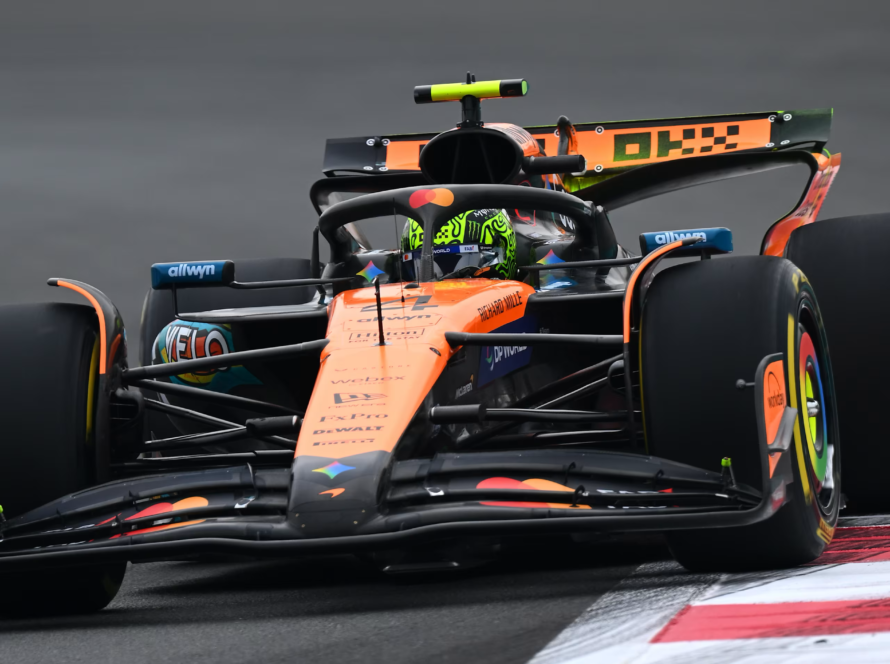
McLaren once again looked like the team caught between categories. They are clearly stronger than the midfield, but they still do not seem to have the final margin needed to properly attack Mercedes and Ferrari. Oscar Piastri qualified fifth, just ahead of Lando Norris in sixth, and while that gives the team a solid platform for Sunday, the overall picture remains slightly frustrating.
There were moments in qualifying when McLaren looked as if they might threaten the second row. The car is not unstable or wildly inconsistent, and both drivers were able to put together respectable laps, but when the front-runners found the final few tenths in Q3, McLaren could not quite go with them. That has been the pattern for much of the weekend so far. They are present, but not decisive.
For the race, that leaves them in an awkward position. They are close enough to benefit if the frontrunners trip over each other, but not yet close enough to impose themselves naturally on the fight at the front. That does not rule them out of a big result, especially if tyre degradation or strategy opens things up, but qualifying suggested they will need help if they want to move beyond the third row.
Gasly stars again as Red Bull continue to search for answers
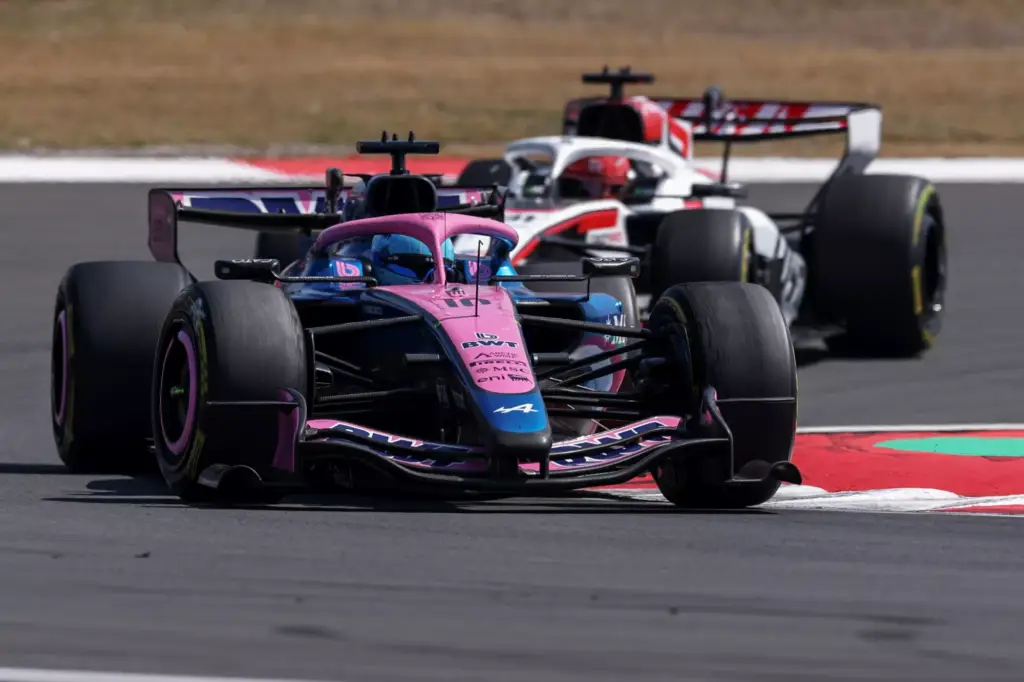
One of the standout performances of qualifying came from Pierre Gasly, who put his Alpine seventh on the grid and once again found a way to insert himself into a battle that should, on paper, belong to the bigger teams. It was another strong lap in what is becoming a quietly impressive weekend for the Frenchman, and it underlined Alpine’s ability to maximise opportunities when others around them fall slightly short.
Gasly’s result looked even better in the context of Red Bull’s continued struggles. Max Verstappen could only qualify eighth, with Isack Hadjar ninth, and although the gap between them was relatively small, neither looked capable of threatening the top six. That is now more than just a difficult Sprint or an off-colour practice session. Across the weekend, Red Bull have looked persistently short of the level expected of them, and Shanghai has exposed that more clearly than Melbourne did.
For Verstappen, the frustration is obvious. For Hadjar, there is at least some encouragement in staying relatively close to his team mate. But for the team as a whole, qualifying reinforced the same uncomfortable point: right now, they are reacting rather than dictating.
Bearman keeps Haas in the top 10 again
Ollie Bearman rounded out the top 10 with another calm and convincing qualifying performance, continuing a very encouraging run of form. What stands out with Bearman is not just the result itself, but how repeatable it is beginning to look. He was competitive in Sprint Qualifying, scored points in the Sprint, and then backed it up by reaching Q3 again for the main qualifying session.
That consistency matters for Haas, especially on a weekend where the midfield is tightly packed and small margins are deciding everything. Bearman has looked confident over one lap and increasingly assured in managing the pressure of high-intensity sessions. In Shanghai, that confidence translated into another top-10 grid slot and another chance to fight for points.
In a weekend dominated by the Mercedes story, Bearman’s work might not take the biggest headlines, but it has been one of the more quietly effective performances in the field.
Q1 and Q2 expose the teams already on the back foot
Further down the order, qualifying reinforced the growing divide between the leading teams, the competitive midfield, and those already scrambling for answers. Williams had another difficult session, with both Carlos Sainz and Alex Albon eliminated in Q1, while Aston Martin also lost both cars early. Cadillac’s struggles continued too, with Sergio Perez failing to progress and Valtteri Bottas also dropping out in the first segment.
Q2 then proved just as unforgiving for the midfield fringe. Nico Hulkenberg missed out by the narrowest of margins, while Franco Colapinto, Esteban Ocon, Liam Lawson, Arvid Lindblad and Gabriel Bortoleto all fell short of the top 10. The margins were tiny, but that only made the pressure heavier. One small mistake, one spin, one yellow flag, and the session was gone.
That kind of compression is going to matter on Sunday as well. Cars starting in the middle of the pack may be separated by only a few tenths on pace, but their race prospects can look very different depending on how cleanly they manage the opening lap and first strategy phase.
The Chinese GP now has a very different kind of pole sitter
Antonelli’s pole does not guarantee victory, but it changes the conversation around the Chinese GP in an important way. Until now, much of the focus on Mercedes has naturally centred on Russell, whose pace and authority have made him look like the team’s established reference point. In Shanghai qualifying, Antonelli changed that dynamic. He did not inherit pole through chaos or luck. He earned it with the best lap of the session.
That sets up a fascinating race. Mercedes still look like the strongest package overall, but Russell is alongside, Ferrari are directly behind and dangerous at the start, and McLaren are close enough to take advantage if the front four become compromised. Add in the reliability questions seen across the weekend and the possibility of Safety Cars, and the Chinese GP starts to look much less straightforward than a front-row lockout might suggest.
What Antonelli has done is give the Grand Prix a fresh centre of gravity. The pace has always been there. Now he has the grid position to turn it into something bigger.


1 Comment