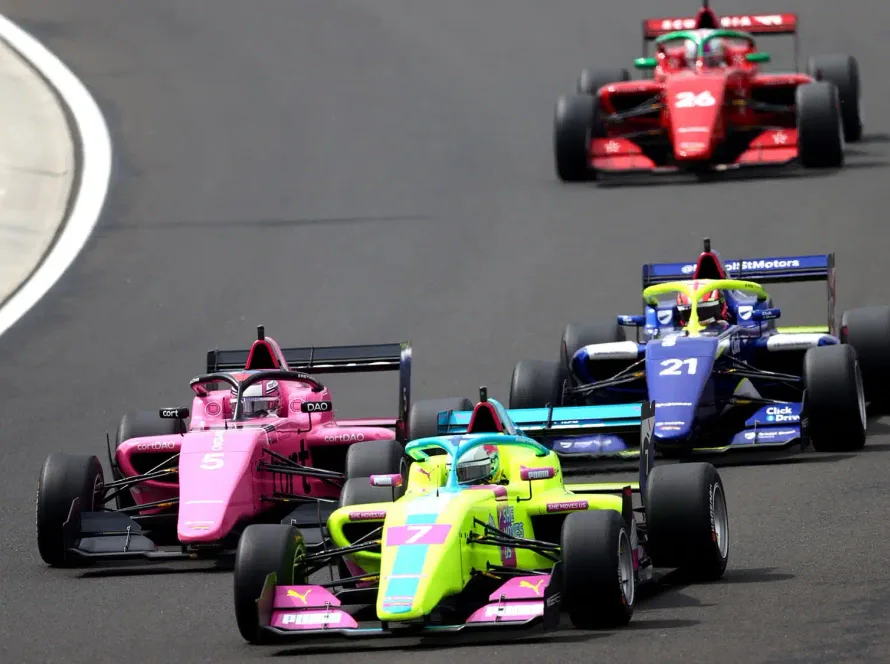
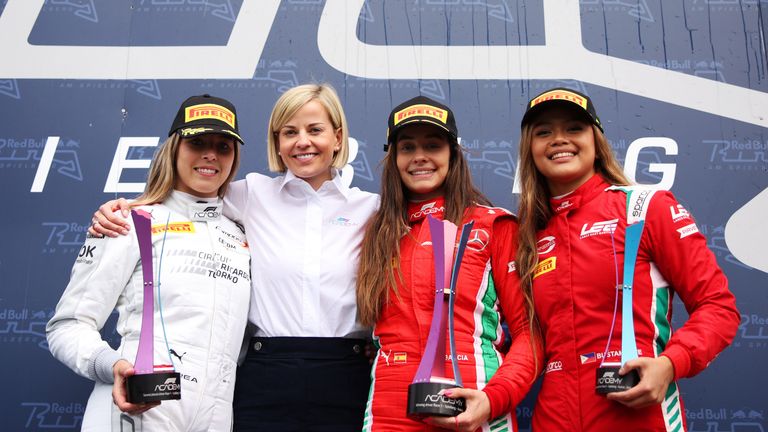
Look at an F1 Academy grid and the cars might appear fairly similar, but there is an important detail that is easy to miss: they are not just similar. They are the same specification.
All 18 drivers race the T421-F1A, the current F1 Academy car. The teams have different liveries, engineers and drivers, but they do not have the freedom to design their own cars or develop a faster engine. In a championship built around driver development, that is a deliberate choice.
It raises an obvious question. If everyone has the same car, what actually separates one driver from another?
To answer that, it is worth looking at the car itself and what the one-make format really means once the drivers leave the pit lane.
Why are the cars the same?
F1 Academy is a one-make championship, so the cars are supplied to the teams to the same specification. Rather than spending the season trying to find a technical advantage over another team, engineers are focused on understanding the car they have and getting it to work as well as possible for their driver.
That does not mean every car is simply taken out of its garage and driven exactly as it arrived.
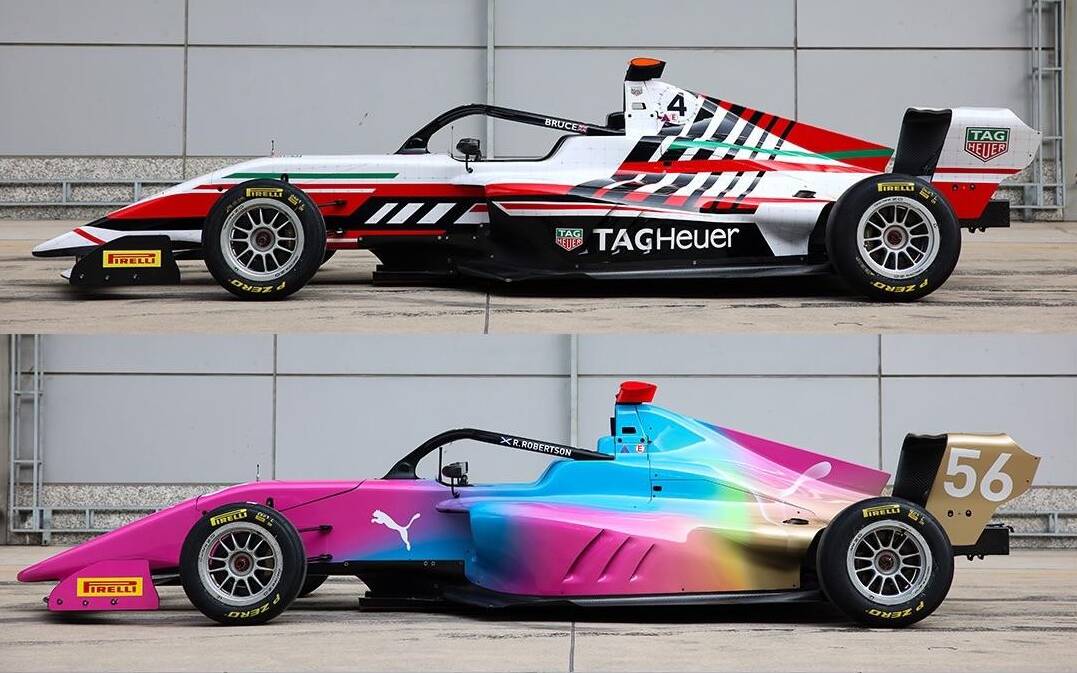
There is still plenty of room to work on setup, particularly with the suspension. The aim is to find the right balance for the driver and the circuit. A car that feels predictable through high-speed corners may not behave in the same way through a track dominated by heavy braking and slow exits, while two drivers can have very different preferences even when they are driving the same car.
The hardware is controlled, but the process of finding performance is not.
What is the T421-F1A?
The car itself is built by Italian manufacturer Tatuus and is based on the T-421 platform used in Formula 4. It has a carbon monocoque chassis, a 1.4-litre turbocharged Autotecnica engine producing 174 bhp and a six-speed sequential gearbox operated by steering-wheel paddles.
On track, the car is capable of reaching around 240 km/h, accelerating from 0 to 100 km/h in 3.6 seconds and generating up to 2G of lateral acceleration through corners.
A lot of that performance comes from the relationship between the car’s mechanical grip and its aerodynamics. The front and rear wings produce downforce, giving the car more grip as its speed increases. Teams can adjust the aerodynamic balance depending on what a circuit demands, but there is always a compromise. More downforce can make the car quicker through corners, while the resulting drag can cost speed on the straights.
Tyres are another part of the equation. They need to be working in the right temperature range, and the way they are treated over a lap or race can have a significant effect on performance. A driver who attacks every corner aggressively may gain time in one part of the lap but give it back later if the tyres begin to lose performance.
How close is it to Formula 4?
The F1 Academy car’s connection to Formula 4 is fairly direct. The Tatuus T-421 platform is used by several F4 championships, including British F4, so the basic architecture will be familiar to anyone who follows junior single-seaters.
The F1 Academy version has been adapted specifically for the championship. It uses its own aerodynamic package, including bespoke front and rear wings, and a different engine specification from British F4. The F1 Academy car’s Autotecnica engine produces 174 bhp, while British F4’s T-421 uses an Abarth 1.4-litre turbocharged engine.
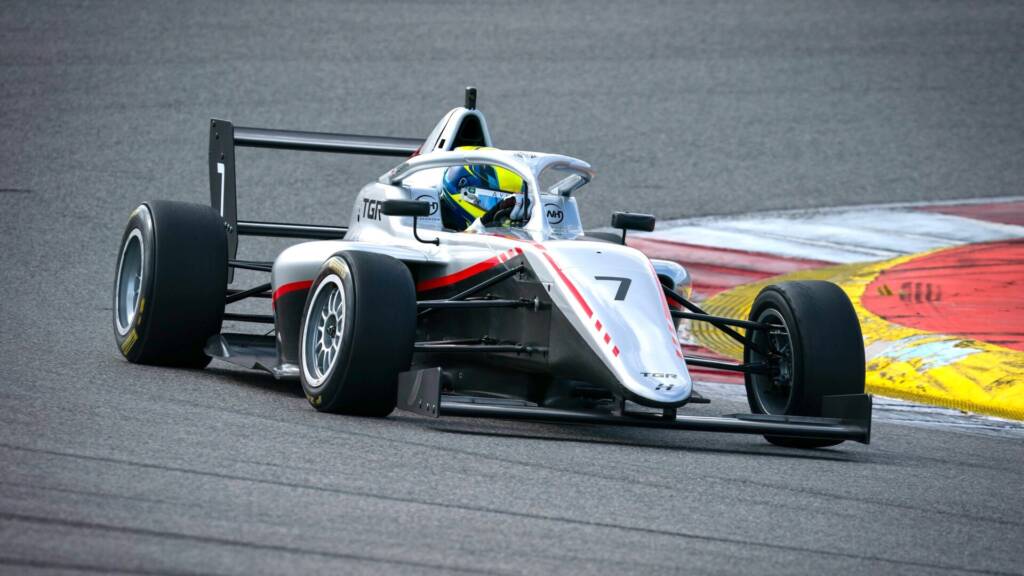
The two categories therefore share a technical foundation, but the cars are not interchangeable. The T421-F1A has been developed around the requirements of F1 Academy.
Where does the lap time actually come from?
This is where having identical cars becomes particularly interesting.
If two drivers have the same engine, gearbox, chassis and tyres, there are fewer places to hide a difference in performance. A tenth of a second can come from braking a little later, carrying slightly more speed through a corner or getting back onto the throttle a fraction earlier. Over an entire lap, those small gains add up.
The driver has to work with the car rather than simply drive around its problems. A setup that gives good front-end response might make the rear less stable, while more stability could give a driver confidence but cost some rotation through slower corners. Finding the right compromise is part of the job shared between driver and engineer.
That is why drivers can be particularly interesting to compare. They have the same machinery, but they do not necessarily use it in the same way. One driver might be more comfortable carrying speed into a corner, while another might be stronger under braking or more consistent with the tyres over a race.
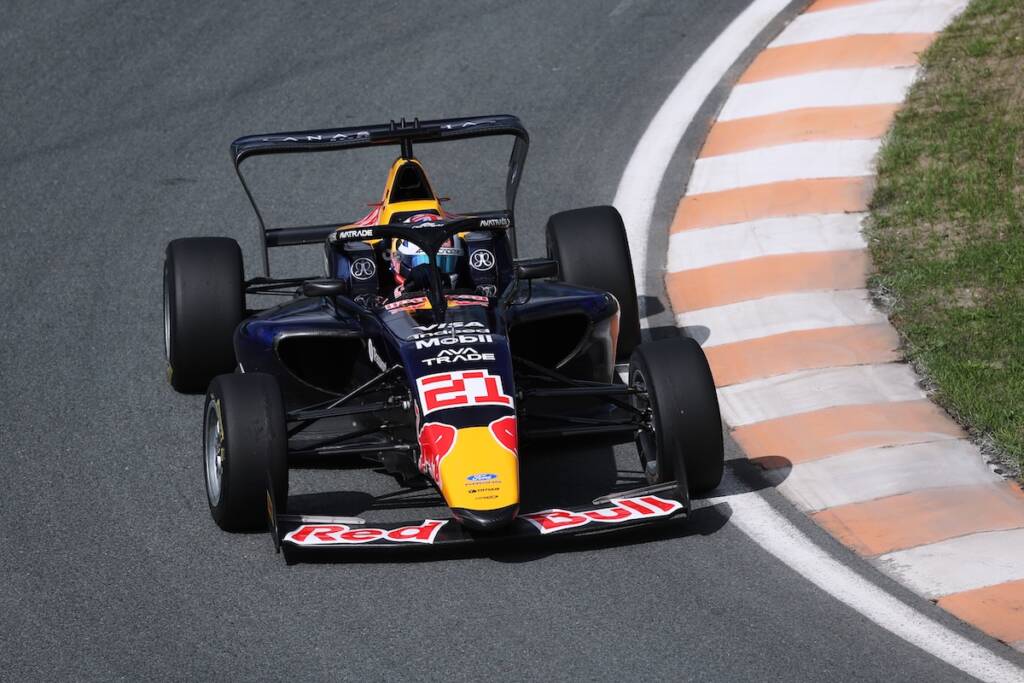
This is ultimately what the one-make philosophy is designed to expose. F1 Academy is not removing the technical side of racing, it is narrowing where those technical differences can come from. Everyone starts with the same T421-F1A, making the decisions behind the wheel and in the garage easier to see.
The car is only part of the equation
The T421-F1A might be identical across the F1 Academy grid, but the way each driver uses it is not. The one-make format removes some of the variables that can separate cars in other championships, while leaving plenty of room for differences in setup, driving style, tyre management and consistency.
Its F4 roots, aerodynamic package and setup options all shape how the racing looks, but every driver is ultimately working from the same starting point. The interesting part is what they do with it.