


The Formula 1 paddock barely has time to catch its breath before the championship moves to Shanghai for the Chinese GP, the second round of the 2026 season and the first Sprint weekend of the year.
After an eventful opener in Melbourne, the grid arrives in China with an early pecking order beginning to emerge. Mercedes left Australia with a commanding one-two finish, Ferrari showed flashes of pace without fully converting it, while McLaren and Red Bull were left chasing answers.
The Chinese GP will not just be another race weekend. With the Sprint format compressing the schedule and limiting preparation time, it becomes an early stress test for teams still learning how to extract performance from Formula 1’s new generation of cars.
Shanghai: a circuit that rewards precision
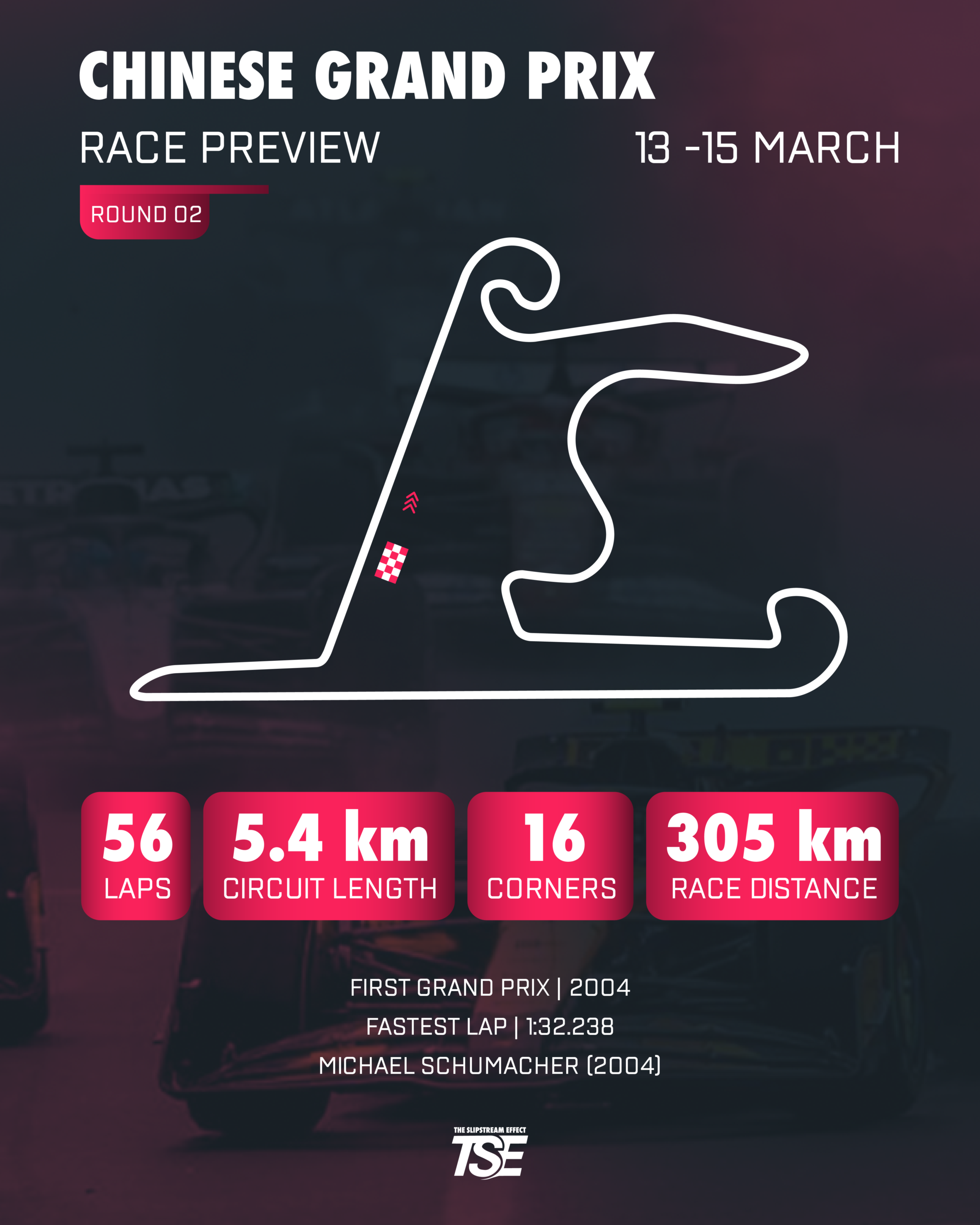
Since its debut in 2004, the Shanghai International Circuit has become one of the most technically demanding venues on the calendar. The track measures 5.451 km, with drivers completing 56 laps during Sunday’s race for a total distance of 305 km.
The circuit’s most famous feature comes immediately after the start. Turns 1 and 2 form a tightening spiral that punishes drivers who misjudge their entry speed, while the long straight that follows later in the lap provides one of the best overtaking opportunities in Formula 1.
Shanghai has always rewarded drivers who can manage tyre wear while maximising exit speed onto the straights. Under the new 2026 regulations, where energy deployment and efficiency play a larger role, those characteristics could become even more decisive during the Chinese GP.
Sprint format changes the rhythm of the weekend
The Chinese GP is the first of several Sprint events this season, meaning the weekend format differs significantly from a traditional race weekend.
Instead of three practice sessions, teams only have one hour of practice on Friday before competitive action begins. Sprint qualifying then takes place later that same day, setting the grid for Saturday’s sprint race.
The sprint itself covers roughly 100 kilometres, roughly one third of a normal Grand Prix distance, and is designed to encourage flat-out racing with minimal strategic complexity.
Saturday then continues with traditional qualifying for Sunday’s main race.
The condensed format forces teams to make critical setup decisions much earlier than usual. A car that misses the setup window in Friday practice can quickly find its entire Chinese GP weekend compromised.
Mercedes arrive with early momentum
The biggest storyline heading into the Chinese GP is Mercedes’ strong start to the season.
George Russell opened the year with victory in Australia, while Kimi Antonelli’s second place secured a dominant one-two finish for the Silver Arrows. That result immediately placed Russell at the top of the championship standings and confirmed Mercedes as the early benchmark under the new regulations.
However, sprint weekends have a habit of reshuffling the order. With limited preparation time and more competitive running packed into the weekend, even small mistakes can dramatically change the outcome.
For Mercedes, Shanghai will reveal whether their Melbourne advantage represents genuine pace or simply a strong opening weekend.
Ferrari searching for cleaner execution
Ferrari left Australia believing they had more pace than the final result suggested.
Charles Leclerc secured a podium, while Lewis Hamilton showed competitive race pace throughout the weekend. Yet strategic calls during the race ultimately prevented the Scuderia from challenging Mercedes for victory.
The Chinese GP could offer Ferrari a better opportunity. The long straights reward strong traction and acceleration, two areas where the Ferrari package appeared competitive in Melbourne.
If Ferrari can combine that pace with stronger race management, Shanghai may produce a much closer battle at the front.
McLaren and Red Bull looking for answers
For McLaren and Red Bull, the Chinese GP arrives as an early opportunity to reset.
McLaren showed encouraging pace in practice and qualifying in Australia but lacked the consistency to fight Mercedes across a full race distance. Red Bull, meanwhile, endured a difficult weekend after Max Verstappen’s qualifying crash forced him into a recovery drive from the back of the grid.
Shanghai’s sprint format could actually help both teams understand their cars more quickly. With an extra race session on Saturday, engineers gain additional data on tyre behaviour, energy deployment and overtaking performance under real racing conditions.
F1 Academy launches its new season
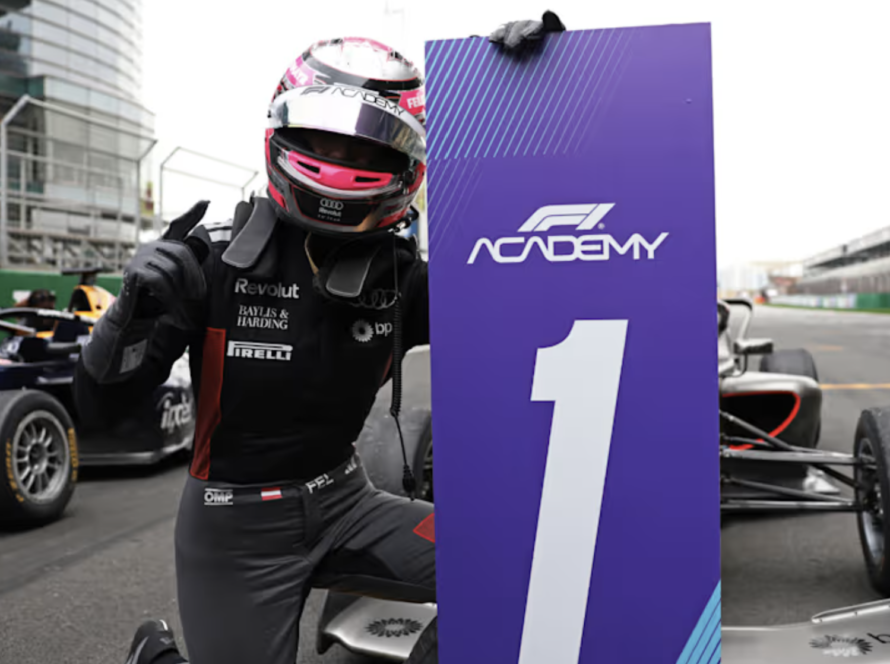
Alongside Formula 1, the Chinese GP weekend will also host the opening round of the 2026 F1 Academy season.
The all-female championship continues to grow in prominence within the Formula 1 ecosystem, providing young drivers with a platform to compete on the same circuits as the main championship.
With qualifying and two races scheduled across the weekend, the series will add another competitive storyline to an already busy Chinese GP event.
A crucial early test in the championship
One race rarely defines a Formula 1 season, but sprint weekends tend to accelerate the process.
With limited preparation time and more competitive sessions packed into three days, teams are forced to reveal their true performance earlier than usual.
The Chinese GP therefore arrives at a key moment. Mercedes lead the championship, Ferrari believe they can close the gap, and McLaren and Red Bull are searching for the development path that will bring them back into the fight.
By the time the paddock leaves Shanghai, the early narrative of the 2026 season may already be much clearer.

2 Comments