In a hotel room in Monte Carlo, a coin spun into the air and disappeared under a curtain. Ron Dennis had been arguing with a young Brazilian driver over half a million dollars, and neither man would budge, so Dennis suggested they flip for it. He won. He also won something far bigger that day: five years with Ayrton Senna, and one of the most complete F1 mentorships ever produced.
Every era-defining driver in this sport has had a boss standing just behind the podium who saw it first. Not the results. The person. F1 mentorship rarely gets the same column inches as the championships it produces, but strip away the trophies and what’s left is something closer to family, three very different versions of it.
The courtship
Dennis had been watching Senna since Formula Ford, years before McLaren ever offered him a seat. When Senna first turned McLaren down in 1982, choosing independence over an easy option, Dennis didn’t push. He respected it. It would be another five years before Senna came looking for him instead, driven to join the team he’d identified as the sport’s benchmark.
Jean Todt’s courtship of Michael Schumacher was more deliberate still. Ferrari hadn’t won a drivers’ title since 1979 when Todt arrived in 1993, and he built his entire rebuild around one signature: Schumacher’s. The contract was finally signed in Schumacher’s own Monte Carlo apartment in 1995, the hotel having run out of rooms to keep negotiating in.
Toto Wolff and Lewis Hamilton skipped the courtship altogether and simply leapt together into their F1 mentorship. Both arrived at Mercedes for the 2013 season within months of each other, Wolff from Williams, Hamilton from McLaren, neither with any guarantee the gamble would pay off. As Wolff put it years later, they had no idea what they were starting.
Built through the wins
What each of these partnerships built afterward speaks for itself, but the character study is in how differently each one worked.
Dennis and Senna won three world titles together between 1988 and 1993, Senna crossing the line first in 35 of his 96 races for McLaren, a strike rate that still ranks among the greatest in the sport’s history. Todt and Schumacher went five consecutive titles from 2000 to 2004, an era of Ferrari dominance built on a driver who, even mid-streak, insisted on testing himself every winter just to be sure he still belonged there.
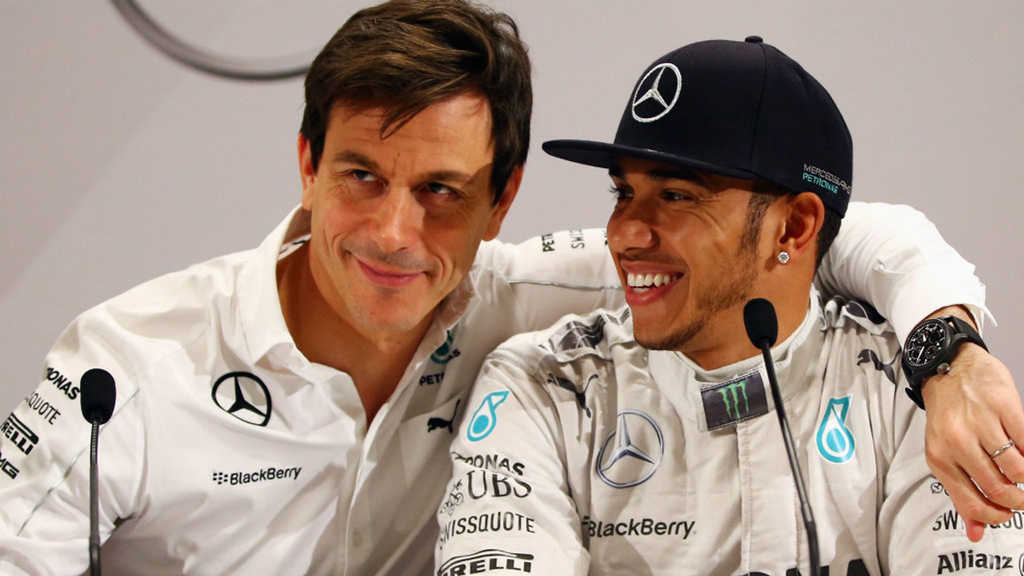
Wolff and Hamilton stacked six drivers’ championships across twelve seasons, a run so total that Hamilton has said flatly it all starts with Toto, his vision setting the tone for everyone underneath him.
Three different sports, almost, played out under the same five red lights.
When loyalty was tested
The truest test of any of these relationships came when the results weren’t there yet.
In 1996, Ferrari’s board was ready to move on from Todt after a string of retirements. Schumacher, barely a season into his own Ferrari career, made it plain to the team that he’d leave too if Todt went. He didn’t have to say it twice. Todt kept his job, and four years later the pair began the most dominant run in Ferrari’s history.
Wolff faced a quieter version of the same test in 2024, when Hamilton chose to leave for Ferrari after twelve years. Wolff has said the two of them worked hard to keep the exit from turning cold or difficult, and largely succeeded. Hamilton still turns up at the Mercedes garage on race weekends. He still flies home with Wolff after some races, the old gang intact even with different overalls in the photos.
For Dennis, loyalty outlived the driver entirely. Senna passed away at Imola in 1994, months after leaving McLaren for Williams. Twenty years on, at a screening of the Senna documentary, Dennis was reportedly moved to tears, a rare public crack in a famously private man.
What outlasts the trophies
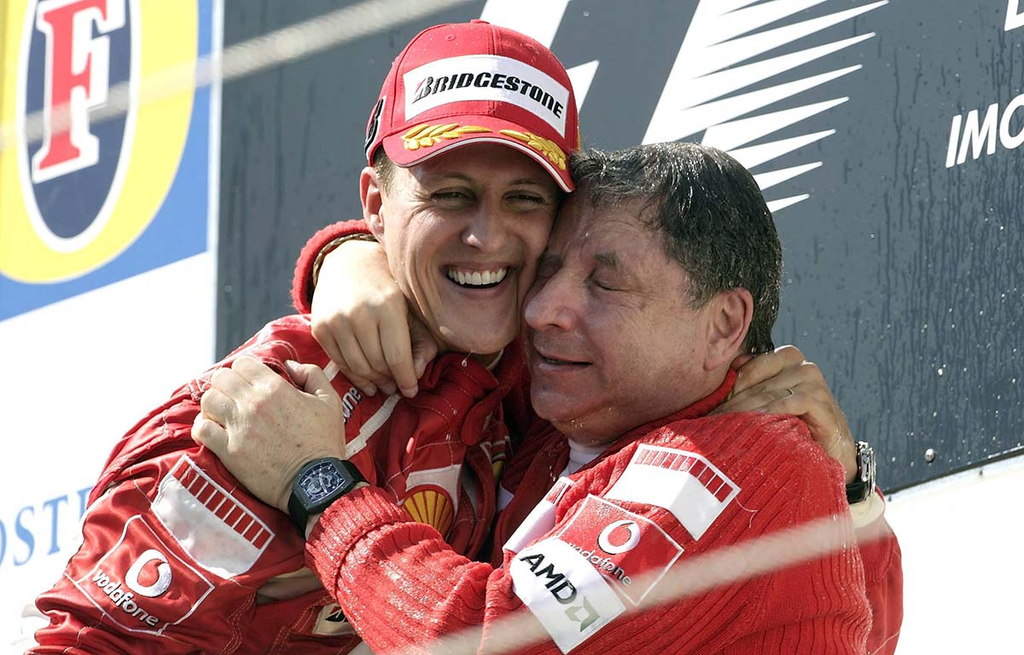
Strip away the podiums and the strategy calls, and what’s left in each of these stories is remarkably ordinary. Todt still calls Schumacher a friend, decades on and through circumstances no one at Ferrari could have foreseen. Wolff still credits his own mentor, the late Niki Lauda, with persuading Hamilton to join Mercedes in the first place, a reminder that mentorship in this sport tends to move in chains rather than straight lines.
And Dennis, asked to reflect on Senna two decades after his death, chose to remember a young driver who’d once impersonated Nigel Mansell’s accent in the McLaren garage just to make everyone laugh.
None of these relationships were uncomplicated. Senna and Dennis clashed. Schumacher pushed Todt to his limit before he ever won him a title. Hamilton and Wolff have had, in Hamilton’s own words, a rollercoaster of emotions over twelve years together. But F1 mentorship was never supposed to be frictionless. It was supposed to be durable, the kind of bond that survives a bad qualifying session, a boardroom threat, or a driver’s move down the pit lane to a rival in red.
That’s the part the record books don’t show. Not who won, but who believed first, and stayed.