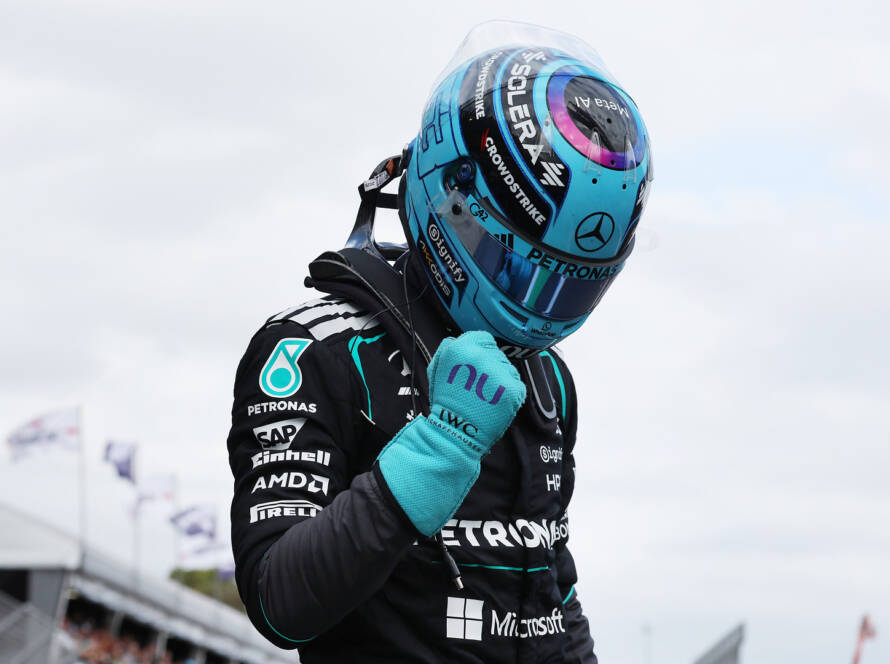
Every driver on the Formula One grid has one teammate they cannot escape, and F1 teammates are a rivalry unlike any other in sport. It is not the driver two seconds up the road. It is the one sharing their garage, their engineers and their car.
Great F1 teammates are rare, because the sport asks two people to be equal number ones while handing them identical machinery to prove otherwise. Some pairings survive that pressure and grow stronger over time. Others do not make it past a single season.
Looking back across F1 history, the difference rarely comes down to talent. It comes down to restraint.
When trust breaks down
No pairing shows the danger better than Ayrton Senna and Alain Prost at McLaren. They arrived as respected rivals in 1988 and left as something closer to enemies. Their tension boiled over at the 1989 Japanese Grand Prix, when a collision at Suzuka decided the title and split the sport’s fanbase for years.
Encouragingly, the story did not end there. Senna and Prost rebuilt enough of a friendship in the years before Senna’s death in 1994 that fans still point to it as proof even F1’s fiercest rivalries can heal.
Red Bull learned a version of the same lesson in 2013. When Sebastian Vettel ignored the “Multi 21” instruction to hold station and passed teammate Mark Webber for the win at the Malaysian Grand Prix, Webber’s response over team radio needed no translation.
“Yeah, that’s good teamwork,” he said. The pair were never close again.
What both rivalries share is that great F1 teammates are rarely undone by one bad race. They are undone by what happens after it, when neither driver is willing to be the one who backs down.
The poisoned chalice
Not every partnership gets the chance to sour, because some never get the chance to form at all. Since Daniel Ricciardo left Red Bull at the end of 2018, Max Verstappen has watched a long line of teammates try and fail to keep pace with him.
Pierre Gasly, Alex Albon and Sergio Pérez all struggled in the seat before being moved on. For 2026, it went to Isack Hadjar, who got promoted after an impressive rookie season at Red Bull’s junior team, Racing Bulls. Team Principal Laurent Mekies was optimistic he can “produce the magic on track.”
History says otherwise. The seat next to Verstappen has been called the hardest in F1 for a reason. “The second seat curse” of never matching up to the four-time World Champion and eventually washing out.
Great F1 teammates need time to build understanding, something that while Verstappen might offer, the seat has not.
The friendship that set the bar
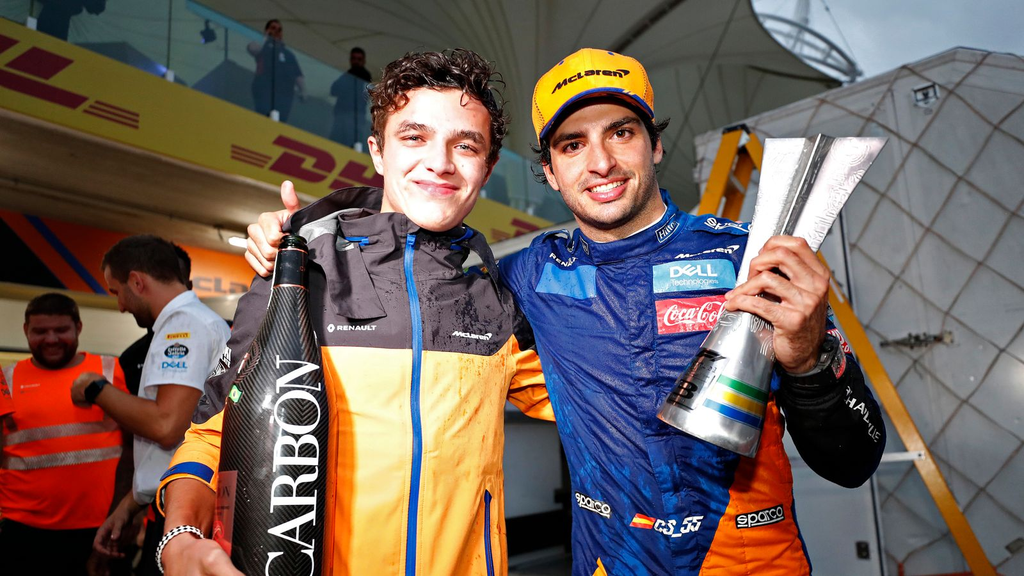
Not every story about F1 teammates ends in fallout, and some end up shaping everything that comes after. Lando Norris and Carlos Sainz shared the McLaren garage for just two seasons, 2019 and 2020. They became one of the grid’s most talked about pairings, known to fans simply as “Carlando.”
Norris has been clear the bond went beyond good chemistry. “What me and Carlos had, or just the level of respect we had for each other, was just higher than what most people see between drivers in Formula 1,” he said, looking back on it years later.
That standard followed him. When Daniel Ricciardo joined McLaren in 2021, Norris admitted the friendship was warm but different. He put it down simply to having different interests away from the track. When Oscar Piastri arrived in 2023, Norris again measured the new dynamic against what came before, eventually calling Piastri the tougher rival of the two.
What Sainz gave Norris was not just a good teammate. It was a benchmark for what great F1 teammates could look like, one he has been chasing with every partner since.
Barcelona, again
Ten years on from Lewis Hamilton and Nico Rosberg’s collision at the Circuit de Barcelona-Catalunya, Mercedes found themselves with another pair of teammates fighting for the same championship. Hamilton and Rosberg had raced go-karts together as children, yet by 2016 the friendship had worn through under the weight of consecutive title fights.
Their collision on the opening lap of the Spanish Grand Prix summed up where things stood. Team Principal Toto Wolff did not hide his frustration afterwards. “It makes me want to puke myself,” he said, of the prospect of imposing team orders to stop it happening again.
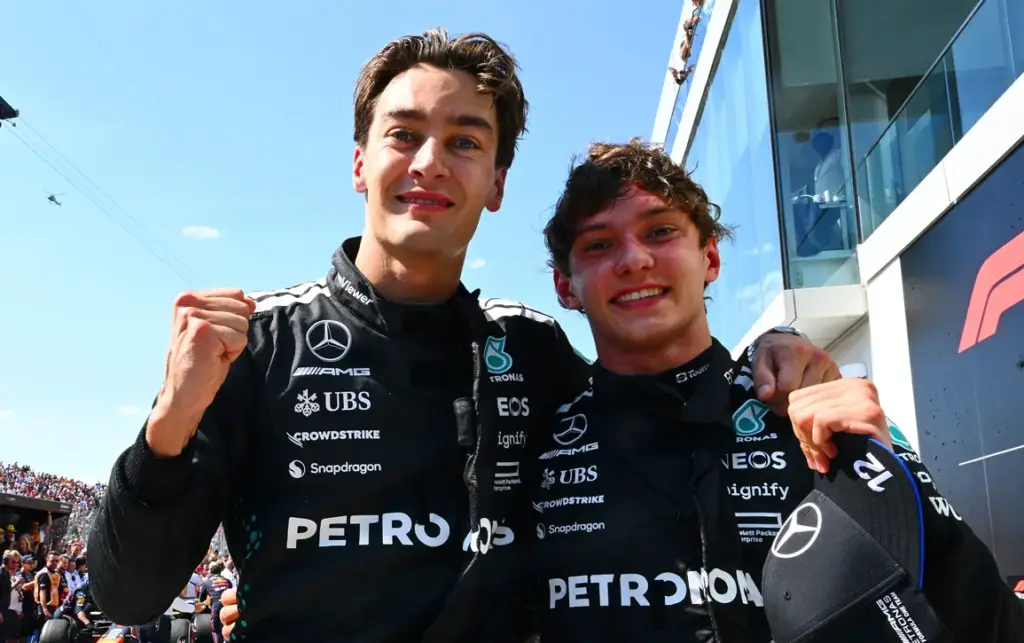
George Russell and Kimi Antonelli entered 2026 as Mercedes’ title hopefuls, in a scenario that echoed the shape of that fight almost exactly. The team has spent a decade building lessons into how it manages internal battles, and both drivers have shown early signs of the composure that Hamilton and Rosberg only found once the title fight was over.
Whether that holds for a full season under pressure remains to be seen. But it is a reminder that the story of F1 teammates never really finishes. It just moves to the next garage.
What connects Senna and Prost to Verstappen and Hadjar, and Hamilton and Rosberg to Russell and Antonelli, is not the era or the car. It is the same simple test: two people, one goal and how much of themselves they are willing to give up to share it.
Norris found his answer with Sainz first, and has been chasing that same standard with every teammate since. The best F1 teammates are the ones who work out how to answer that question together, rather than against each other.