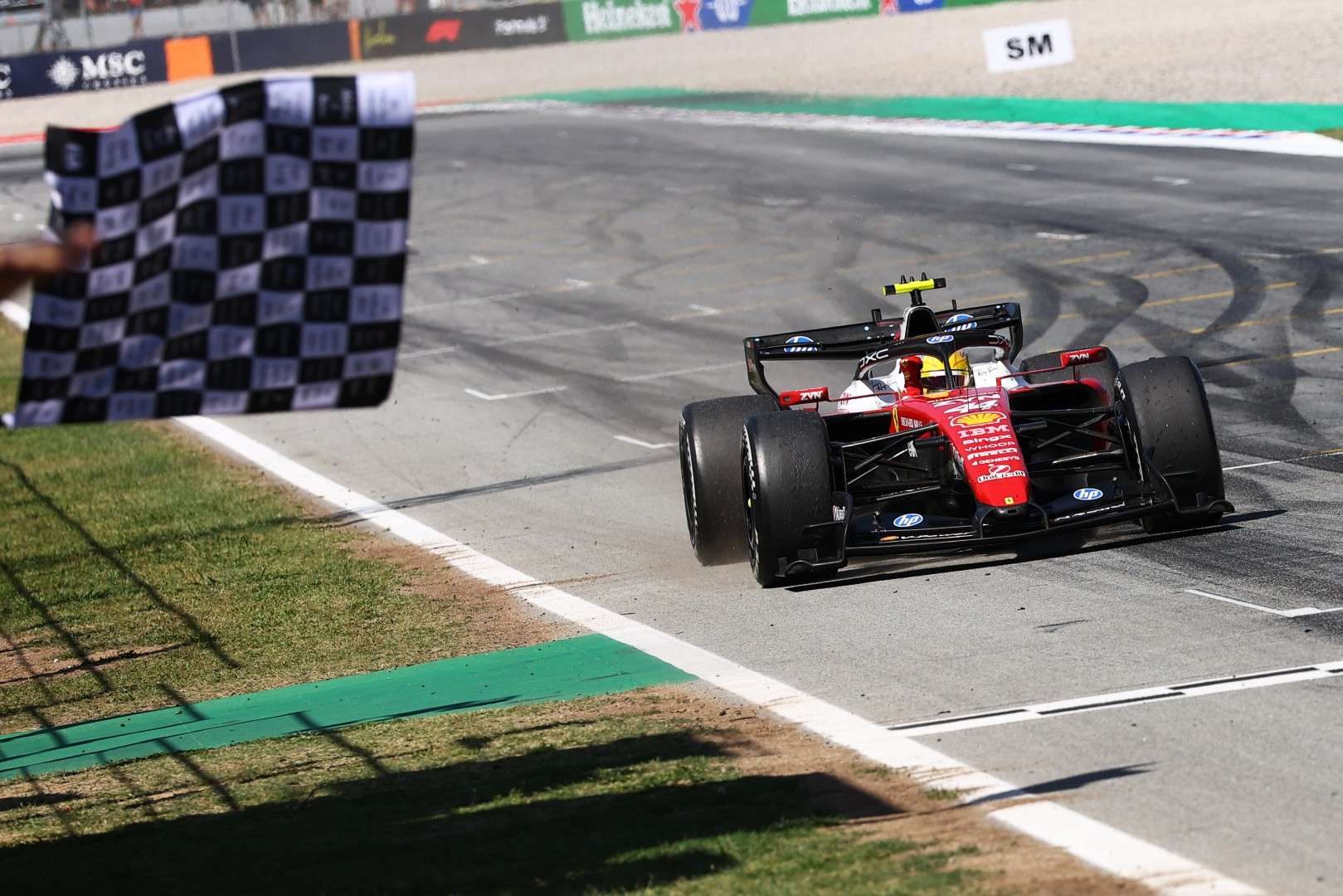
The Circuit de Barcelona-Catalunya is unforgiving with heat. With track temperatures hitting 53°C, teams must manage their tyre degradation, a reality that pushed many teams to choose a conservative two-stop strategy. Scuderia Ferrari did the opposite. By committing to an aggressive, unconventional three-stop strategy, the Italian team went beyond just managing the heat, they maintained the absolute internal stability required to conquer a volatile race.
Internal stability in Formula 1
During a Grand Prix, an F1 team relies on a constant cycling loop of information between the car’s mechanical sensors, the driver’s sensory input, and the data models on the pit wall. When that information loop is stable, the team runs a coherent race and decisions reinforce each other seamlessly. When instability enters the cycle, strategy becomes fragmented and purely reactive.
Ferrari’s three-stop pit strategy worked because their system remained perfectly aligned despite the extreme environmental friction. Ferrari stayed locked in a proactive loop. Mercedes, by contrast, hit points of friction: tyre behaviour that didn’t match expectations and strategy calls that shifted under pressure.
Stint one: setting a predictable rhythm
Starting from P2 on soft compound tyres, Hamilton struck a healthy, predictable pace between the two Mercedes drivers. The team established an alignment of the car, driver, and pit wall, that set the tone for Ferrari’s three-stop strategy.
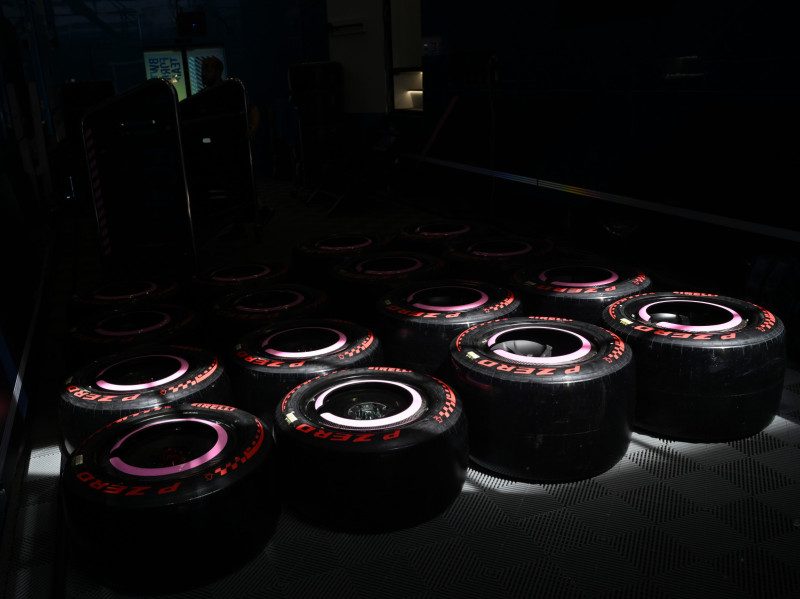
The first move came on Lap 11. Knowing that running long would cook the soft rubber, Hamilton pitted early for hard tyres. This gave Hamilton the advantage of a powerful undercut and fresh tyres on a hot track.
Mercedes’ response to this exposed the first cracks in their internal communication loop. George Russell, who had been leading the Grand Prix, was called into the pits unexpectedly, a reactive move triggered by Hamilton’s stop rather than by Mercedes’ own plan. The uncertainty was immediately audible over the team radio:
“I was managing in that first stint, you could have given me the heads up.” – George Russell
“Update me on the plan, are we moving to 3?” – George Russell
Those messages tell the story: the driver wasn’t aligned with the pit wall, and the pit wall wasn’t aligned with the car.
Middle phase: Ferrari forces reactive timing
Hamilton’s fresh rubber allowed him to unleash a relentless pace that put pressure on the Mercedes pair. By Lap 21, Hamilton was within two seconds of Russell, and continued to push. By Lap 27 Hamilton pitted again for mediums, another controlled reset that kept Ferrari’s three-stop strategy on track. Around Lap 36, Norris pits, forcing the Mercedes, who were running out of grip, to pit. Hamilton then leads the race.
Ferrari’s short-stint structure kept the car in a predictable window. Meanwhile, Mercedes ran on longer stints, forcing them to nurse their tyres, and amplifying uncertainty.
The VSC: Where systemic stability pays off
In a chaotic race environment, a stable team can weaponise unpredictability. On Lap 40, Fernando Alonso stopped on track, triggering a Virtual Safety Car (VSC). While rival pit walls scrambled to recalculate their safety windows, Ferrari executed the final phase of their three-stop strategy with precision.
They boxed Hamilton on Lap 41 for his final set of hards. Operating under restricted VSC speeds meant Hamilton lost minimal relative time in the pit lane, allowing him to comfortably leapfrog Russell as he emerged from the pit exit. This VSC moment rewarded an organised system equipped to use variables to their advantage.
Closing phase: Standing tall amidst volatility
In the final stint, Hamilton continued to build the gap as Mercedes continued to adjust on the fly. Ferrari lost Leclerc to a mechanical issue in Lap 63, but the race structure remained intact as it was built around Hamilton’s repeatability. Even with one car gone, Ferrari’s system held, and their three-stop strategy brought success.
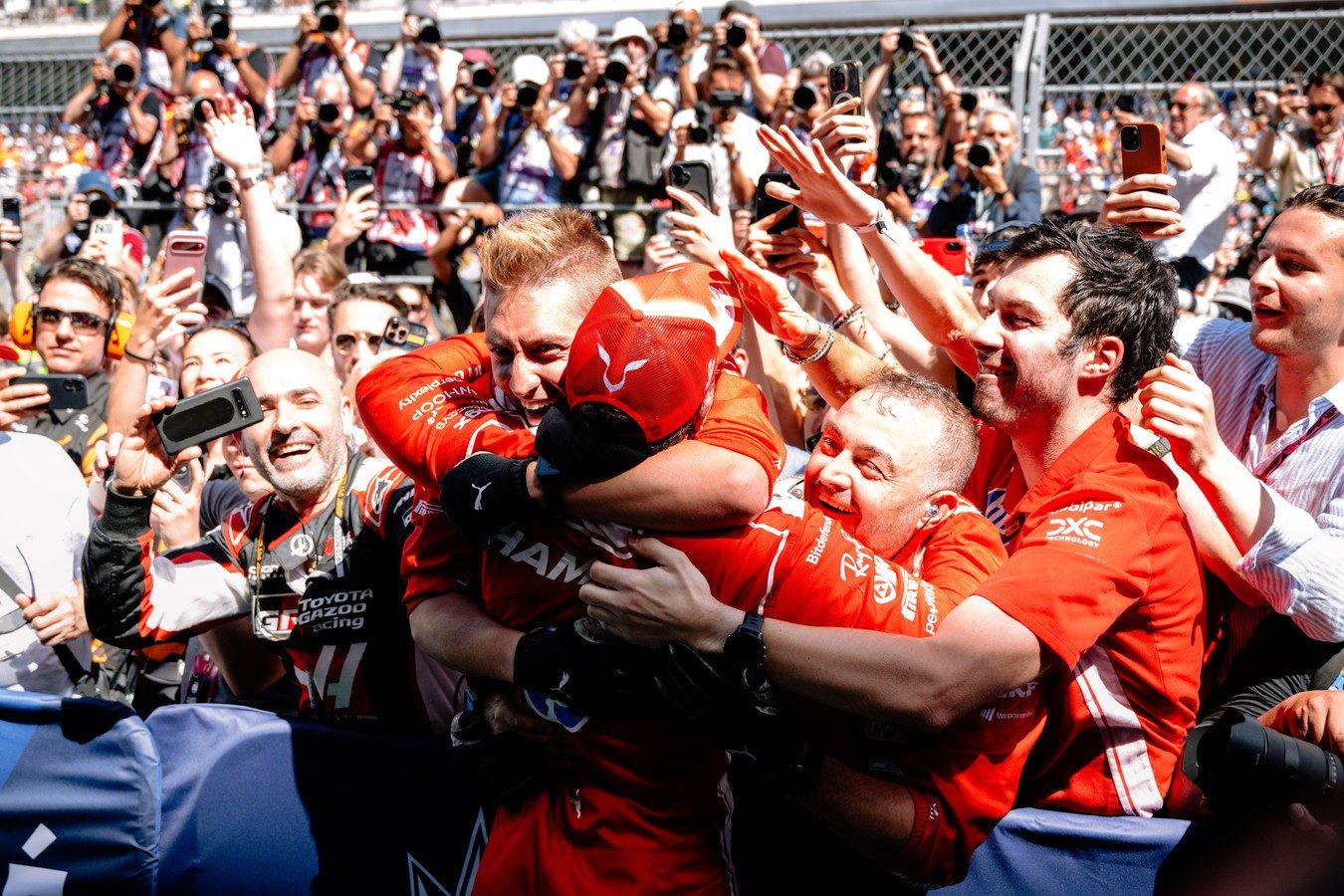
Ferrari out-stabilised the race
Ferrari won because they were the most internally coherent team on the grid. This systemic stability equipped the decorated driver, Lewis Hamilton, with the tools required to take his maiden podium for Ferrari.
Ultimately, their three-stop strategy created a smooth, predictable flow of information that allowed Hamilton to execute with absolute clarity in extreme conditions. In a race defined by blistering heat, tyre degradation, and sheer volatility, Ferrari simply out-stabilised Barcelona.