The conflict broke out on 28 February 2026, when joint US-Israeli strikes on Iran triggered a widen regional war. Iran retaliated with strikes across the Gulf, hitting Bahrain and Saudi Arabia among other states. A war like this shifts the focus of the world on the humanity lost and not on the F1 2026 calendar.
The cancellation
Formula 1 was due in the region just weeks later – Bahrain on 10-12 April, followed by Jeddah in Saudi Arabia on 17-19 April. These were rounds four and five of what was meant to be a record 24-race season.
F1 officially cancelled both races on 14 March. No replacement venues had been found at the time, which reduced the season to 22 races. It also left a five-week gap in the F1 2026 calendar between the Japanese Grand Prix (27-29 March) and Miami (1-3 May).
CEO Stefano Domenicali framed it as a safety call rather than a political one: “While this was a difficult decision to take, it is unfortunately the right one at this stage considering the current situation in the Middle East. I want to take this opportunity to thank the International Automobile Federation as well as our incredible promoters for their support and total understanding… We cannot wait to be back with them as soon as the circumstances allow us to do so.”
FIA President Mohammed Ben Sulayem echoed the safety framing, saying the FIA would always place the wellbeing of its community first.
The Sepang patch and what it reveals
On 26 July, ahead of the Hungarian Grand Prix, F1 confirmed Malaysia’s Sepang International Circuit to join the 2026 calendar. The track has been dormant since 2017. However, it will host the Bahrain Grand Prix from 2-4 October, slotting between Azerbaijan and Singapore to restore the calendar to 23 rounds.
The official title for the race is “Formula 1 Gulf Air Bahrain Grand Prix in Malaysia,” with Bahrain itself funding the event to keep its name on the calendar even though the race won’t touch Bahraini soil. Domenicali’s own framing leaned into the return rather than the workaround: “We are delighted to confirm that Malaysia will host the Bahrain Grand Prix in 2026… Malaysia is an incredible country, and Sepang holds a special place in Formula 1 history.”
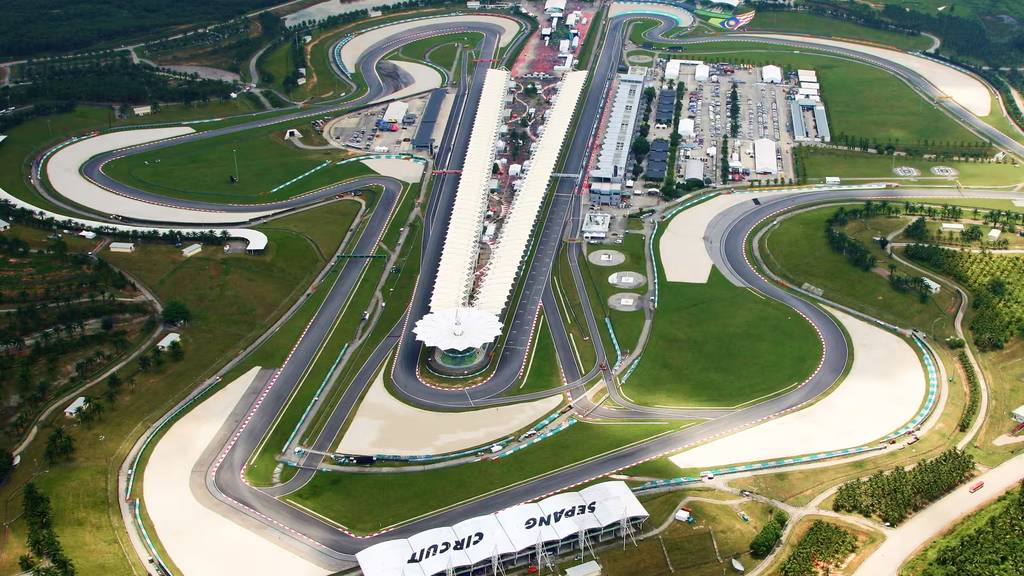
However, the fix done at Sepang hasn’t settled anything. It has simply moved the crisis to the end of the season. Qatar (27-29 November) and Abu Dhabi (4-6 December), which are the last two rounds of the F1 2026 calendar, continue to remain under a cloud of conflict. Domenicali has said that a final call needs to come before the end of September.
The clearest signal of how seriously this is being taken hasn’t actually come from F1 at all. Instead, it came from its sister championship. The FIA confirmed the World Endurance Championship will not visit Qatar or Bahrain for its own season finale. They chose to move those rounds to Barcelona and Monza instead, citing “the current regional security” situation.
The contingency plan: Imola’s possible return
To prepare for the cancellation of the races in Qatar and Abu Dhabi, Imola and Portimão have both been floated as replacement venues. However, Portimão has effectively been ruled out since it’s already scheduled for construction work ahead of its planned 2027 return.
So far, Gazzetta dello Sport has reported Imola as the frontrunner. Imola has a history of stepping in when needed most, as this is the same circuit that stepped in during the COVID-disrupted 2020 and 2021 seasons. The circuit was dropped from the F1 2026 calendar in favour of Madrid before any of this began. Perhaps, Imola will always find a way back to F1.
If it happens, Imola will be hosting the finale on 29 November, and would be F1’s first European season decider since the controversial 1997 European Grand Prix at Jerez.
The bigger picture: A strategy built on “false stability”
F1’s Gulf relationship isn’t new. It actually dates back to 1977, when Frank Williams signed a sponsorship deal with Saudia Airlines. By 2026, that relationship had deepened into four Gulf races on a single F1 calendar. Those races, as we know, are Bahrain, Saudi Arabia, Qatar and Abu Dhabi. Along with this, sponsorship deals, promoter fees and sovereign wealth stakes are woven into the sport’s ownership structure.
A researcher named James M. Dorsey framed it in his coverage of the crisis that cuts to the core of what’s being tested. The Gulf states have spent years cultivating an image as “an island of stability” in an unstable region. This is a pitch that was aimed squarely at international federations and sponsors. However, it is the same pitch that is now under direct strain.
The disruption has also revived the long-running “sportswashing” debate around F1’s Gulf expansion. Human rights groups including Amnesty International have argued the races serve to polish the reputations of host governments. Seven-time World Champion Lewis Hamilton has repeatedly pushed F1 to address human rights records in the region directly. F1 itself has consistently rejected that framing, treating the calendar decisions purely through a safety and logistics lens.
What this says about F1’s global ambitions
The 2026 calendar was designed to showcase F1 at its most global. A record 24 races, with four of them in the Gulf alone. Within six weeks of the season starting, that narrative had already cracked.
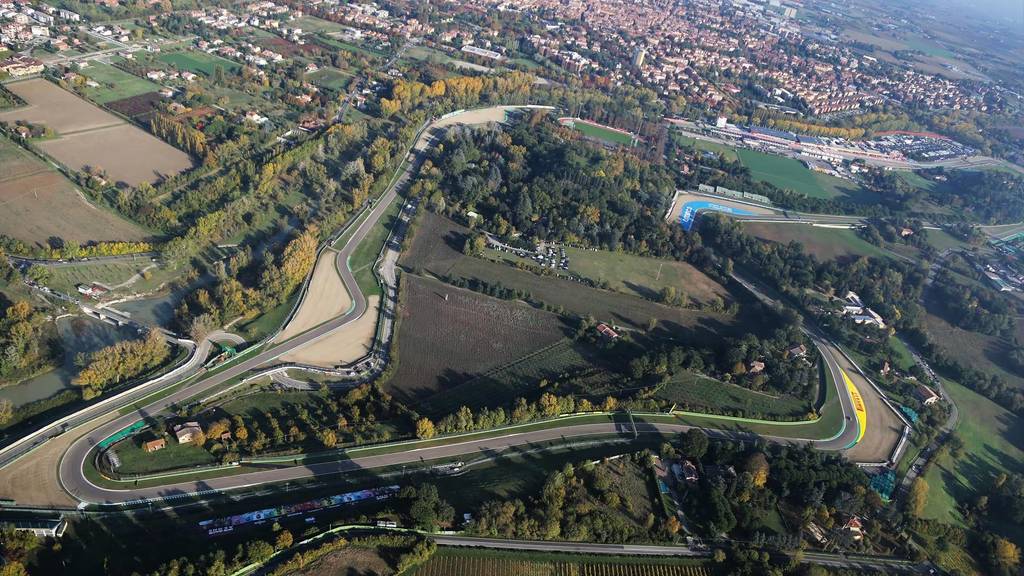
The response so far has shown two competing instincts at once: F1 doubling down on its Gulf commitments by allowing Bahrain to pay to keep its own name in the calendar, rather than simply dropping the race, while simultaneously reaching backward to its old European heartland with Imola as the safety net if the back end of the season collapses as well.
The unresolved question is whether 2026 exposes the Gulf strategy as genuinely fragile, or whether F1’s willingness to spend this much effort protecting the Bahrain brand specifically shows just how central that strategy remains regardless of the risk.