In Formula 1, managing race information and predictability is just as crucial to winning as aerodynamics or engine power. Surviving the night race at Marina Bay required reliance on predictive race modelling to simulate optimal decisions in real-time. Yet, when teams faced information blackouts or ignored engineering data, the consequences were immediate and devastating. This article offers a comparative look at how different frontrunners handled information when the stakes were highest.
The strategic gamble that backfired
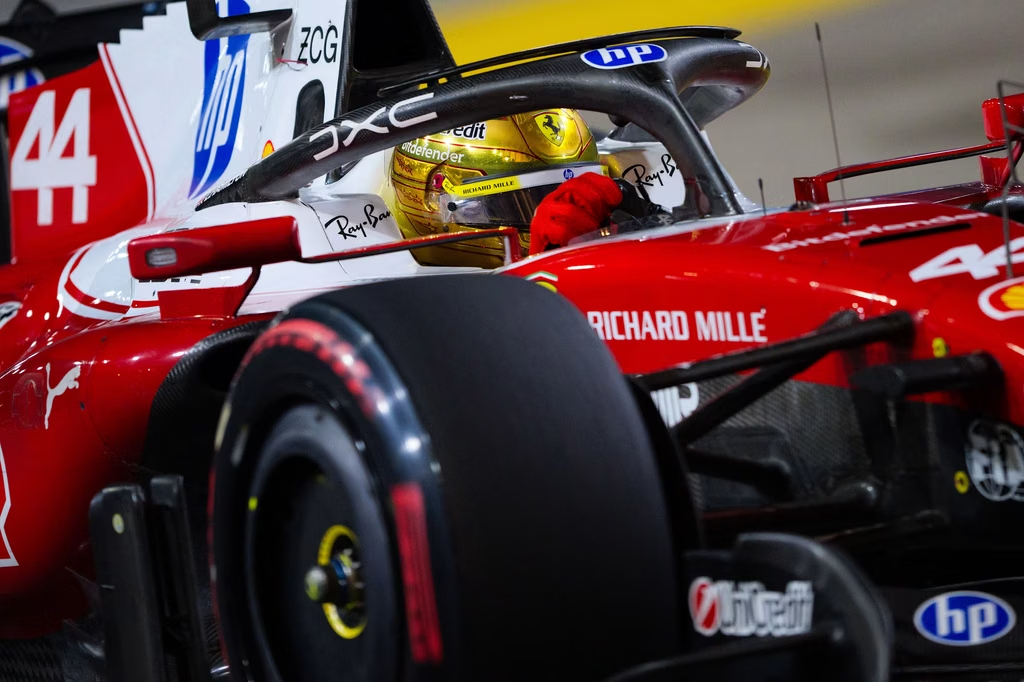
On lap 39, Ferrari recognised a risk-free VSC window and radioed to double-stack their drivers. Trusting his own instinct and track position instead, Hamilton chose to override the team’s decision.
Alternative race data modelling, using Charles Leclerc’s lap times after his pit stop, reveals a stark contrasting scenario had Hamilton complied. With a clean 2.5 second pit stop and a 20 second total pit loss, the Briton would have rejoined firmly in P3. With fresher, faster tyres, arming him with a tyre offset advantage, Hamilton would have possessed the mechanical grip to easily secure a definitive podium finish.
This strategic breakdown shows how modern race execution relies on predictive race modelling rather than localised driver perspective. While a driver can judge immediate mechanical balance, they lack the macro-level telemetry to anticipate exponential tyre degradation over time. Exchanging long-term pace for brief, deceptive track position led to Hamilton’s dramatic fall down the order. Strategic success relies on absolute trust and uncompromised communication between drivers and the pit wall.
Following the engineering strategy would have maximised the SF-26’s performance, securing a double podium for Ferrari. Ultimately, this breakdown in data reliance proved that short-term human perception cannot compete with the strategic reality of predictive systems.
The limits of certainty
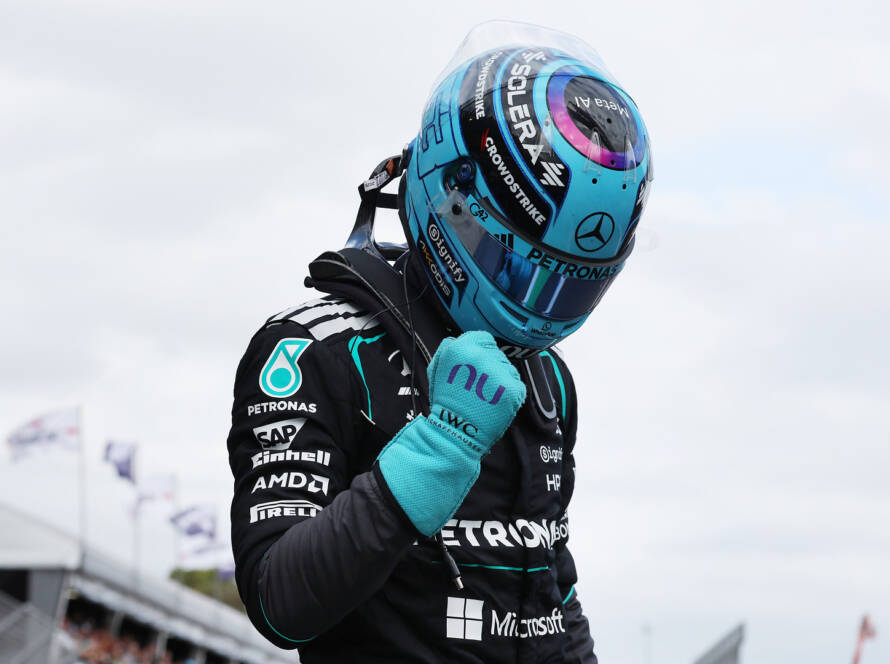
Starting P19 after an engine penalty, George Russell executed an aggressive, extended Medium-tyre stint to climb to P7 by lap 40 out of 62. When a late VSC emerged, Mercedes lunged for the tactical window. The VSC, however, ended just as he crossed the pit entry line.
Had the VSC lasted just 15 seconds longer, Russell would have secured a cheap pit stop and maintained track position ahead of Lawson to come home in P7. Instead, completing the stop under green-flag conditions dropped him into P10 and track position was completely lost.
While Hamilton actively overrode a strategic opportunity, Mercedes pursued one that was shattered entirely by external timing. This divergence highlights the dual vulnerabilities in trackside execution: strategy can fail either through driver insubordination on dependencies on variables teams cannot control.
This scenario exposed the pit entry as an information point where predictive race modelling reaches its limits. Once a team commits their car across this physical boundary, they surrender all leverage over external possibilities. Mercedes could not forecast the moment Race Control resumed the green flag. This reveals an operational blindspot, leaving even the most advanced data systems hostage to external decisions.
The cascading impact of unscheduled strategy
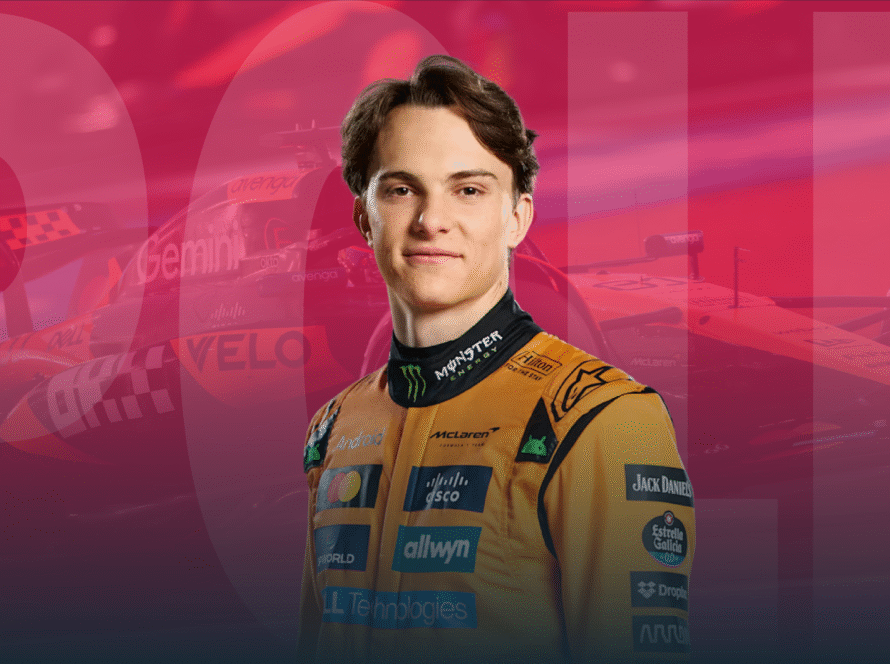
Occasionally in motorsports, unexpected changes to strategy can bring more than just obstacles, they can help drivers climb up the order. When circumstances align, unscheduled events can even place drivers on the podium. On lap 39, McLaren chose not to pit Oscar Piastri under the VSC. A slow front-right puncture on lap 42, however, forced an unscheduled green-flag pit stop that dropped him forty seconds behind Hamilton.
No predictive software would willingly recommend sacrificing that much time on a street circuit where overtaking is notoriously difficult. Yet, the frontrunning gap provided an isolated buffer of clean air. Piastri bypassed the traditional penalty of dirty air, optimising his Soft tyre preparation laps without thermal spiking. Kimi Antonelli experienced a similar unpredictable event as he capitalised on a Norris-Hamilton battle to gain an unexpected podium.
The forced randomness of the puncture granted McLaren an unlikely advantage that their pre-race simulations would not have anticipated. It seemed for both teams a lack of information or predictability can sometimes be a strategic saviour.
By going beyond the expected trajectory, these unforeseen circumstances allowed Piastri and Antonelli to make late race charges. When frontrunners fall into mathematical statements, immediate adaptation to unmodelled events create the most competitive edge. Antonelli gained a step on the podium and Piastri made P5 his own.
Validating the strategy through predictive race modelling
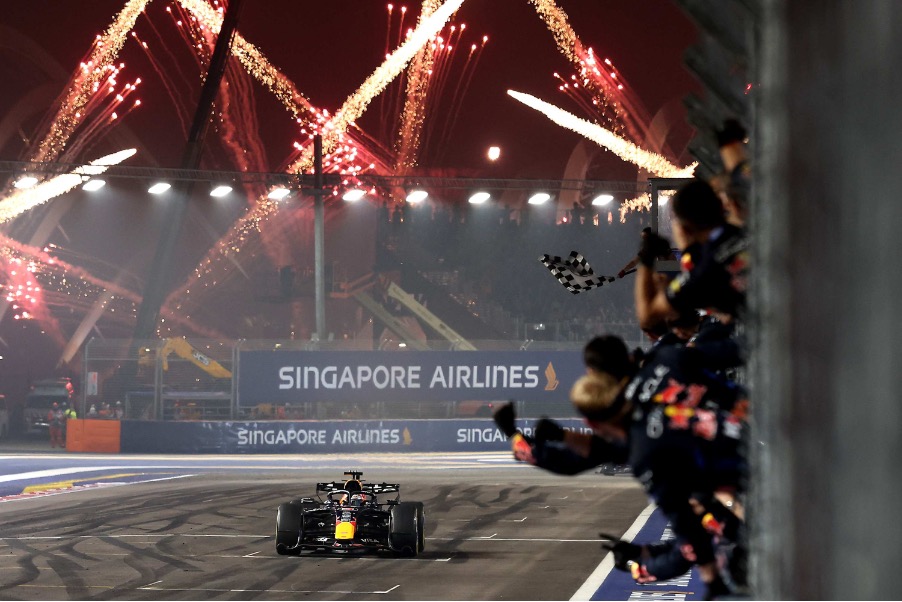
When it comes to strategy at Singapore, Max Verstappen’s victory serves as the perfect control variable for success. Red Bull demonstrated what happens when strategy experiences zero shocks and complete data information aligns with reality.
In this race, live qualitative feedback from the driver came second to pre-existing quantitative data. With communication issues prevalent, Red Bull did not need tyre behaviour confirmation from Verstappen. Their real-time telemetry and corner-by-corner sector deltas painted a flawless digital picture. The race naturally followed their intended script: a clean 32-lap stint on Softs, followed by 30 laps on Mediums. The car stayed strictly within its projected performance window, so the strategy required zero live improvisation.
From an information standpoint, this distinct data alignment reduced the risk of strategic error. Unlike the communication friction and lack of information that compromised Ferrari’s race, Red Bull had all the information and data to protect them against hesitation. This comparison proves that while strategic flexibility is vital during unexpected chaos, absolute isolation from trackside noise ensures the ultimate competitive advantage, transforming perfect information into flawless execution.
Conquering the Singapore night
Singapore proved that racing supremacy relies on mastering the information pipeline. By locking out the noise and trusting their raw data, Red Bull turned race simulations into track dominance. They conquered the night to secure Verstappen’s historic, maiden victory under the gleaming Singapore floodlights.