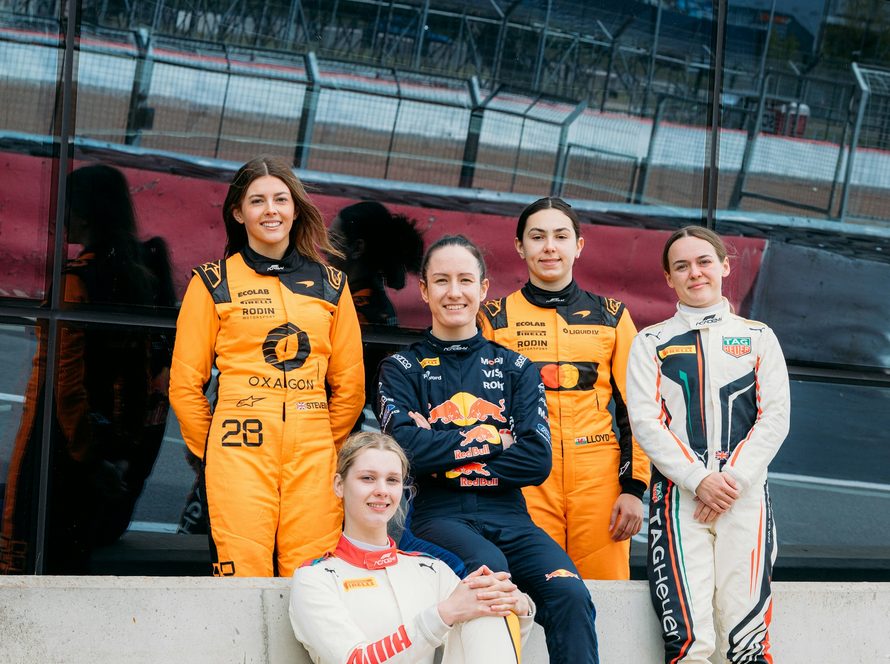
There is no shortage of big names on the F1 Academy grid. Red Bull, McLaren, Ferrari, Mercedes and Aston Martin are all represented, while LEGO, Sephora, PUMA and Gatorade have found their way into the championship. Behind them sit six established racing teams: PREMA Racing, Campos Racing, MP Motorsport, Rodin Motorsport, ART Grand Prix and Hitech Grand Prix.
It makes for a grid with a distinctly F1 Academy identity. The championship has built a team structure that brings together several different sides of modern motorsport, with the six F1 Academy teams providing the racing operations, the F1 teams supporting individual drivers and major brands bringing their own audiences and identities into the sport.
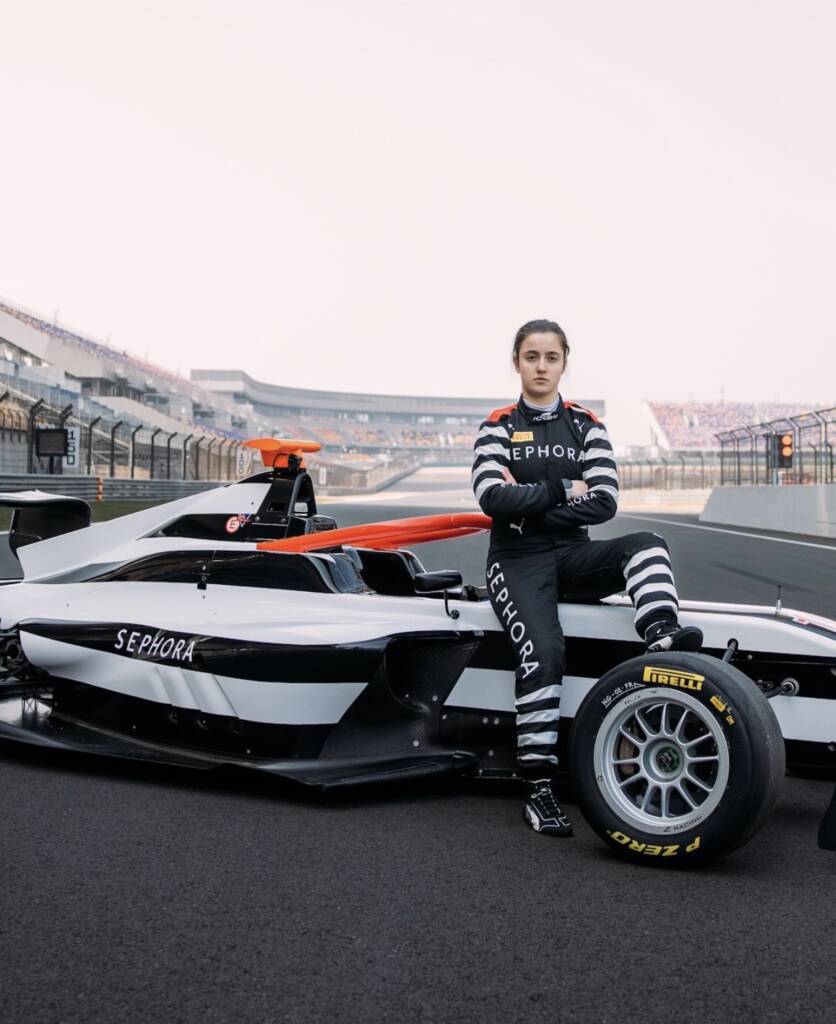
The result is a series where a driver’s journey can involve several different organisations at once, each bringing something different to the table. Alisha Palmowski races for Campos Racing while being supported by Red Bull, Esmee Kosterman competes with MP Motorsport with LEGO backing and Natalia Granada races for PREMA with Sephora behind her. None of these relationships are competing with one another. They are part of what makes F1 Academy what it is.
The teams behind the action
At the centre of the 2026 championship are the six teams actually responsible for running the cars: PREMA Racing, Campos Racing, MP Motorsport, Rodin Motorsport, ART Grand Prix and Hitech Grand Prix. Each operates three cars, providing the engineers, mechanics and trackside infrastructure behind the grid. They are the teams handling the practical side of getting a driver onto the circuit and keeping her there, from preparing the car to analysing data and making decisions throughout a race weekend.
All six also arrive with plenty of experience. PREMA is one of the biggest names in junior single-seater racing, with a long history across Formula 2, Formula 3 and Formula 4, and has won every F1 Academy Teams’ Championship since the series began. Campos Racing, MP Motorsport, Rodin Motorsport and ART Grand Prix are similarly well established across the junior categories, while Hitech Grand Prix joined F1 Academy in 2025. Hitech also has a unique role within the championship, operating the Wild Card entry at selected rounds and giving local talent the opportunity to join the grid and compete alongside the full-time drivers. Their involvement gives F1 Academy a wealth of racing knowledge and experience, while ensuring each team brings its own identity and approach to the championship.
That means the F1 Academy team is the organisation you should look to when you want to know who is actually operating a particular car. A driver might have a Red Bull, Ferrari or LEGO logo across her livery, but it is one of these six teams responsible for running the entry. The distinction is important because the F1 Academy team and the organisation supporting the driver can be two completely different things.
How is F1 involved?
Ten active F1 teams support a driver in F1 Academy during 2026, creating a direct connection between the championship and the wider Formula 1 driver development system. McLaren has even gone a step further with a second supported entry through McLaren Oxagon. But while the F1 teams bring their names and support to the championship, they are not operating separate F1 Academy teams themselves. Instead, they support individual drivers who compete through one of the six established F1 Academy outfits.
Alisha Palmowski is a good example of how the structure works. She is supported by Red Bull Racing, but her F1 Academy team is Campos Racing. The F1 team therefore becomes another part of the driver’s journey, adding the resources, development opportunities and identity of an F1 organisation to the racing operation provided by her F1 Academy team.
It creates a particularly interesting pathway for young drivers. They can develop their racing skills within an established junior team while also becoming part of an F1 team’s wider driver programme, creating a link to the upper levels of single seater racing and showing how the F1 Academy teams can work alongside the sport’s biggest names.
The brands bringing their own flavour
The F1 teams aren’t the only organisations getting involved. F1 Academy has created space for brands from outside traditional motorsport, with LEGO, Sephora, PUMA, Gatorade, American Express, TAG Heuer and Wella Professionals among those connected to the 2026 grid. Their involvement adds another layer to the championship because these companies aren’t simply bringing money or visibility to a car. They can bring their own audiences, identities and ideas about what motorsport can look like.
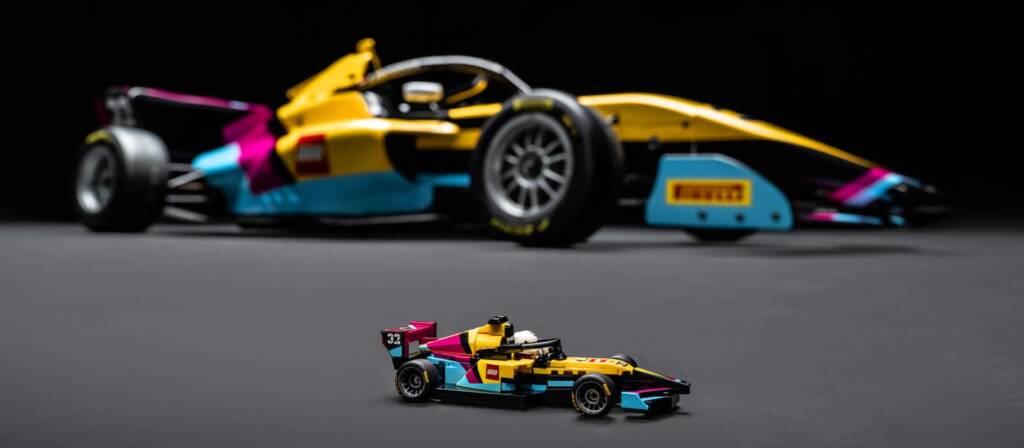
LEGO is perhaps one of the clearest examples. Esmee Kosterman races for MP Motorsport with LEGO backing, creating a partnership between one of the world’s best known creative brands and a young female racing driver. Rather than running a team itself, LEGO uses its F1 Academy teams to connect with a new generation of fans, while the championship gives it a natural link to the future of motorsport.
The same can be seen with Sephora and Natalia Granada, who races for PREMA with the beauty brand behind her. Sephora has no traditional role in running a single seater team, which is exactly what makes its involvement interesting. It brings a different audience and perspective to the championship, alongside brands from beauty, toys, fashion and sportswear, broadening what it means for a brand to have a place in racing.
One car, multiple stories
This is what makes F1 Academy stand out amongst other racing series. Look at a car and you might see a Red Bull, McLaren or LEGO logo first, but behind that branding is a driver, an F1 Academy team and, in many cases, an F1 development programme or commercial partner.
Each organisation has a different role in that picture. The F1 Academy team is responsible for the racing operation and the day to day running of the car. An F1 team, where applicable, supports the driver’s development and connects her to its wider programme. A commercial partner can then bring its own identity, audience and ambitions into the championship. The same car can therefore represent several organisations without any of them stepping on the other’s toes.
It gives the drivers themselves a much broader network around their careers. They aren’t simply associated with one team name. They can have an established racing outfit developing their on track performance, an F1 organisation helping them navigate the wider single seater pathway and a global brand supporting their profile. It is a model that gives each relationship its own purpose while keeping the driver at the centre.
A team structure with an identity of its own
That combination is ultimately what gives the F1 Academy teams so much character. The six racing teams bring the technical expertise and experience needed to develop drivers, while the F1 teams connect them to the highest levels of single seater racing and provide a route to identify future talent. Brands such as LEGO and Sephora bring new audiences and perspectives, showing there are plenty of ways to find a place within motorsport.
None of these approaches needs to fit neatly into the same box. PREMA can bring its junior racing experience, Red Bull can develop its next generation of talent and LEGO can inspire a new generation of fans, all while supporting the same driver. Each organisation contributes something different without having to become something it isn’t.
With six teams running the cars, ten F1 teams supporting drivers and a growing collection of global brands, F1 Academy has created a team structure that is entirely its own, bringing drivers, teams, F1 organisations and brands together on the same grid.